Sheesham vs mango vs acacia: which wood for kitchenware?
The real hardness numbers behind sheesham, mango and acacia, which one actually resists water and warping, and why 'acacia' on a label often means less than you'd think.
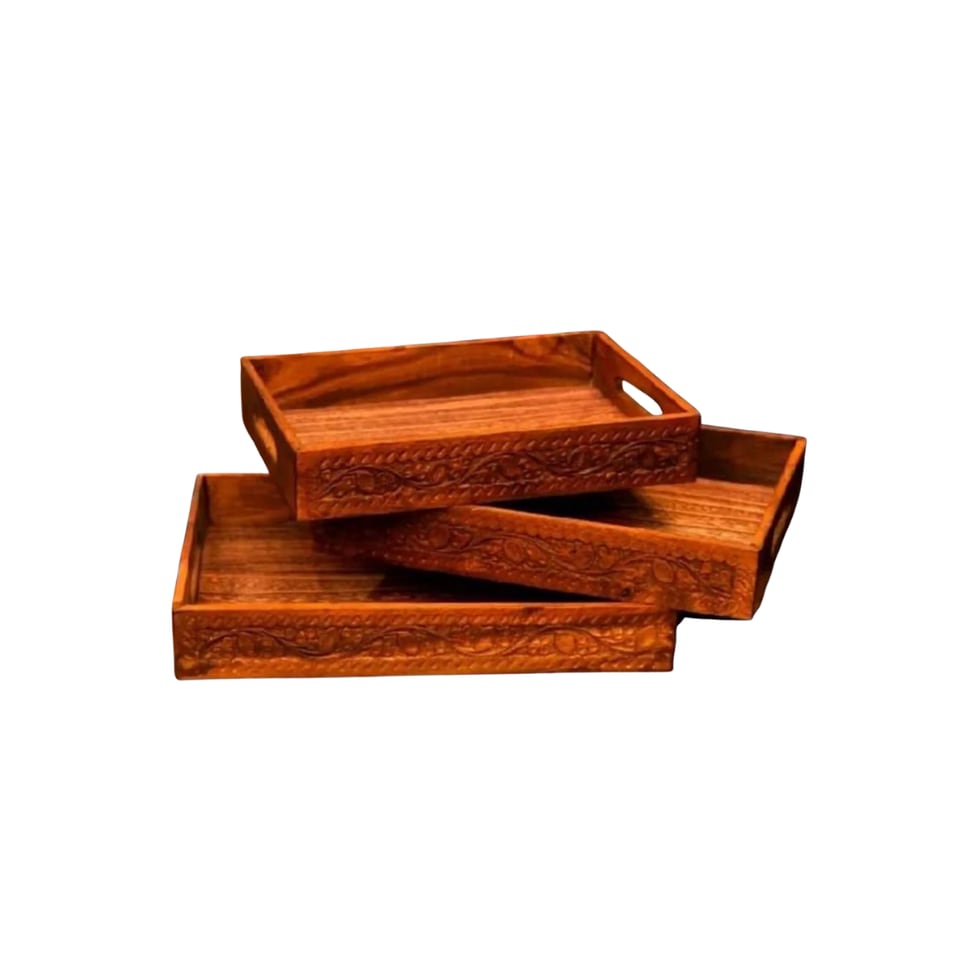
Sheesham is the hardest and most water-resistant of the three, at roughly 1,660 lbf on the Janka scale. Acacia varies widely by species, from about 1,700 up to 2,200 lbf, and mango is softest at around 1,070 lbf — fine for occasional use, but sheesham and hard acacia outlast it under daily handling.
Most listings for wooden kitchenware name a wood without saying anything checkable about it, so "sheesham", "mango" and "acacia" end up doing more marketing work than descriptive work. The numbers below are published Janka hardness figures — the standard industry test for how well a wood resists denting — plus what each wood is actually like to live with day to day.
How hard is each wood, actually?
The Janka scale measures how much force it takes to press a steel ball halfway into a wood sample — higher means more resistant to dents and scratches. Published figures put sheesham (Dalbergia sissoo) at around 1,660 lbf, common kitchenware-grade acacia species from about 1,700 to 2,200 lbf, and mango (Mangifera indica) at roughly 1,070 lbf.
- Sheesham (Dalbergia sissoo): ~1,660 lbf
- Acacia (species-dependent — commonly Acacia auriculiformis in retail kitchenware): ~1,700–2,200 lbf
- Mango (Mangifera indica): ~1,070 lbf
- Red oak, for reference: ~1,290 lbf — mango sits below it, sheesham and hard acacia sit above it.
Which wood resists moisture and warping best?
Sheesham carries natural oils in the grain that make it resistant to moisture, warping and insect damage without a heavy finish — one reason it's the standard for rolling boards across the subcontinent. Acacia is also fairly moisture-resistant once seasoned, though most care guides still call for oiling it every one to three months. Mango is the most porous of the three and needs the most frequent oiling to stop it drying out and cracking.
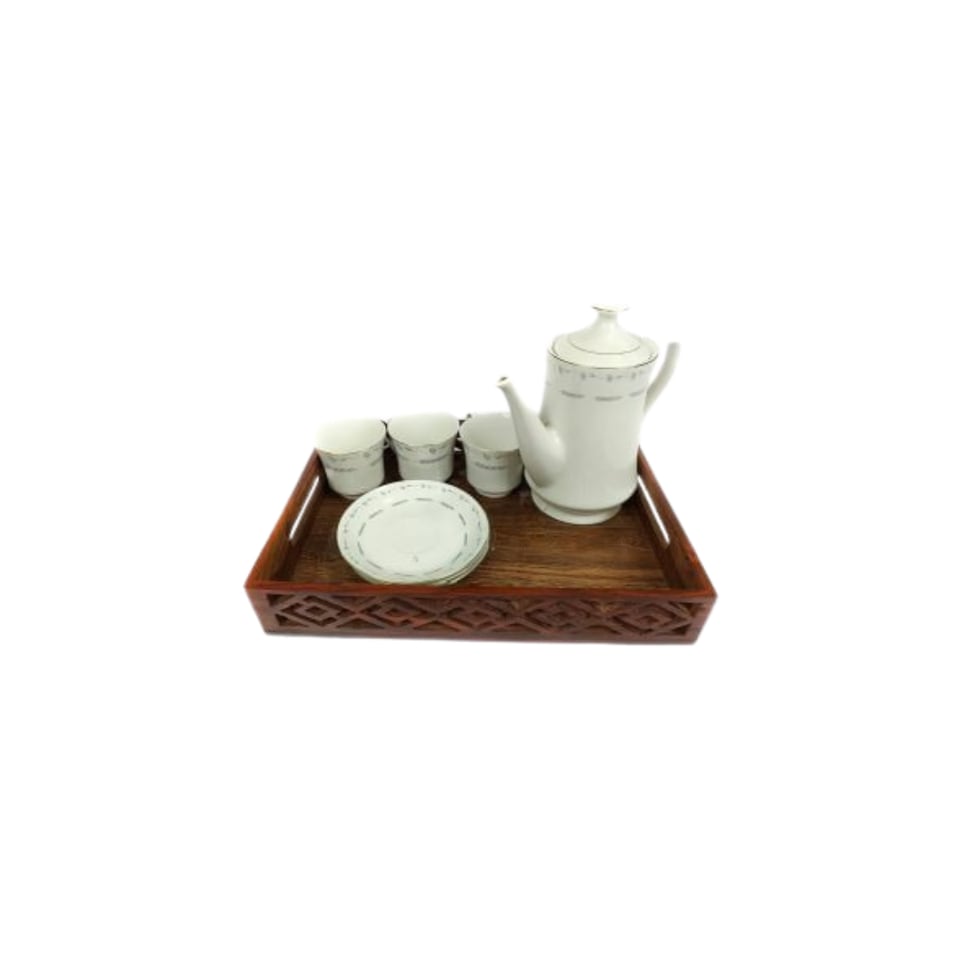
Is mango wood a lesser choice, or just a different one?
Neither — it's a genuinely useful wood for light-to-medium kitchen use, and its main selling point is real: mango trees are grown for fruit, and the timber is typically a byproduct of orchards past their fruiting life rather than cut specifically for furniture. What it isn't is a wood built for the heaviest daily use. A serving tray or dry-fruit box that gets picked up and put down constantly will show wear on mango sooner than on sheesham or a dense acacia.
Buying a dry fruit tray specifically? Read the sizing and Eid-gifting guide
What does "acacia" on a label actually mean?
Often less than it should. Acacia is a genus of well over a thousand species with very different densities, and most retail listings just say "acacia" without naming which one — so a 2,000 lbf board and a considerably softer one can carry the identical label. The species most often sold as kitchenware-grade acacia, Acacia auriculiformis, is genuinely hard; a decorative acacia sold under the same word is not necessarily the same wood at all.
Which wood holds fine carving detail best?
Sheesham's density is exactly what makes it demanding to carve and what makes the result last: a chiselled border or a scratch-etched naqshi pattern holds crisp edges for years rather than blunting and rounding off with handling. Mango's softer grain is easier and faster to carve, which suits broader, simpler decorative work but shows wear at fine edges sooner. Acacia sits closer to sheesham on this — hard enough to hold detail, but with more variation piece to piece depending on which acacia species it actually is. That variation is the practical reason a workshop that turns and carves in one consistent wood can promise a repeatable result, where a supplier switching between unnamed acacia batches can't.
What does each wood typically cost?
Mango is consistently the most affordable of the three to buy, which is a real part of its appeal rather than a compromise. Sheesham sits at the upper end, reflecting both the density that makes it slower to work and the carving and finishing time a hand-turned piece takes. Hard acacia usually lands close to sheesham in price, though — because "acacia" covers such a wide range of actual species and densities — that price doesn't always track the same hardness two listings both claim.
- Daily-use kitchenware (rolling boards, serving trays, spice boxes): sheesham or a named hard acacia species.
- Fine hand-carving or naqshi lacquer work: sheesham — the density holds a scratched or chiselled edge without chipping.
- Occasional-use or display pieces on a budget: mango wood is a genuinely sound, more affordable choice.
- Anything advertised only as "acacia" with no species named: ask which one before assuming it matches a 2,000 lbf figure.
Buying a serving tray specifically? Read the full sizing and finish guide
Is sheesham sustainable to use?
Sheesham (Dalbergia sissoo) is rated Least Concern by the IUCN, but the entire Dalbergia genus — sheesham included — has been listed under CITES Appendix II since January 2017, a genus-wide trade-control measure brought in because so many rosewood species look alike and get mislabelled in trade. It doesn't mean sheesham is endangered; it means legitimate exporters carry paperwork most buyers never think to ask about. If a seller can't produce that paperwork for an international shipment, that's worth asking about before you order, not after.
Which wood is food-safe?
All three are food-safe once finished with a food-grade oil rather than a furniture varnish — the wood itself isn't the risk, an unspecified sealant on top of it is. We leave every piece meant to touch food or dough, from a chakla belan to a dry-fruit tray liner, in plain finished sheesham rather than lacquering the working surface.
See how this plays out on a rolling board: read the chakla belan guide
Exactly which oil, and how often: read the wooden board oiling guide
How can you tell which wood you're actually getting?
Since the label alone often isn't enough, a few checks in hand tell you more than the listing does. None of these need special tools, and they work whether you're buying in person or trying to judge a listing photo.
- Weight: sheesham and hard acacia feel noticeably heavier for their size than mango — density is the whole story on the Janka scale.
- Grain: sheesham typically shows dark, dramatic streaks through a warm brown; mango tends toward a lighter, more uniform tone with softer contrast.
- Smell: sheesham has a faint rosewood scent at an unfinished edge or the underside; mango and acacia are largely scentless.
- Ask the direct question: a seller or workshop that can name the exact species — not just the genus "acacia" — is a good sign they know what they're selling.
Which wood should you actually buy for kitchenware?
For anything handled daily — a rolling board, a serving tray that gets stacked and unstacked, a spice box opened several times a day — sheesham or a properly identified hard acacia will outlast mango. For occasional-use or display pieces, mango is a genuinely sustainable, lighter option that costs less to buy and to ship. We work exclusively in sheesham because every piece is turned to order and meant to last years, not seasons, and the wood has to earn that.
That's also why we work only in sheesham. Each tray, board or box is turned and carved in our own workshop, and anything engraved or sized to your request is made after you ask for it. Hand work only makes sense with a wood that's worth it, which is the case we're making for sheesham throughout this piece rather than assuming it.
See the nested serving tray set
Browse the full Kitchen & Dining collection
Building something custom? Request a made-to-order piece
Wood vs stone matters for a mortar and pestle too — read the comparison
Frequently asked questions
- Which is harder, sheesham, mango or acacia wood?
- By published Janka hardness figures, sheesham (Dalbergia sissoo) rates around 1,660 lbf, kitchenware-grade acacia species run from about 1,700 to 2,200 lbf depending on which acacia it is, and mango (Mangifera indica) is softest at around 1,070 lbf.
- Is mango wood good for kitchenware?
- Yes, for light-to-medium use — bowls, trays, and organisers. It's softer and more porous than sheesham or hard acacia, so it needs more frequent oiling and shows wear sooner under constant daily handling, but its sustainability story is genuine: the timber is usually a byproduct of orchards past their fruiting life.
- Does acacia wood need regular oiling?
- Yes. Most care guides recommend oiling an acacia board or tray every one to three months with a food-safe oil. Skipping this lets the wood dry out and crack, even though acacia is one of the more moisture-resistant options among the three.
- Is sheesham wood endangered or restricted?
- No — sheesham (Dalbergia sissoo) is rated Least Concern by the IUCN. It is, however, listed under CITES Appendix II along with the entire Dalbergia genus since 2017, a trade-control measure aimed at rosewood species that are hard to tell apart, not a sign that sheesham itself is at risk.
- Why do two products both labelled "acacia" feel completely different?
- Because "acacia" is a genus name covering well over a thousand species with very different densities, and most listings don't specify which one. A hard, kitchenware-grade species like Acacia auriculiformis and a soft decorative acacia can both be sold under the same single word.
- Is mango wood more eco-friendly than sheesham?
- Its sourcing story is different rather than simply better: mango timber is typically a byproduct of fruit orchards past their fruiting life, while sheesham is grown as a timber species. Sheesham itself is not endangered, but mango's byproduct sourcing is a genuine sustainability point in its favour.
- Do you make anything in mango or acacia wood?
- No — every piece we make is turned in sheesham. It's the wood that holds up to being used for years rather than seasons, which is the standard we build every piece to.