Is sheesham sustainable? An honest answer from a workshop
Sheesham's real sustainability picture: IUCN status, what CITES Appendix II actually requires, the 2022 export-rule change, and the dieback disease killing sheesham trees in Punjab — the parts most listings leave out.
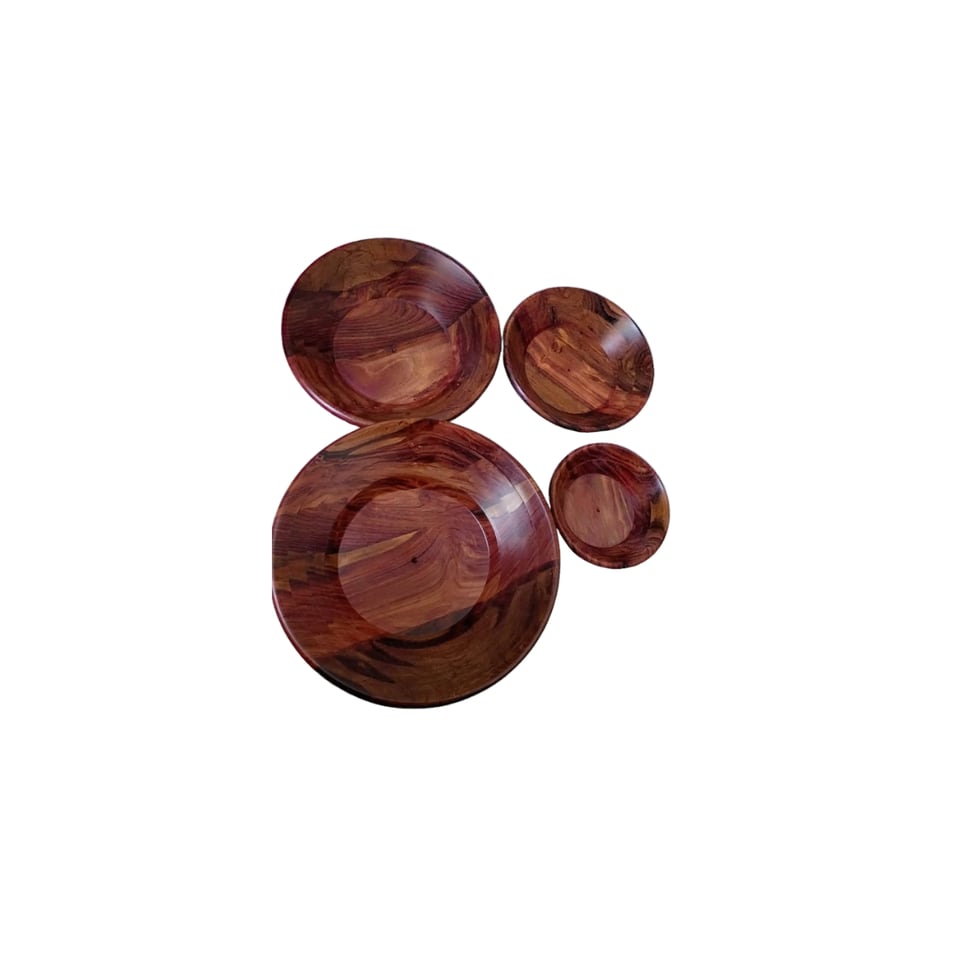
Sheesham (Dalbergia sissoo) is not endangered — the IUCN rates it Least Concern — but the whole Dalbergia genus has needed CITES Appendix II export paperwork since January 2017. The bigger threat to the tree isn't furniture demand at all: a fungal dieback disease has been killing sheesham across parts of Punjab since 1998.
Most sustainability guides answer this question with reassurance and stop: fast-growing, plantation-grown, an eco-friendly choice. That's true as far as it goes, but it skips the parts that actually matter to someone buying — what regulation genuinely applies, what changed recently, and a tree-disease problem that's been reported in Punjab, where this workshop is, for almost thirty years. Here's the fuller version, with the parts that don't flatter us left in.
Is sheesham wood endangered?
No. The International Union for Conservation of Nature (IUCN) lists Dalbergia sissoo as Least Concern, its lowest-risk category — it is not on any extinction watchlist. The confusion usually comes from a separate, genus-wide trade rule that applies to sheesham alongside the rest of the Dalbergia genus, most of which are genuinely rare rosewood species that are hard to tell apart from sheesham once they're cut into boards.
What does CITES Appendix II actually require?
Appendix II is a trade-control listing, not a ban — it doesn't stop sheesham being grown, cut or sold. It became binding for the whole Dalbergia genus on 2 January 2017, and it means legitimate exporters need permit paperwork to move raw timber and most finished items across a border, specifically because so many rosewood species look identical once planed and could otherwise be traded under a sheesham label.
Did anything change more recently?
Yes. In November 2022, at CITES' 19th Conference of the Parties in Panama, member states agreed that finished Dalbergia sissoo items can move in a shipment without an individual export permit, provided each item contains under 10 kg of actual timber. A wooden serving plate or a spice box falls comfortably under that weight — the change was introduced because the earlier paperwork requirement was landing hardest on small artisan workshops while doing little to stop large-scale illegal logging.
- IUCN status: Least Concern — not endangered, not on any red list.
- CITES status: Appendix II for the whole Dalbergia genus, binding since 2 January 2017.
- 2022 update: finished items under 10 kg of timber exempted from individual export permits (CITES CoP19, Panama).
- Certification: no FSC-certified sheesham forestry scheme is in general commercial use — treat a certification claim with scepticism unless a seller can produce it.
Why are sheesham trees actually dying in parts of Punjab?
The sharper threat to sheesham isn't the furniture trade — it's a fungal dieback disease first reported as an epidemic in central Punjab in 1998, which has since spread through both India and Pakistan. Surveys have recorded mortality as high as 80% among sheesham planted along canal banks in some affected areas, with lower but still significant losses along roadsides. Researchers point to a combination of factors — waterlogged and poorly drained soil, root and collar rot, and a handful of specific fungal pathogens working together rather than any single cause. It's a plant-health crisis playing out in the same province this workshop is in, and it has nothing to do with how much sheesham furniture the UK or anywhere else buys.
How long does a sheesham tree take to grow?
Around 20 years to reach a usable trunk diameter for timber — fast for a hardwood, where many species take 60 years or more. That growth rate is a big part of why sheesham has stayed viable as a working timber despite the disease losses: a tree planted today is back in rotation within a generation, not several.
Is sheesham grown in forests or on farms?
Mostly farms. Sheesham is widely grown as an agroforestry species — planted along field boundaries, canal banks and roadsides alongside food crops rather than cut from untouched natural forest. That's a genuine point in its favour, though it's also, awkwardly, exactly where the dieback disease has hit hardest, since waterlogged canal-side ground is where the fungus spreads fastest.
How sheesham actually compares to mango and acacia: read the wood comparison
Why does almost every UK listing call it "Indian rosewood"?
Because the trade name stuck and the geography behind it didn't keep up. Dalbergia sissoo grows across the whole Punjab region, split by a border drawn in 1947 — it's as native to Pakistan's side as India's. This workshop turns it in Sillanwali, in Sargodha district, Punjab, Pakistan, using the same species UK retailers sell as Indian rosewood; the wood doesn't know which side of the border it grew on, only the label does.
Does buying from Pakistan rather than India change any of the rules?
No — and that's worth stating directly, because it isn't obvious from how the trade talks about this wood. CITES Appendix II applies to the Dalbergia genus by species, not by exporting country, so the same permit rules, the same 2022 under-10 kg exemption and the same IUCN status cover sheesham grown and turned in Sargodha exactly as they cover sheesham grown in Punjab, India. The 2022 relief was requested by India's delegation at CoP19, since Indian exporters raised the issue first, but the resulting rule is genus-wide and applies wherever Dalbergia sissoo is exported from.
Do you hold a sustainability certification for the sheesham you use?
No, and we'd rather say that plainly than imply one we don't have. No FSC-certified sheesham supply chain is in general commercial use at the scale small workshops buy at, so a maker claiming one is worth questioning closely. What we can tell you instead: the workshop turns in small runs rather than factory-scale batches, and the wood comes from the same farm-grown supply that's genuinely reduced pressure on natural forest across the region.
Small runs also mean a piece is turned, finished and checked by hand before it goes on sale, rather than cut and machine-finished in volume. Ready-to-ship pieces in our shop are delivered within 3 to 4 days anywhere in Pakistan, cash on delivery; a piece engraved or sized to order takes longer, because it is made after you ask for it.
- Ask which species, not just which genus — "Dalbergia sissoo" or "sheesham", not just "rosewood".
- For an unusually large piece, ask whether the seller can produce CITES paperwork for anything over 10 kg of timber.
- Ask whether the piece is made to order or pulled from finished stock cut in advance.
- Ask whether a stated certification is checkable, or just a word sitting on a listing page.
So is sheesham a responsible choice for a kitchen or gift piece?
For a serving plate, a spice box or anything else under 10 kg of actual timber, yes — the species isn't endangered, it grows quickly enough to stay in rotation, and most of the supply already comes from farmed rather than wild-cut trees. The honest caveat is the dieback disease: a reason to care about where the trade goes next, not a reason to avoid a plate turned from a tree that's already been cut.
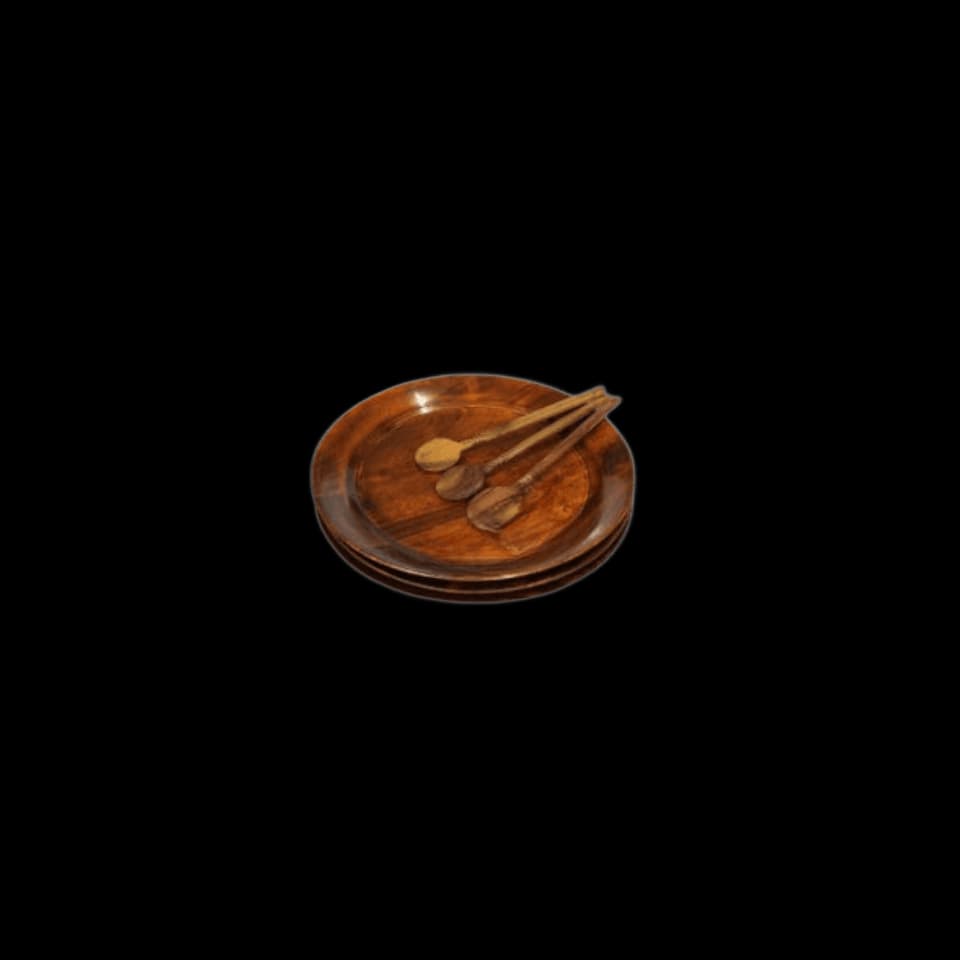
See the nested serving tray set
Browse the full Kitchen & Dining collection
See how the same wood behaves on a lathe: how a sheesham bowl is turned
Frequently asked questions
- Is sheesham wood the same as rosewood?
- Sheesham is a rosewood — its botanical name, Dalbergia sissoo, places it in the same genus as the woods generally sold as rosewood, and UK retailers most often list it as "Indian rosewood". The terms overlap because sheesham genuinely is one specific rosewood species among several hundred in the same genus, not a different wood being mislabelled.
- What changed with sheesham's CITES rules in 2022?
- At CITES' 19th Conference of the Parties in Panama in November 2022, member states agreed that finished Dalbergia sissoo items can be exported without an individual permit as part of a shipment, provided each item contains under 10 kg of actual timber. Most small furniture and homeware pieces fall comfortably under that weight.
- How long does a sheesham tree take to grow?
- Around 20 years to reach a usable trunk diameter for timber — fast compared with hardwoods that take 60 years or more, which is part of why sheesham has remained a viable working timber despite recent disease losses.
- Why are sheesham trees dying in parts of Punjab?
- A fungal dieback disease, first recorded as an epidemic in central Punjab in 1998, has caused mortality as high as 80% among sheesham planted along canal banks in surveyed areas. It's a plant-health problem, not a consequence of the furniture trade, and it affects the same province this workshop is in.
- Is sheesham wood FSC certified?
- Not on any wide, checkable scale — no FSC-certified sheesham forestry programme is in general commercial use at the volume most small workshops buy at. Treat a specific certification claim on a sheesham listing with scepticism unless the seller can actually produce it.
- Do sheesham trees need pesticides or heavy irrigation to grow?
- No — sheesham tolerates a wide range of soils, including sandy and gravelly ground, and is commonly grown along field edges and canal banks without the heavy chemical inputs some plantation timber needs. Its vulnerability comes from fungal disease in waterlogged ground, not from how intensively it's farmed.