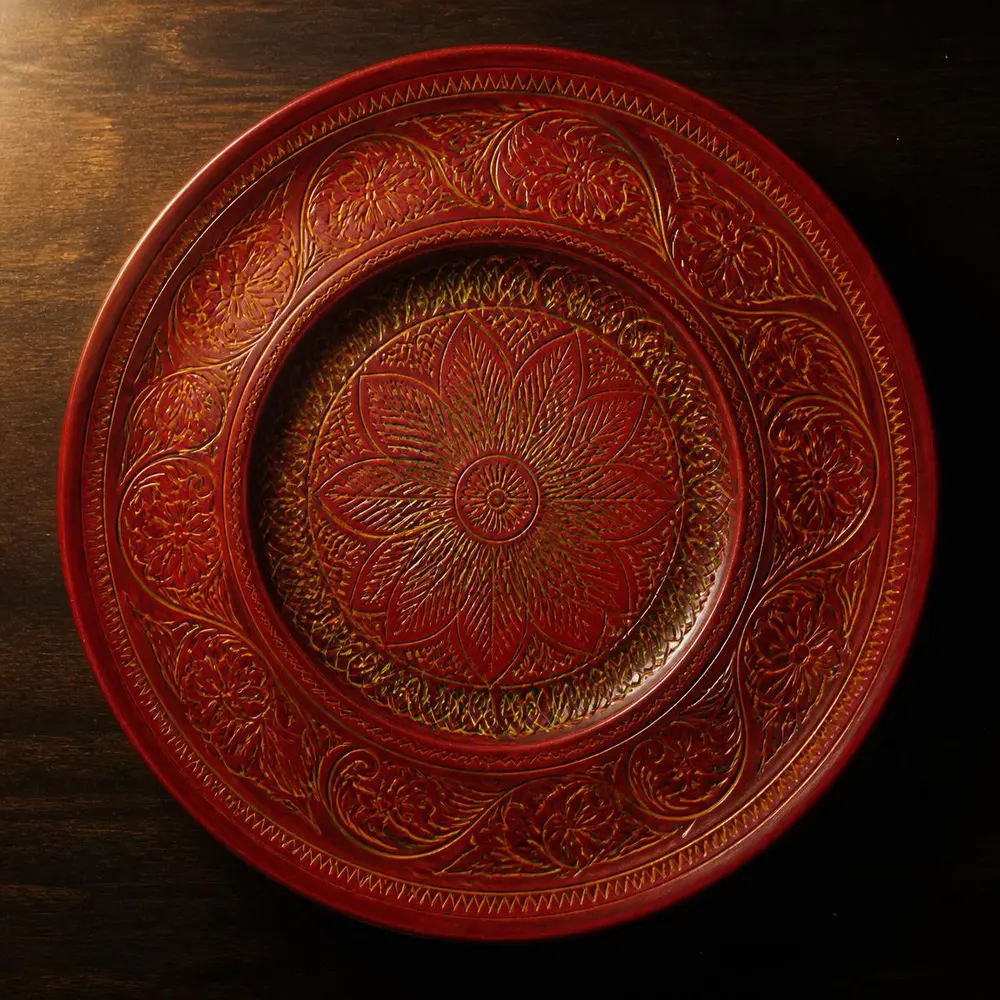
Made slowly, in Sillanwali.
A hand craft carried across a border in memory, kept alive in one small town in Sargodha.
Turned wood, coloured lac
naqshi lacquer work marries two older skills — turning wood on a lathe and working with coloured lac — into a single craft: scratch a design back through the lac and the colours beneath surface as fine rainbow lines.
The craft is passed from ustad to apprentice, hand to hand, without a written manual. The knowledge lives in the wrists.
1947 — carried across a border
At Partition in 1947, artisan families packed what mattered — their tools, their sticks of lac, and the skill in their hands — and crossed into the new Pakistan. Many settled in Sillanwali, a town in the Sargodha district of Punjab.
What could have been lost in the upheaval took root instead. Sillanwali became a centre of Pakistani lacquer woodcraft — today home to around one hundred workshops, still working ustad to apprentice.
The craft's standing was recognised internationally when naqshi work received the UNESCO Seal of Excellence in 2007.
How a rosewood disc becomes an heirloom
Every piece moves through the same four hands-on stages — the reason no two are ever identical.
- 01
Turning
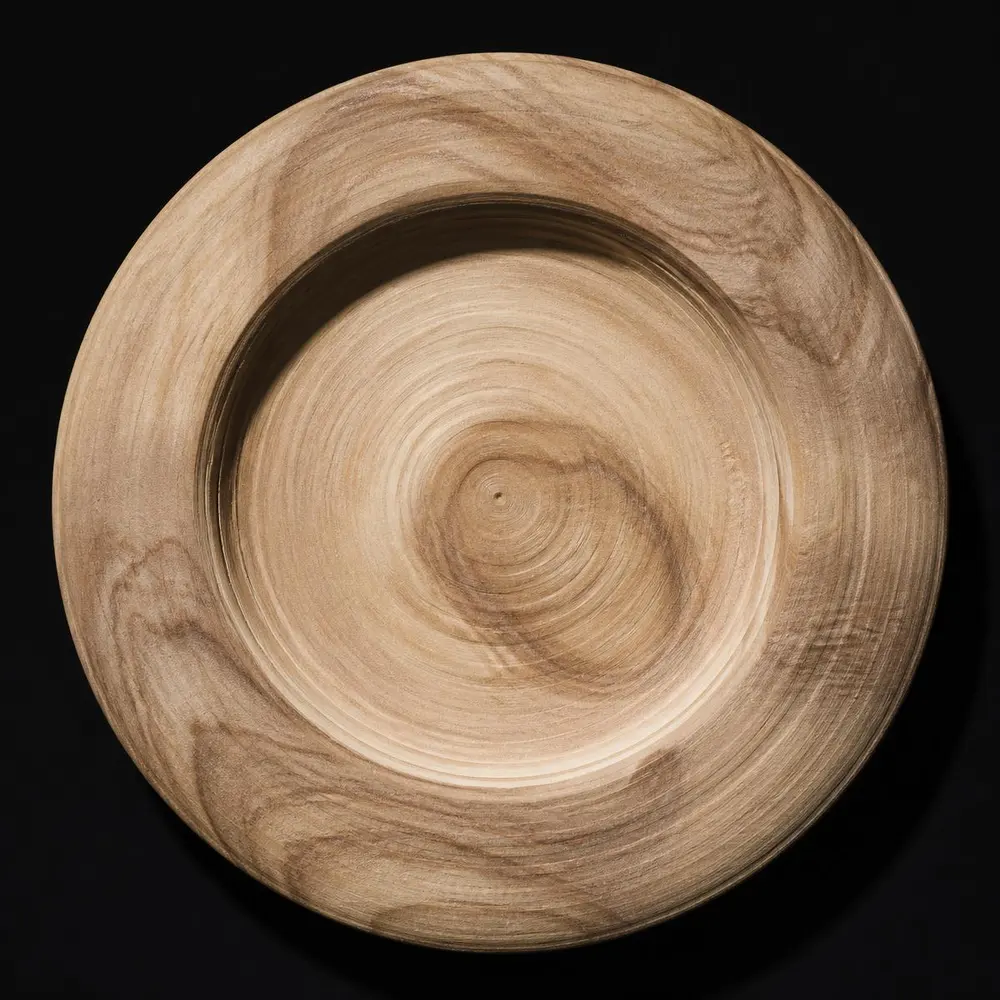
A block of sheesham is turned on the khraad until it finds its shape — a plate, a box, a bead.
- 02
Layering lac
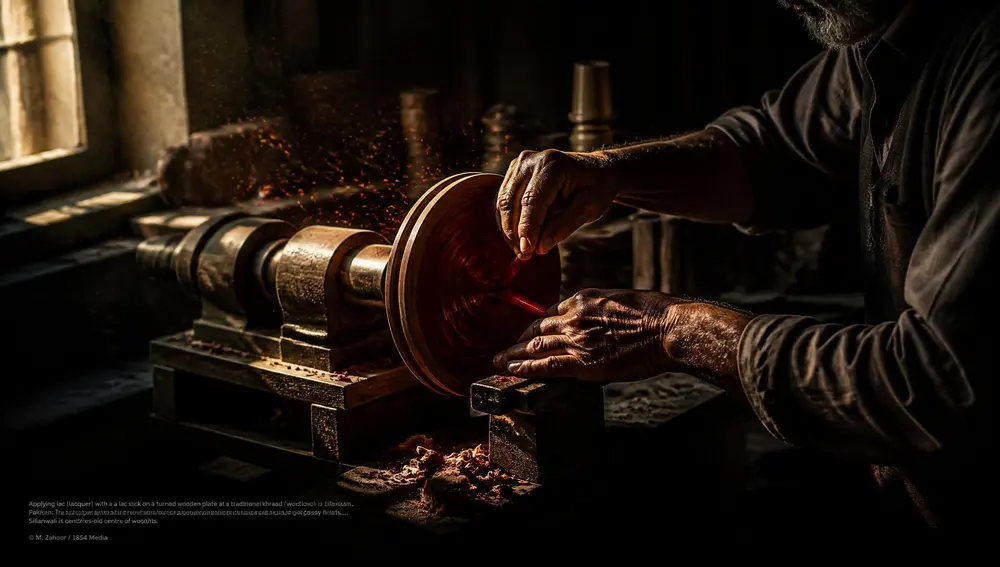
Sticks of coloured lac are pressed to the spinning wood. Friction heat melts them on in layers — red, then yellow, then green.
- 03
Scratching
The artisan scratches the design back through the layers by hand. Each cut reveals a colour beneath, so the pattern reads as rainbow lines.
- 04
Engraving
Where a piece carries a name, date, or ayat, it is engraved last — in English, Urdu, or Arabic — and confirmed with the family first.
The workshop today
We are one of Sillanwali's workshops, working the same way our craft has for generations — by hand, one piece at a time. What has changed is who the pieces are for: a plate for a nikkah, an ayat for a new home, a box named for a child, a desk set for a company.
A naqshi piece is meant to outlast the giving. Made slowly, in Sillanwali; shipped carefully, to your door anywhere in Pakistan; paid for in cash when it arrives.