How to oil a wooden chopping board (and how often, UK homes)
The oil to use on a wooden chopping board or sheesham serving board, how often UK homes actually need to reoil one, and why olive oil and ordinary coconut oil do more harm than good.
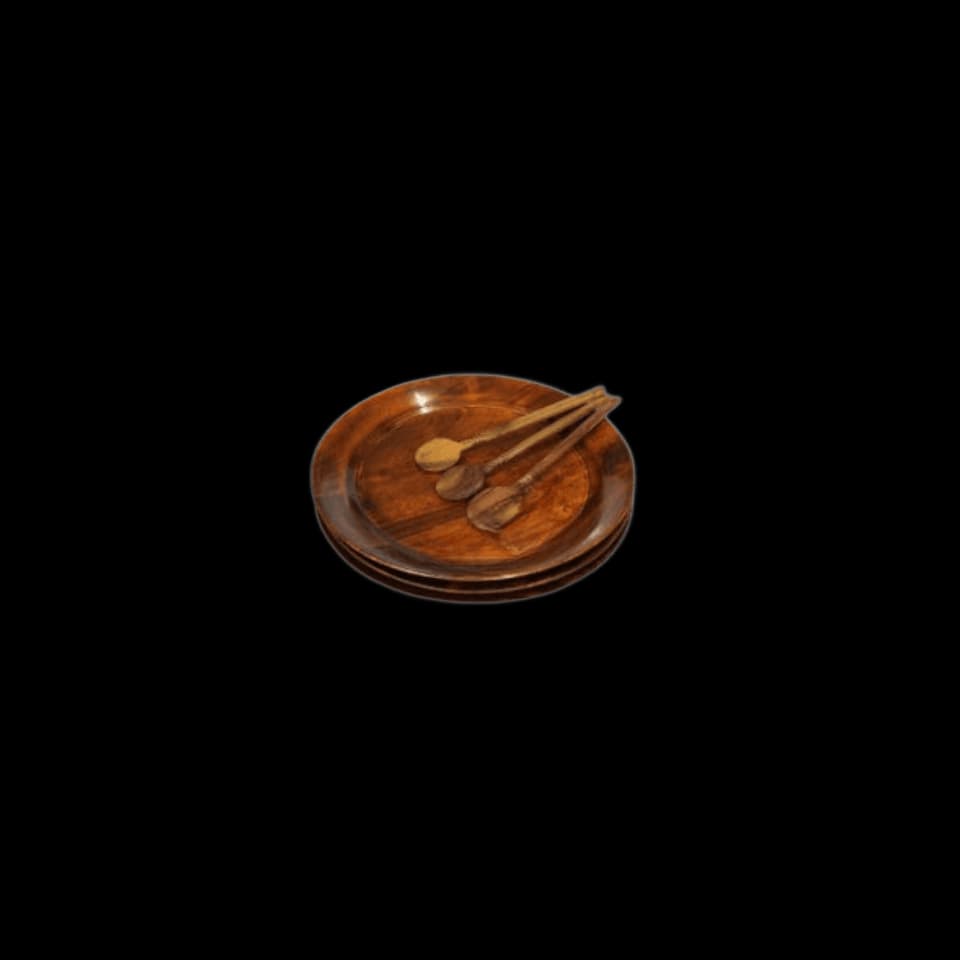
Use a food-safe mineral oil on a wooden chopping board — not olive, vegetable or ordinary coconut oil, which turn rancid inside the wood within weeks. For daily UK use, reoil a sheesham board every three to four weeks; for occasional use, every two to three months, or when water stops beading on the surface.
Which oil should you actually use on a wooden chopping board?
Food-safe mineral oil (sold as "food grade" or "butcher block" oil) is the standard choice because it never goes rancid and needs no curing time. Fractionated coconut oil — the liquid, refined kind, not the solid jar from a supermarket shelf — is a usable alternative for the same reason. A light rub of mustard oil is the traditional first-use seasoning across the subcontinent and is what we suggest before a new sheesham piece sees its first meal.
How often should you oil a sheesham board or serving plate?
Our own serving plates leave the workshop finished with a food-safe polish rather than a heavy varnish, which is deliberate — a lighter finish lets the wood breathe, but it also means the oiling schedule below actually matters rather than being a nice-to-have.
- Used most days (a chopping board, a daily rolling board): every 3–4 weeks.
- Used a few times a week (a serving board, snack plates): every 6–8 weeks.
- Used occasionally, or mainly on display: every 2–3 months.
- Any schedule, at any point: as soon as the surface looks dry, pale, or feels rough under a hand.
Can you use olive oil, vegetable oil, or coconut oil instead?
Not if you want the board to stay pleasant to use. Olive oil and other cooking oils are non-drying oils — they never fully cure inside the wood fibres, so they turn rancid in as little as four to eight weeks and leave a sticky surface with an off smell that is genuinely difficult to get back out. Solid coconut oil from a supermarket jar has the same problem in a UK kitchen once it re-solidifies at room temperature; fractionated (liquid) coconut oil doesn't, because the fraction that solidifies has already been removed.
How do you actually oil a wooden board, step by step?
- Wash with warm water and a little washing-up liquid if it needs it, then dry immediately with a tea towel and let it air-dry for a couple of hours — never oil a board that's still damp.
- Pour a small amount of oil onto the surface and rub it in with a soft cloth in circular motions, covering the edges and underside as well as the top.
- Leave it to soak in for at least 20 minutes, then wipe off anything that hasn't absorbed — a board should never feel wet or have oil running off it.
- Stand it on its edge to dry for several hours, or overnight, so both faces dry at the same rate.
How do you know a board needs oiling before it starts to crack?
Sprinkle a teaspoon of water on the surface. If it beads and sits there, the board is still sealed. If it soaks in within about 30 seconds, that's your sign — oil it that day rather than waiting for the pale, dry look to set in, which is usually a few weeks further along than the water test.
Does sheesham need oiling more than mango or acacia?
Sheesham carries natural oils in its own grain and is the most moisture-resistant of the three without a heavy finish, but that doesn't mean it can skip oiling — it means it forgives a missed month better than mango does. Mango is the most porous of the three and dries out fastest; a mango board left unoiled for a season is the one most likely to show a hairline split first.
See the full hardness and moisture comparison: sheesham vs mango vs acacia
Can a naqshi lacquer piece be oiled the same way?
No — and this is worth knowing before you reach for the same oil on a decorative piece. Anything with painted or scratched naqshi lacquer should be dusted with a dry cloth, not oiled; the lacquer is a resin layer, not bare wood, and oil sits on top of it rather than feeding the grain underneath. Plain, unlacquered sheesham — a serving plate, a chakla belan, a bowl — is the kind of piece the oiling routine above is actually for.
Why do UK homes need to oil wooden boards more than the climate they came from?
Central heating is the reason. A sheesham piece made in Sillanwali dries out gradually over a Punjabi winter; a UK home with the heating on for months at a stretch pulls moisture out of the wood far faster than that, particularly if the board sits near a radiator or in an airing cupboard. If your board seems to need oiling more often than the schedule above suggests, that's usually why — move it away from direct heat rather than assuming the wood is at fault.
Turned in the same wood: read the chakla belan buying guide
What size are the serving plates, and how are they made?
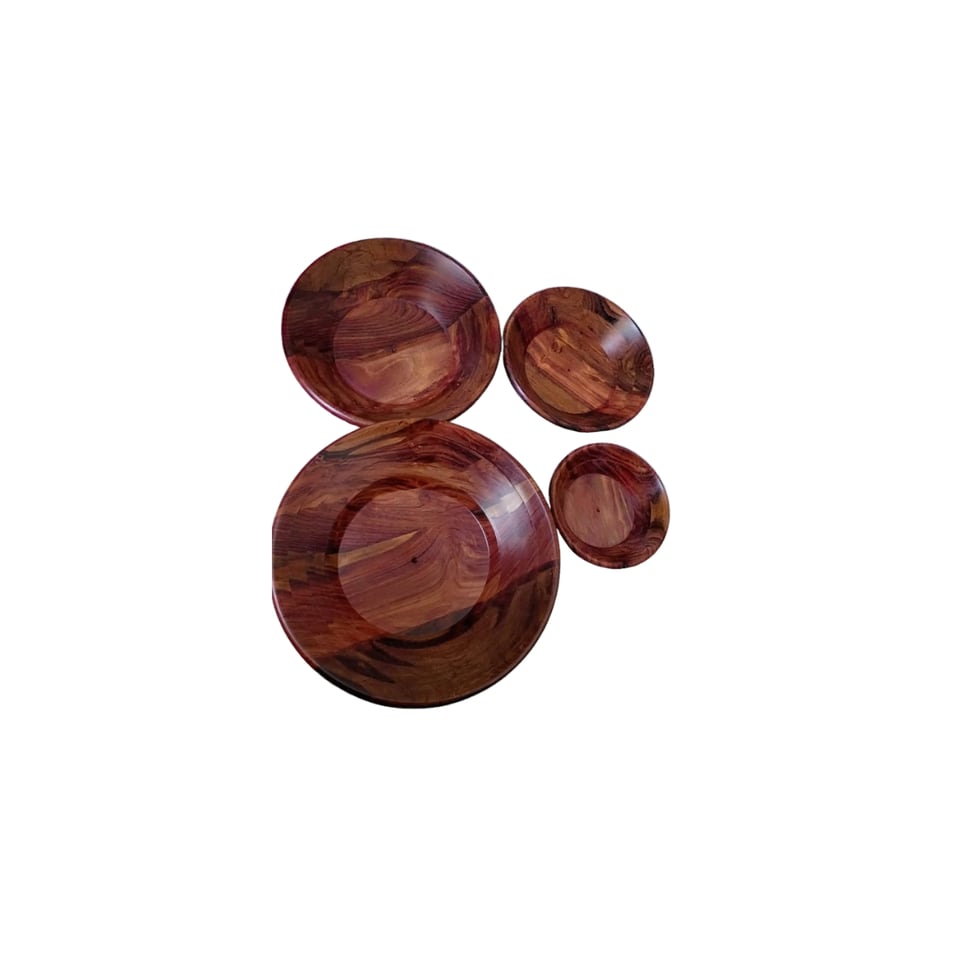
Ours are turned from solid sheesham, 18–23 cm (7–9 in) across, and sold as a set of three with two wooden spoons, or as four plates and bowls together. Each set is turned in our own workshop and ready to ship, cash on delivery anywhere in Pakistan.
See the nested serving tray set
Browse the full Kitchen & Dining collection
Also caring for wooden spoons and utensils? Read the cleaning guide
Frequently asked questions
- What oil should I use on a wooden chopping board?
- A food-safe mineral oil, sometimes sold as butcher block oil, is the standard choice — it's odourless, doesn't go rancid, and is approved for direct food contact. Fractionated (liquid) coconut oil is a workable alternative for the same reason.
- How often should I oil a wooden chopping board?
- Every 3–4 weeks for a board used most days, every 6–8 weeks for a few times a week, and every 2–3 months for occasional or display use. Oil sooner if the surface looks pale or dry, or if a few drops of water soak in rather than beading on top.
- Can I use olive oil on a wooden chopping board?
- No. Olive oil is a non-drying oil that never fully cures inside the wood, so it turns rancid within four to eight weeks and leaves a sticky, smelly surface that's hard to remove. Use a food-safe mineral oil instead.
- Is coconut oil safe for a wooden chopping board?
- Fractionated (liquid) coconut oil is fine, because the part that solidifies at room temperature has already been removed. Ordinary solid coconut oil from a supermarket jar re-hardens inside the wood pores in a UK kitchen and doesn't spread or absorb the same way.
- How do I know when my wooden board needs oiling?
- Sprinkle a little water on the surface. If it beads up, the board is still sealed. If it soaks in within about 30 seconds, it's time to oil — that test catches it earlier than waiting for the wood to look visibly dry.
- Does sheesham wood need oiling more than mango or acacia?
- Less, if anything. Sheesham carries natural oils in the grain and resists moisture better than mango without a heavy finish, so it forgives a missed month more than a mango board would. All three still need a regular oiling schedule to last.
- Can I put a wooden serving plate in the dishwasher?
- No. Wash by hand with warm water and a little washing-up liquid if needed, dry immediately, and never leave it soaking or standing in water — a dishwasher's heat and prolonged soak will crack a solid wood plate along the grain.
- Can I oil a naqshi lacquer piece the same way as a plain board?
- No. Lacquered and painted naqshi pieces should be dusted with a dry cloth rather than oiled, since the lacquer is a resin coating, not bare wood, and oil doesn't feed the grain underneath it. Oiling is for plain, unlacquered sheesham pieces meant for food, like a serving plate or a chakla belan.