Buying a chakla belan in the UK: sizes, wood and what actually lasts
What to look for in a wooden chakla belan if you are buying from the UK — sheesham vs marble, the exact sizes we turn, how to tell hand-lathed from mass-machined, and the habits that stop a board cracking.
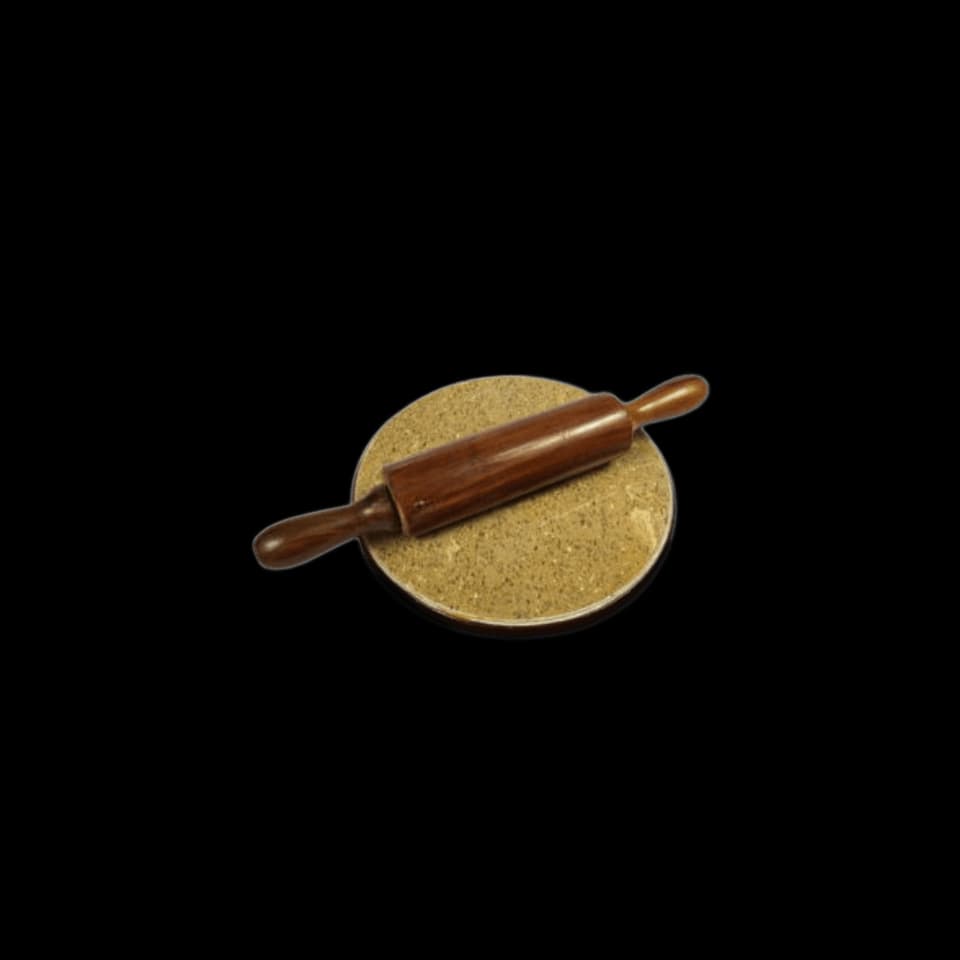
A chakla belan is the round wooden board and tapered rolling pin used for roti, chapati and paratha. In the UK you can buy one from Etsy, eBay or a South Asian grocer, or order directly from a workshop. The things that decide whether it lasts a decade are the wood, the thickness, and whether it was turned by hand.
What size is a chakla belan, exactly?
This is where most listings are vague, so here is a straight answer from the workshop floor. The board we turn in Sillanwali is 9 inches (23 cm) across. That is the size a single cook reaches across comfortably without leaning, and it is the size Punjabi kitchens have settled on over generations. Larger 11–12 inch boards exist and suit a joint-family kitchen rolling forty rotis at a sitting, but for a UK household of two to five people, 9 inches is the size you actually want.
- Board diameter: 9 in / 23 cm — our standard, and the practical size for most UK kitchens.
- Board thickness: a wooden chakla should be at least 1 in / 2.5 cm. Thin boards warp because the two faces dry at different rates.
- Belan (pin) length: 10–11 in / 25–28 cm with a taper at both ends. The taper lets you rock the pin and roll a round disc without lifting it.
- Feet: three or four low turned feet lift the board off a wet worktop. Better airflow, far less warping.
Is sheesham the same as Indian rosewood?
Effectively yes, and the naming causes real confusion when you are comparing listings. Sheesham is Dalbergia sissoo, sold in the UK as Indian rosewood or shisham. It is dense, closes tight around the grain, and takes daily use without splintering — which is why it is the standard for rolling boards across the subcontinent. Neem is sometimes offered as an alternative and is perfectly usable, though softer. Mango wood is cheaper, lighter, and dents sooner.
One point worth making plainly, because almost every UK listing gets it wrong by omission: this craft is not exclusively Indian. The workshops of Sillanwali, in the Sargodha district of Punjab, Pakistan, have turned and lacquered sheesham for around three hundred years. The same wood, the same lathe, the same tradition — a different side of a border drawn in 1947.
Sheesham or marble: which chakla is better?
Marble boards are heavy, stay cool and wipe clean easily, which makes them good for pastry. Sheesham boards are lighter, warmer to work on, and release dough more readily than a cold stone surface. If you are making roti several times a week, wood is the more comfortable everyday board. Keep marble for baking. The £4.99 marble boards common in UK shops are a different product for a different job, not a cheaper version of the same one.
How do you tell hand-lathed from mass-machined?
- Turn the board over. A hand-turned board shows faint concentric tool marks from the lathe chisel — not a perfectly uniform machined surface.
- Check whether the grain pattern differs between two boards of the same product. Identical grain across every unit means veneer or heavy machining.
- Look at the belan taper. A hand-turned taper is subtly asymmetric; a moulded one is mirror-perfect.
- Ask the seller who made it. A workshop can name the person at the lathe. A reseller cannot.
That last test is the useful one. Every piece we ship is turned to order in our own workshop rather than pulled from a warehouse — six working days from order to finished board, then shipping to the UK.
Is sheesham food-safe for direct dough contact?
Yes, and it is worth understanding why so you can judge any seller's answer. Untreated sheesham needs no coating to be food-safe; the risk in a wooden board is not the wood but a varnish or sealant that was never intended for food. Ours are finished plain, without varnish. Season a new board with food-safe mineral oil, or a light rub of mustard oil, before first use. If a listing advertises a glossy lacquered working surface, ask what the lacquer is — on a hand-painted set the decoration belongs on the edges and underside, never where the dough goes.
Plain or hand-painted?
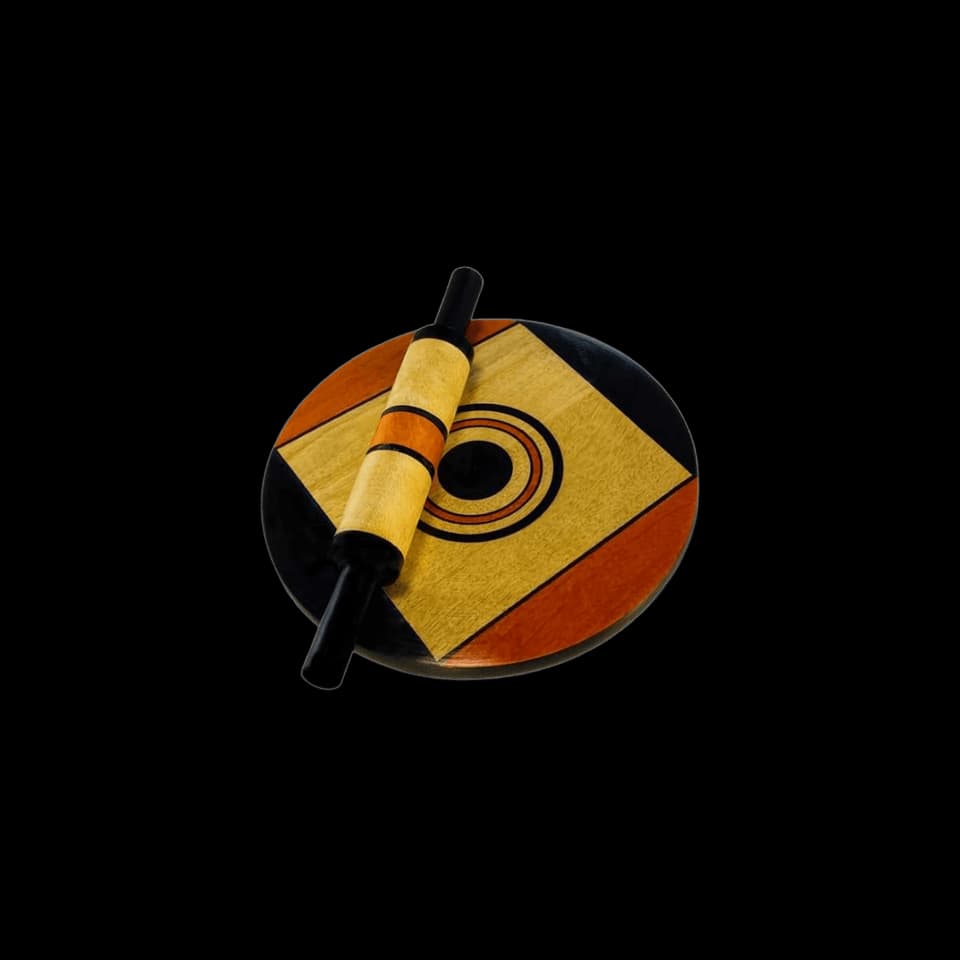
Plain sheesham is the honest daily choice — nothing to chip under the pin. Hand-painted naqshi sets carry the scratch-etched lacquer work this town is known for and are traditionally given as wedding and shower gifts. The painting sits on the rim and underside, so they remain usable rather than purely decorative.
Read how naqshi lacquer is actually made
How do you stop a wooden chakla from cracking?
- Scrape dough off with a plastic scraper and wipe with a dry cloth. Never put it in a dishwasher or under a running tap.
- If you must rinse it, dry it immediately and stand it on its edge so both faces dry evenly.
- Never leave it soaking, or flat on a wet worktop. This is the single most common cause of a split board.
- Rub in a thin coat of food-safe mineral oil monthly for the first year, then every three months.
- Store the belan beside the board, not resting on it — a damp patch under the pin dries the wood unevenly.
- UK-specific: keep it away from a radiator and out of a heated airing cupboard. Central heating dries sheesham faster than a Punjabi winter ever will.
Order a hand-turned chakla belan
Prefer a press to a rolling pin? Read the wooden roti maker guide
Frequently asked questions
- Where can I buy a handmade wooden chakla belan in the UK?
- You can buy one from Etsy or eBay sellers, from UK South Asian grocers, or directly from a workshop that makes them. Buying direct is the only way to know who turned the piece and what the finish is. We turn each chakla belan to order in Sillanwali, Pakistan, and ship to the UK.
- What size chakla belan should I buy?
- A 9 inch (23 cm) board with a 10–11 inch (25–28 cm) tapered belan suits most UK households of two to five people. Larger 11–12 inch boards are made for joint-family kitchens rolling large batches. Board thickness matters more than diameter: look for at least 1 inch.
- Is sheesham the same as Indian rosewood?
- Yes. Sheesham, shisham and Indian rosewood are all names for Dalbergia sissoo. It is the standard wood for chakla belan across Pakistan and India because it is dense, holds a smooth surface, and resists splintering under daily use.
- Which is better, a wooden chakla or a marble one?
- For daily roti, a sheesham wooden chakla is warmer, lighter and releases dough more easily. Marble suits pastry and baking, where a cool surface helps. They are different tools rather than better and worse versions of the same one.
- Why does a wooden chakla crack?
- Almost always water, or dry heat. Washing under a tap or leaving the board on a wet worktop lets it absorb moisture unevenly, and it splits along the grain as it dries. In UK homes, storing it near a radiator does the same thing in reverse. Wipe dry, stand it on edge, and oil it a few times a year.
- Is sheesham wood safe for food?
- Yes. Untreated sheesham needs no coating to be food-safe and is used across the subcontinent for boards, spoons and serving pieces. Season a new board with food-safe mineral oil or a light rub of mustard oil before first use. Be cautious about any board sold with an unspecified varnish on the working surface.
- How long does delivery to the UK take?
- Each piece is turned to order rather than held in stock, so allow six working days in the workshop before it ships. Contact us on WhatsApp for a current shipping quote and transit time to your address.