What is Naqshi lacquer woodcraft from Sillanwali, Pakistan?
Naqshi is a hand-painted and hand-scratched lacquer technique on turned sheesham wood. Sillanwali, in Sargodha district, is the centre of this craft in Pakistan.
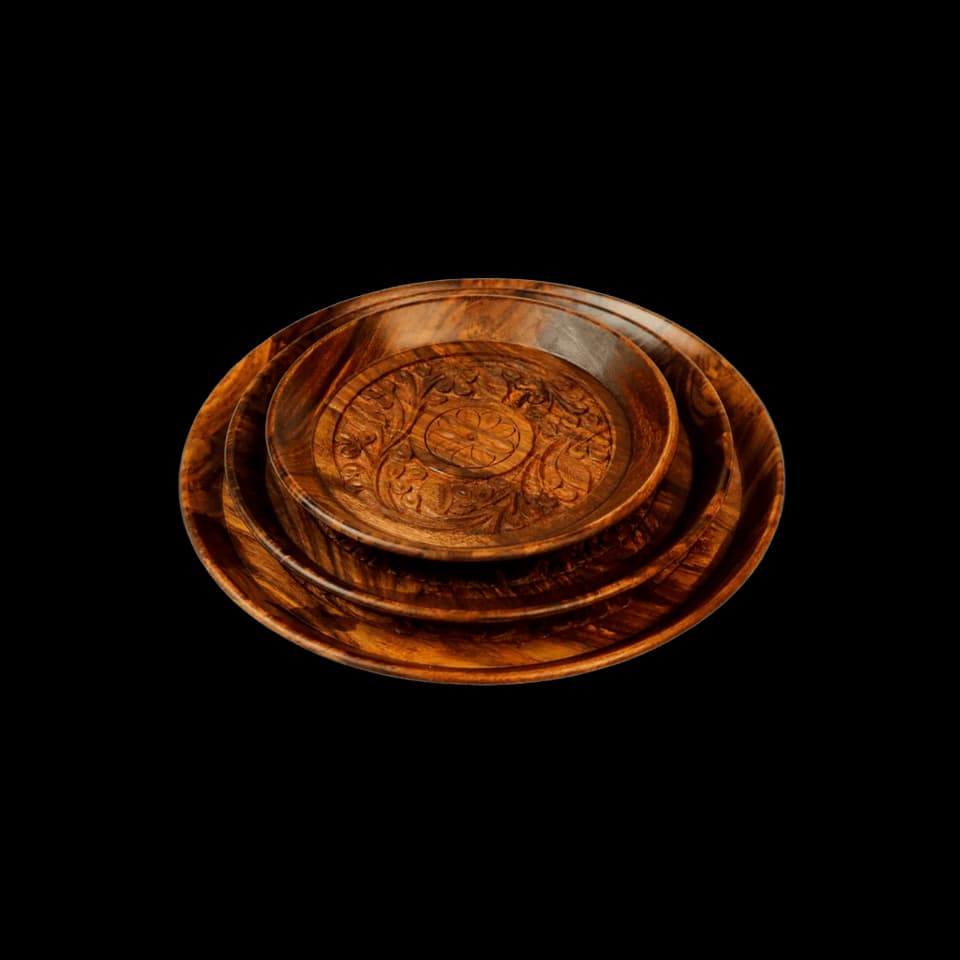
Naqshi lacquer woodcraft is a Pakistani technique in which coloured lac is layered onto lathe-turned wood, then scratched by hand so the colours beneath show through. Almost every piece starts as sheesham (Dalbergia sissoo, sold in the UK as Indian rosewood). Sillanwali, in Sargodha district, Punjab, is the craft's main surviving centre today.
Where does naqshi lacquer come from?
The technique came to Sillanwali from undivided Punjab. When the subcontinent was partitioned in 1947, artisan families carried the tools and the skill across the new border into Pakistan, and a large number settled in Sillanwali, in what is now Sargodha district. Roughly a hundred workshops in the town still work this way today, the craft passed from ustad to apprentice rather than taught in a classroom.
What does the word 'naqshi' actually mean?
Naqshi describes one specific stage of the process, not the whole craft. Coloured lac is melted onto the turned wood in layers first; naqshi is the scratching or engraving of that lac surface by hand, so the colour beneath the cut shows through the top layer. A piece that is only painted, or only carved, is not naqshi in the strict sense — the term refers specifically to this scratch-and-reveal technique.
How is a naqshi piece made, step by step?
- Khraad (lathe): the wood is turned into a bowl, tray, vase, box, or table leg.
- Lac layers: coloured lac is applied in layers while the piece still spins.
- Scratching (naqshi): the design is scratched back by hand so under-colours appear.
- Carving: some pieces are hand-carved instead of, or as well as, painted.
- Finish: the piece is polished. Food-contact items often use a steel insert so the wood stays dry.
Because every step is done by hand, grain, carving depth, and colour shift a little from piece to piece. That variation is normal. It is also why photos are a guide, not a pixel match.
Is naqshi lacquer made only in Pakistan, or in India too?
Lac-turnery as a broad craft — wood turned on a lathe and coated in coloured lac — has a shared history across the wider subcontinent, and lacquered wooden kitchenware is sold today as Indian largely because Indian marketplaces dominate the English-language search results for it. The naqshi scratch-technique specifically concentrated in Sillanwali after the craftsmen who carried it crossed into Pakistan in 1947, and that is where it has been made continuously since. A piece listed only as 'Indian lacquerware' online may in fact be Pakistani naqshi work, mislabelled by a reseller who doesn't know the difference.
Which wood is used, and why do UK shops call it 'Indian rosewood'?
Sheesham — Dalbergia sissoo — is the wood used for every naqshi piece we make, from decorative plates to jewellery boxes. UK timber merchants and furniture retailers commonly sell the same species as 'Indian rosewood', a trade name rather than a botanical one, largely because sheesham has historically been exported through Indian ports. The tree itself is not exclusive to India; it grows across Pakistan and northern India alike, and Sillanwali's workshops source and turn it locally.
Is naqshi lacquer food-safe?
Naqshi lacquer decoration is used on display and gift pieces — plates, clocks, boxes — rather than on surfaces meant for direct food contact. Where a naqshi piece does need to hold something, such as a dry-fruit tray, it typically takes a separate steel or glass liner so food never touches the lacquered wood directly. For anything meant to touch food or dough, we finish the wood itself rather than lacquer it, as on a chakla belan or roti maker.
How do you care for a naqshi lacquer piece in a UK home?
- Dust with a dry or barely damp soft cloth. Skip anything alcohol-based, which can dull or lift a lac finish.
- Never soak it or put it through a dishwasher — lac is a resin coating, not a waterproof sealant.
- Keep it away from radiators and direct sun. Central heating dries the wood faster than it would dry in Punjab, and the lac layer can hairline-crack if the wood beneath shrinks too quickly.
- A light coat of furniture wax once or twice a year keeps the surface fed without softening the lacquer underneath it.
How long does it take to make one naqshi piece?
Every naqshi piece we sell is turned and finished after you order rather than pulled from a shelf. The Naqshi Decorative Plate, the Naqshi Wall Clock and the Naqshi Jewellery Box each take about 10 working days in the workshop before they ship. That covers turning, several passes of lac in different colours where the piece is lacquered, and the hand-work itself — nothing is stocked pre-made, because lac and paint both need to be applied while a piece can still be worked.
What sizes and pieces does Sillanwali Handicrafts make?
- Naqshi Decorative Plate — 8, 10 and 12 in (20, 25 and 30 cm) across, sold as a graduated set of three, carved rather than lacquer-scratched.
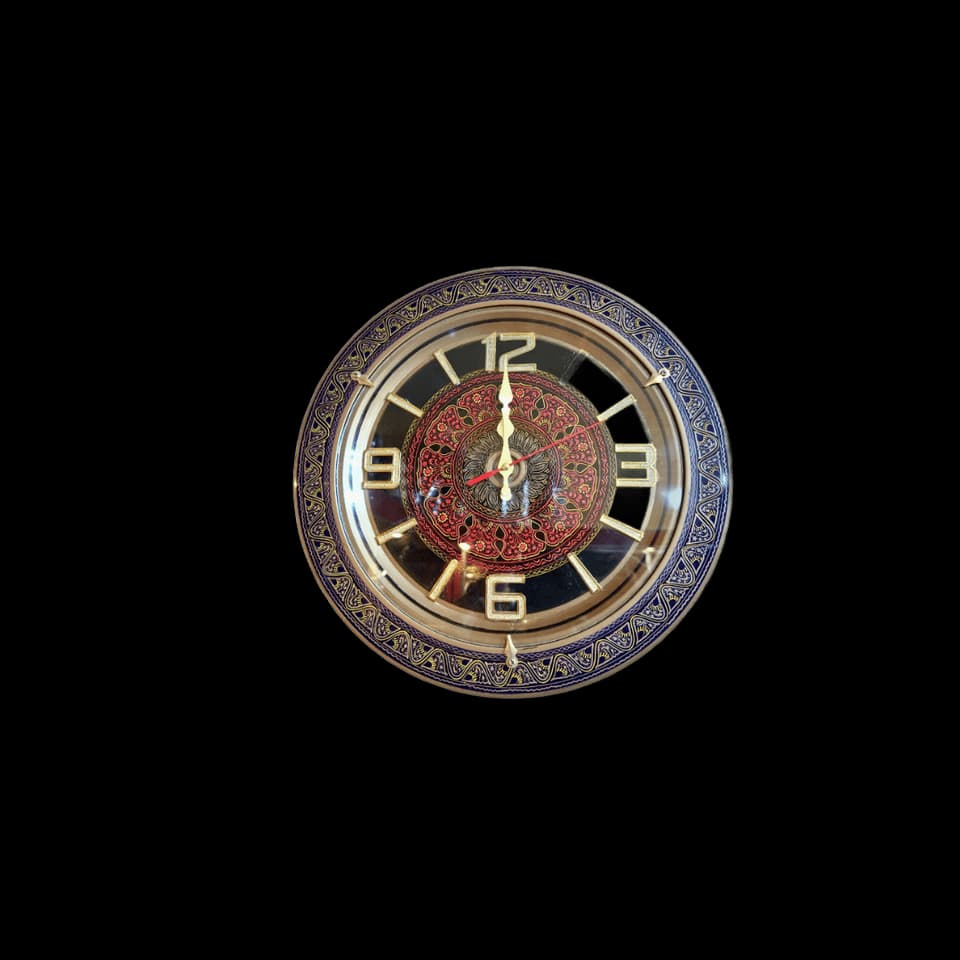
- Naqshi Wall Clock — 12 in (30 cm) across, hand-painted bezel in red-and-blue, teal or purple.
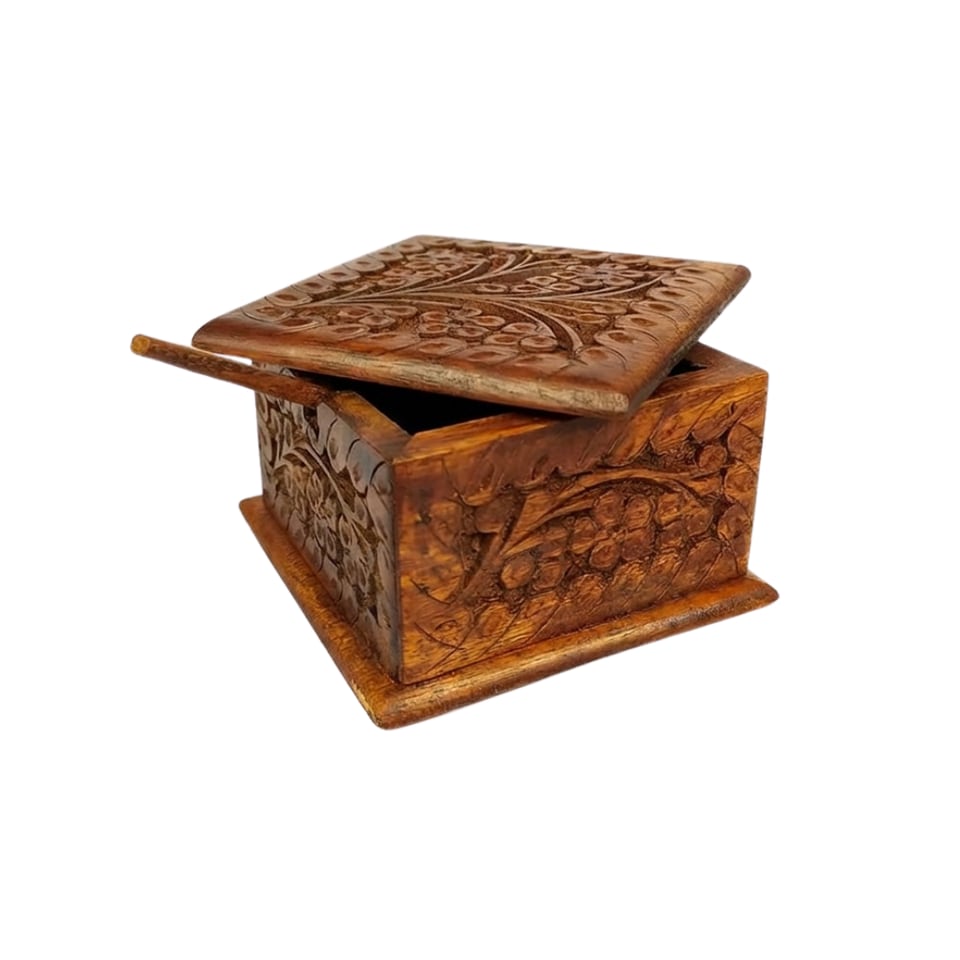
- Naqshi Jewellery Box — 6 x 4 in (15 x 10 cm) or 8 x 5 in (20 x 13 cm), carved on the lid and all four sides, with a hinged lid.
See the Naqshi Decorative Plate
Browse the Home Decor collection
Buying from the UK? Read the chakla belan guide
Full guide: caring for lacquered wood in a centrally heated home
Frequently asked questions
- Is naqshi the same as ordinary lacquer work?
- Not exactly. 'Lacquer work' is a broad umbrella term for coating wood in coloured lac. Naqshi is the specific technique of scratching or engraving that lac surface by hand once it's applied, so the colours underneath show through — a piece that's only painted or sprayed isn't naqshi in the strict sense.
- Is naqshi lacquer made only in Pakistan, or also in India?
- Lac-turnery broadly has shared roots across the subcontinent, which is why search results default to Indian sellers. The naqshi scratch-technique itself concentrated in Sillanwali, Sargodha district, Pakistan, after the artisans who carried it crossed the border at Partition in 1947, and it has been made there continuously since.
- Why do UK shops sell this wood as 'Indian rosewood' if the craft is Pakistani?
- 'Indian rosewood' is a timber trade name for Dalbergia sissoo (sheesham), not a claim about where a finished piece was made. The tree grows across both Pakistan and northern India, and the trade name stuck because the wood was historically exported through Indian ports.
- Is naqshi lacquer food-safe?
- Naqshi lacquer is used on display and gift pieces, not surfaces meant for direct food contact. Where a lacquered piece needs to hold food, such as a dry-fruit tray, it takes a steel or glass liner. Anything meant to touch food or dough, like a chakla belan, is left as finished bare wood rather than lacquered.
- How do you clean a naqshi lacquer piece?
- Dust it with a dry or barely damp soft cloth and avoid alcohol-based cleaners, which can dull or lift the lac. Never soak it or put it in a dishwasher, and keep it away from radiators — central heating dries the wood faster than it would dry in Punjab, which can hairline-crack the lac layer.
- How long does it take to make one naqshi piece?
- About 10 working days in the workshop. That covers turning on the lathe, several passes of coloured lac where the piece is lacquered, and the hand-scratching or carving itself.
- Is the naqshi lacquer craft dying out?
- Around a hundred workshops in Sillanwali still practise it, with skills passed from ustad to apprentice rather than taught formally. It remains a live, working craft rather than a museum piece, though — as with most hand skills — its future depends on enough apprentices choosing to learn it.