How do you care for lacquered wood in a centrally heated home?
Why UK central heating cracks a lacquer finish faster than age does, what humidity and radiator distance to actually keep, and how naqshi lac differs from the lacquer on ordinary furniture.
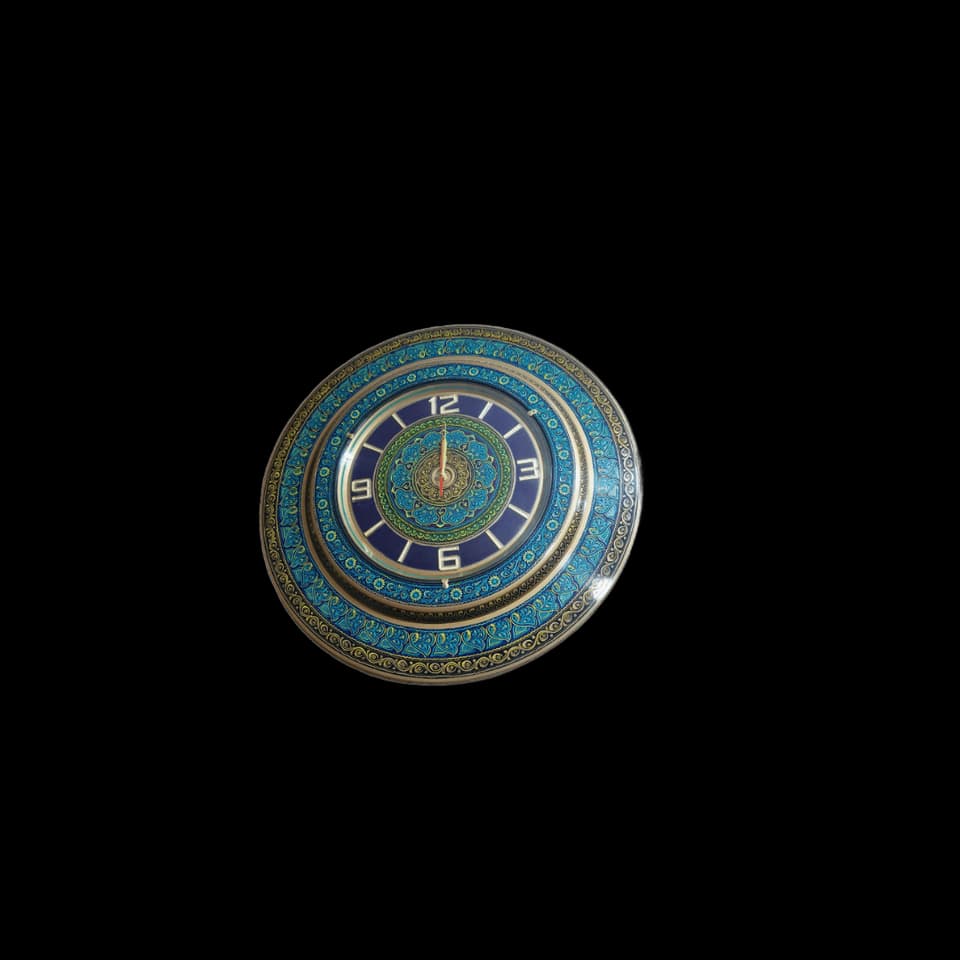
Keep lacquered wood at least a metre from radiators and out of direct sun, dust it with a dry or barely damp cloth, and hold indoor humidity between 40% and 60%. Central heating dries the air faster than wood can adjust, and that mismatch is what actually cracks a lacquer finish — not age.
How do you stop lacquered wood cracking in a centrally heated home?
UK homes run their heating for months at a stretch, and that steady warm, dry air pulls moisture out of solid wood faster than the piece can adjust — the surface dries and shrinks before the core does, and the lac or lacquer layer on top splits along the grain under that stress. Keeping a piece at least a metre from any radiator, and off a windowsill that gets direct sun, removes the sharpest source of that stress without needing to do anything else.
Naqshi lac is built up in coloured layers — usually red, then yellow, then green — before the top colour is scratched back to make the pattern, so a hairline crack in the finish tends to show as a thin line of a different colour rather than a plain split in a single-colour coating. That's often the first visible sign a piece has dried out too quickly, sometimes before the crack is even wide enough to feel with a fingernail.
What humidity level is safe for lacquered wood indoors?
Aim to keep the room a lacquered piece lives in somewhere between 40% and 60% relative humidity. A winter with the heating on can push a closed room down to 15–25%, which is dry enough to shrink solid wood measurably — a small hygrometer from a hardware shop is the only reliable way to know where a room actually sits, rather than guessing from how the air feels.
How far should a lacquered piece sit from a radiator or a sunny window?
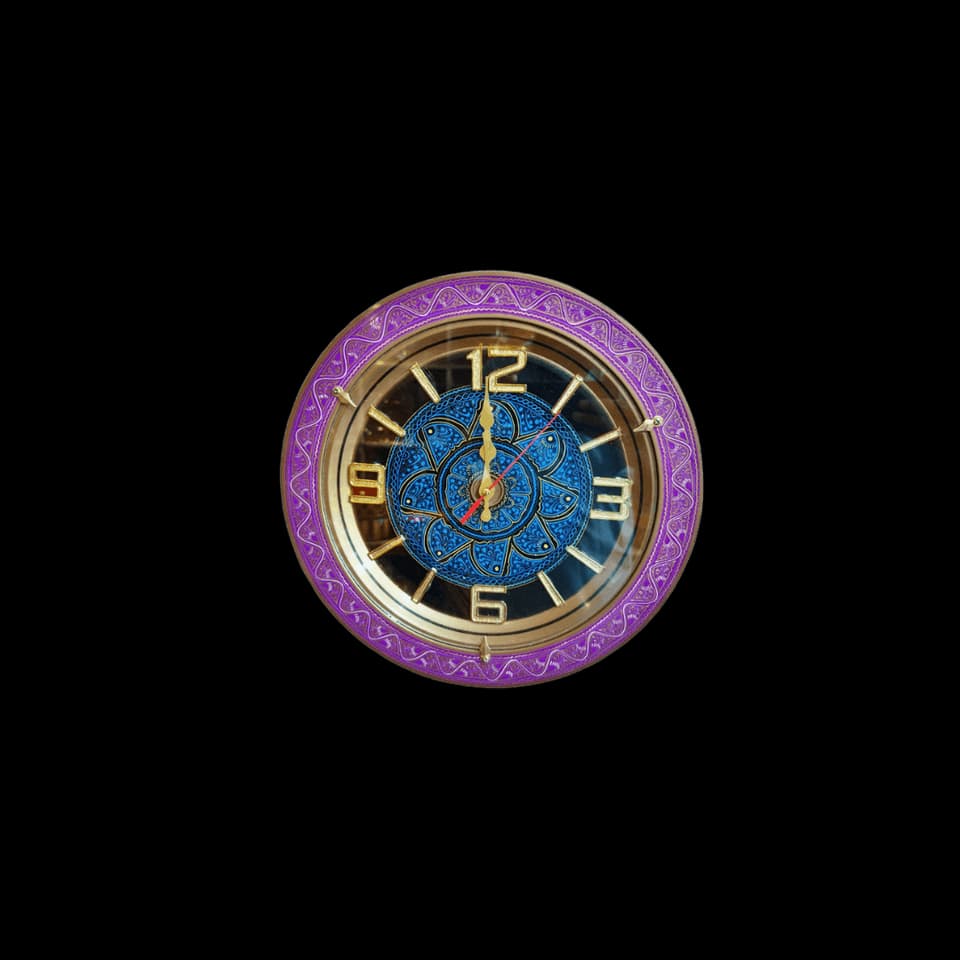
About a metre is the distance UK furniture-care guidance gives for keeping any solid wood or lacquered piece clear of a direct heat source, and it applies as well to a wall clock as to a dining table. Direct summer sun through a window dries wood one-sidedly in much the same way a radiator does in winter, so the same distance is worth keeping from a sunny sill.
Is naqshi lac the same as the lacquer on ordinary furniture?
No. Most furniture described as 'lacquered' in the UK has a sprayed synthetic coating — nitrocellulose or a catalysed lacquer — applied as a liquid finish. Naqshi lac is a natural resin, melted onto the wood by friction while it spins on the khraad lathe and then scratched back by hand so the colours beneath show through; it behaves closer to a dyed shellac than a modern spray finish, which is why alcohol-based cleaners and wipes are worse for it than they'd be for a sprayed lacquer top coat. Care advice written for a sprayed factory lacquer — the kind found on most dining-table advice pages — doesn't automatically transfer to a hand-scratched lac finish for this reason, even though the two look similar at a glance.
What's the safest way to dust and clean a lacquered piece?
- Dust with a dry or barely damp microfibre cloth, flicking dust away rather than rubbing — rubbing hard enough to shift ordinary dust can leave faint hairline scratches in a lac surface over time.
- Wipe up a spill immediately rather than leaving it to sit; lac is a resin coating, not a waterproof seal.
- Skip alcohol-based cleaners, wet wipes and spray polishes, all of which can dull or lift the lac.
- Never soak a piece or put it through a dishwasher, even if part of it looks like it could take water.
Can you use furniture polish or a spray cleaner on lacquered wood?
Better not to. Most spray polishes and all-purpose furniture cleaners are formulated for varnished or painted wood, and can leave a faintly tacky film or dull a lac surface if used repeatedly. If dusting alone isn't enough, a plain soft cloth and, at most, the thin wax coat described further down is the safer routine — nothing marketed as 'wood polish' or 'multi-surface cleaner' has lac specifically in mind.
What's a simple placement checklist for a lacquered piece in a UK home?
- At least a metre from any radiator, wood burner or underfloor heating vent.
- Off a windowsill that gets direct sun for more than an hour or two a day.
- Away from a kettle, hob or bathroom, where steam causes sudden humidity swings.
- Somewhere stable, rather than a spot where it gets knocked or handled daily.
Why has my lacquered piece gone cloudy or developed a pale mark?
A pale, milky patch under the finish is usually moisture trapped just below the surface — condensation from a hot mug, a damp cloth left too long, or steam from a nearby kettle. It's a sign the piece sat somewhere too wet or too warm for a few minutes, not that the finish has failed outright, so the first move is to shift the piece away from that source and let it dry out gradually rather than wiping it with anything stronger than a soft cloth.
Should you wax or oil a lacquered piece, and how often?
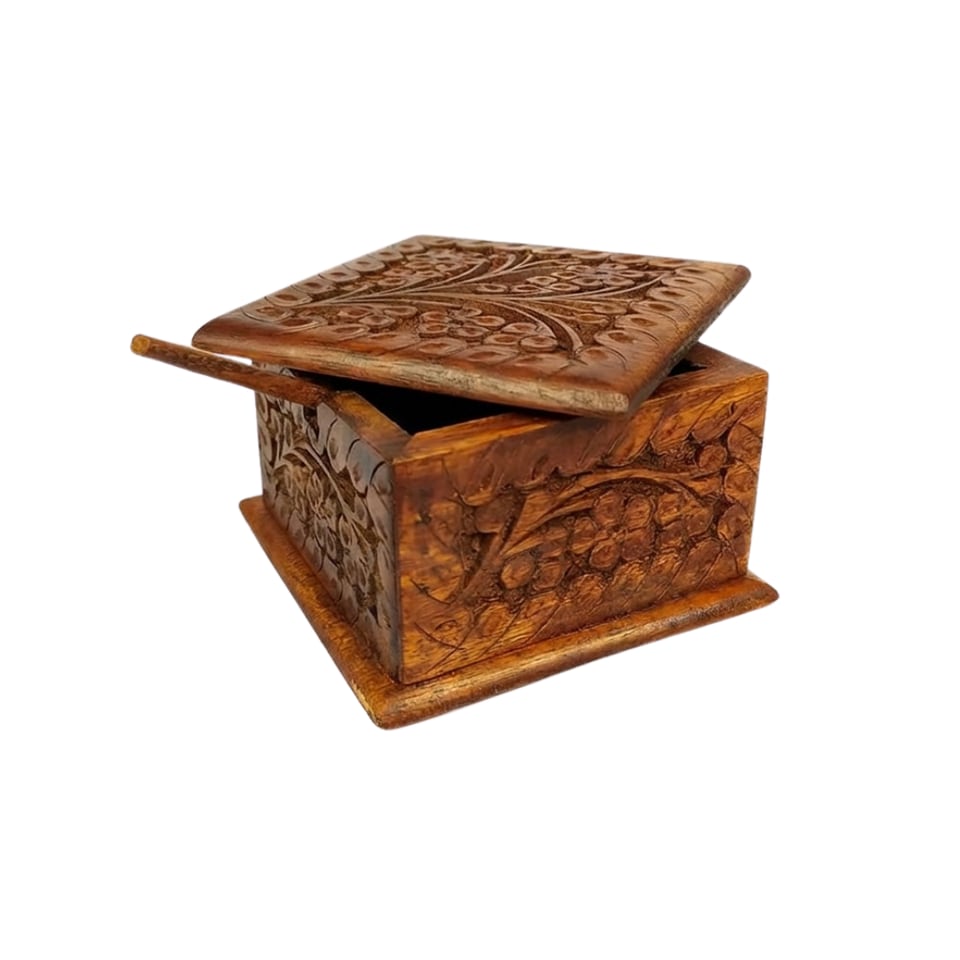
Wax, not oil. A thin coat of clear furniture wax worked in with a soft cloth once or twice a year feeds a lacquered surface without softening the lac underneath it. Oil is for bare, unfinished wood — a chakla belan board or a roti press, where there's no lac layer for the oil to sit on top of — so keep the two routines separate rather than treating every wooden piece in the house the same way. A piece that's handled daily, like a jewellery box opened each morning, is worth checking more often than one that only ever sits on a shelf, simply because it picks up more hand oil and dust in the process.
How long does a naqshi lacquer finish last before it needs any attention?
With the radiator distance and humidity habits above, a naqshi lac finish on a piece we make — a wall clock, a decorative plate, a jewellery box — should need nothing beyond dusting and an occasional wax for years. The Naqshi Wall Clock is 12 in (30 cm) across and takes about 10 working days to turn, layer and hand-scratch, and the same lac and turning process goes into the Naqshi Decorative Plate and Naqshi Jewellery Box. If a piece has genuinely dulled or hairline-cracked after sitting unprotected near a heat source for a long stretch, re-lacquering is a specialist job rather than a home fix — re-melting and re-scratching lac by hand takes the same skill it took to apply it in the first place, not a coat of varnish over the top.
Frequently asked questions
- How do you stop lacquered wood cracking in a centrally heated home?
- Keep it at least a metre from a radiator or direct sun, and keep the room's humidity between 40% and 60% if you can — a cheap hygrometer shows where a room actually sits. Central heating dries wood faster than it can adjust, and that mismatch is what splits a lac layer, not the passage of time.
- Is naqshi lac the same as the lacquer on a dining table?
- No — most furniture lacquer sold in the UK is a sprayed synthetic coating, while naqshi lac is a natural resin melted onto the wood by hand while it spins on the lathe, then scratched back to reveal the colours underneath. It behaves more like a dyed shellac, so it's more sensitive to alcohol-based cleaners than a sprayed lacquer top coat.
- What humidity is safe for a lacquered piece indoors?
- Somewhere between 40% and 60%. UK central heating can push a closed room down to 15–25% over a winter, which is dry enough to shrink solid wood measurably and put stress on the lac layer sitting on top of it.
- What's the safest way to dust a lacquered piece?
- A dry or barely damp microfibre cloth, flicking dust away rather than rubbing — rubbing hard enough to shift ordinary dust can leave faint hairline scratches in the lac surface over time. Wipe up any spill immediately rather than leaving it to sit, since lac isn't a waterproof seal.
- Why has my lacquered ornament gone cloudy?
- A pale, milky patch under the finish is usually trapped moisture — condensation from a hot drink, a damp cloth left too long, or nearby steam — rather than a failed finish. Move the piece away from the source and let it dry out gradually rather than wiping it with anything stronger than a soft cloth.
- Should I wax or oil a lacquered piece?
- Wax, not oil. A thin coat of clear furniture wax once or twice a year feeds a lacquered surface without softening it; oil is for bare, unfinished wood like a chakla belan board, where there's no lac layer for the oil to sit on top of.
- How far should a lacquered piece be kept from a radiator?
- About a metre, which is the standard UK furniture-care distance for any solid wood or lacquered item near a heat source. The same distance is worth keeping from a sunny windowsill, since direct sun dries wood one-sidedly in much the same way a radiator does.