Wooden roti makers in the UK: sizes, wood and what actually lasts
What to look for in a wooden roti press if you're buying from the UK — the size that matters, why sheesham holds up at the hinge, press vs rolling pin, and how to keep it working for years.
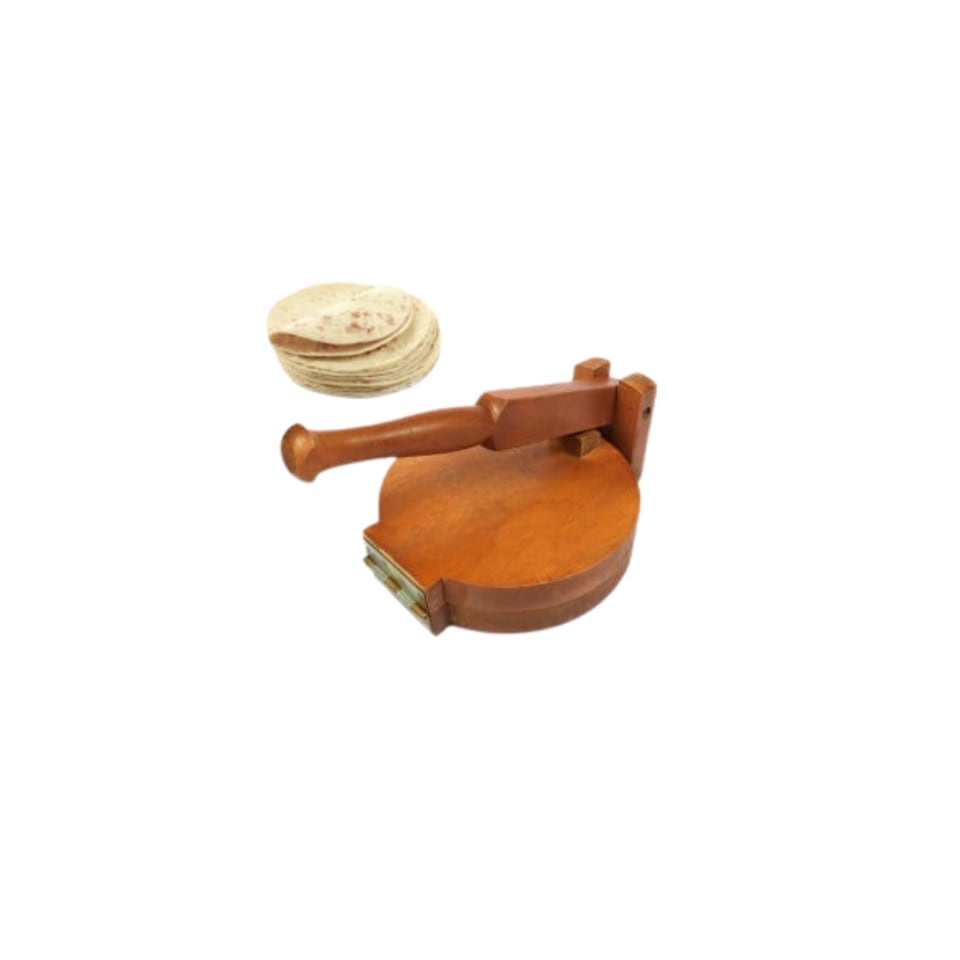
A good wooden roti maker for UK kitchens is a hinged sheesham press about 9 inches (23cm) across, built thick at the hinge so it won't loosen with daily use. It flattens dough into an even round in one push, no rolling needed, and needs only a wipe and occasional oiling to last for years.
How does a wooden roti press actually work?
A ball of dough sits on the base plate, you close the hinge and press the handle down once, then lift and peel off a flat, even round — no rolling pin, no wrist work. Ours is a single hinged sheesham unit, 9 in (23 cm) across, so one press covers a normal-size roti in one go rather than several passes.
What size roti press should you buy?
UK listings vary a lot on size, from small palm-width units to full plates, and the photo alone rarely tells you which you're getting. One marketplace listing we checked runs 9 cm across and 11 cm tall — a compact size built for a small paratha, not a full roti. Ours is 9 in (23 cm) across — the same working diameter as our chakla belan rolling board — sized for an everyday roti rather than a mini one.
- Roti press diameter: 9 in / 23 cm — matches a standard rolling-board roti.
- Hinge and plate thickness: built solid enough that thousands of presses don't work the joint loose, the usual failure point on a thin softwood press.
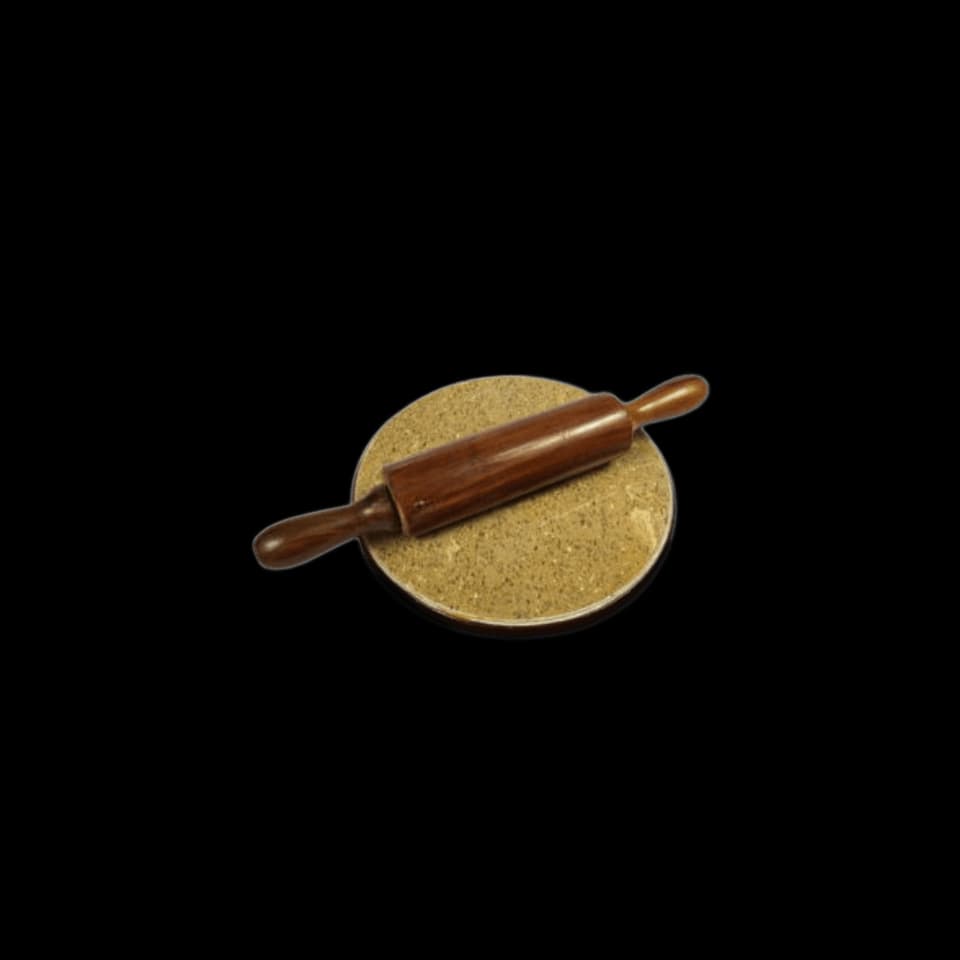
- Compare to a chakla belan board, also 9 in / 23 cm, if you're deciding between a press and a rolling pin.
What does a wooden roti press cost in the UK?
Basic wooden datta presses on UK marketplaces run from around £14 to £15, rising for carved or decorated versions. That's a small outlay set against years of daily pressing, provided the hinge is dense enough wood to take the repeated pressure without working loose — which is where a lot of the cheapest listings cut corners.
Is sheesham the right wood for a roti press?
Yes. Sheesham — Dalbergia sissoo, sold in the UK as Indian rosewood — is dense enough to take thousands of presses without the hinge working loose, which is the main way a cheaper softwood press fails. It's the same wood we turn for chakla belan boards and rolling pins, for the same reason: it holds up under repeated pressure without splitting along the grain.
Steel and cast-iron datta presses are common too, and some cooks prefer the extra weight for even pressure. A wooden press needs no seasoning, doesn't rust in a humid UK kitchen, and stays cool enough to pick up barehanded straight after use — the trade-off most buyers are making when they choose wood over metal.
"Datta press", "roti press", "chapati press" — same thing?
Yes, it's mostly regional naming rather than different products. UK South Asian grocers and marketplaces often list the tool as a "datta press", while diaspora buyers searching in English more often type "roti press" or "chapati press" — all three describe the same hinged plate-and-lid press.
Is a roti press better than a rolling pin?
For a household making roti most days, a press is faster and more consistent — it flattens the whole dough ball in one motion instead of several passes, and it's far easier on the wrist over a week of cooking. If you make roti only occasionally, or want the thinner, hand-worked edge a rolled paratha gets, a chakla belan is still the better tool. Many kitchens keep both rather than choosing one.
Compare it to a rolling board: read the chakla belan guide
Can a wooden roti press make puri and paratha too?
It presses puri dough the same way as roti, in one motion, and most UK listings market the same tool for both. Paratha usually still needs a rolling pin for the folding and re-rolling stages that give it its layers, so a press replaces the belan for roti and puri but not for a layered paratha.
How do you clean and care for a wooden roti press?
- Wipe off flour and dough with a dry or barely damp cloth; never soak it or put it in a dishwasher.
- Keep it away from a radiator or an airing cupboard — central heating dries sheesham faster than it dries in Punjab, and a dried-out hinge is what eventually cracks.
- Rub a little food-safe mineral oil into the plates every few months so the press keeps releasing dough cleanly instead of sticking.
How long does delivery to the UK take?
Ours is ready to ship from the workshop and delivered within 3 to 4 days anywhere in Pakistan, cash on delivery. For a UK address, contact the workshop for a current shipping quote and transit time.
See the chapati tong for turning roti after pressing
Frequently asked questions
- How does a wooden roti press work?
- You place a ball of dough on the base plate, close the hinge, press the handle down once, then lift and peel off a flat, even round. It replaces rolling with a rolling pin — no wrist work, and one motion per roti.
- What size roti press should I buy?
- Check the diameter before buying, since photos alone don't show scale and UK listings vary from palm-sized units to full plates. Ours is 9 in (23 cm) across, the same working diameter as a standard chakla belan rolling board.
- Is sheesham a good wood for a roti press?
- Yes. Sheesham (Dalbergia sissoo, sold in the UK as Indian rosewood) is dense enough to take thousands of presses without the hinge working loose, which is the usual failure point on a thinner softwood press.
- Is a datta press the same as a roti press?
- Yes. "Datta press" is the name UK South Asian grocers most often use; "roti press" and "chapati press" are the same hinged plate-and-lid tool under different regional names.
- Is a roti press better than a rolling pin?
- For roti made most days, a press is faster, more consistent, and easier on the wrist. For occasional cooking, or for the thinner edge a hand-rolled paratha gets, a chakla belan rolling board and pin is still the better tool — many kitchens use both.
- Can a wooden roti press make puri or paratha?
- It presses puri dough the same way as roti. Paratha usually still needs a rolling pin for its folding and re-rolling stages, so a press covers roti and puri but not a layered paratha.
- How do you clean a wooden roti press?
- Wipe it with a dry or barely damp cloth — never soak it or put it in a dishwasher. Keep it away from radiators, and rub in a little food-safe mineral oil every few months so it keeps releasing dough cleanly.
- How long does a wooden roti press take to arrive in the UK?
- Each press is turned and hinged to order rather than held in stock, so allow seven working days in the workshop before it ships. Contact us on WhatsApp for a current UK shipping quote and transit time.