Wooden masala dabba in the UK: what to look for
What actually matters when buying a wooden spice box in the UK — compartment count, sheesham vs mango wood, glass lid vs wood lid, and how it's different from the traditional round steel dabba.
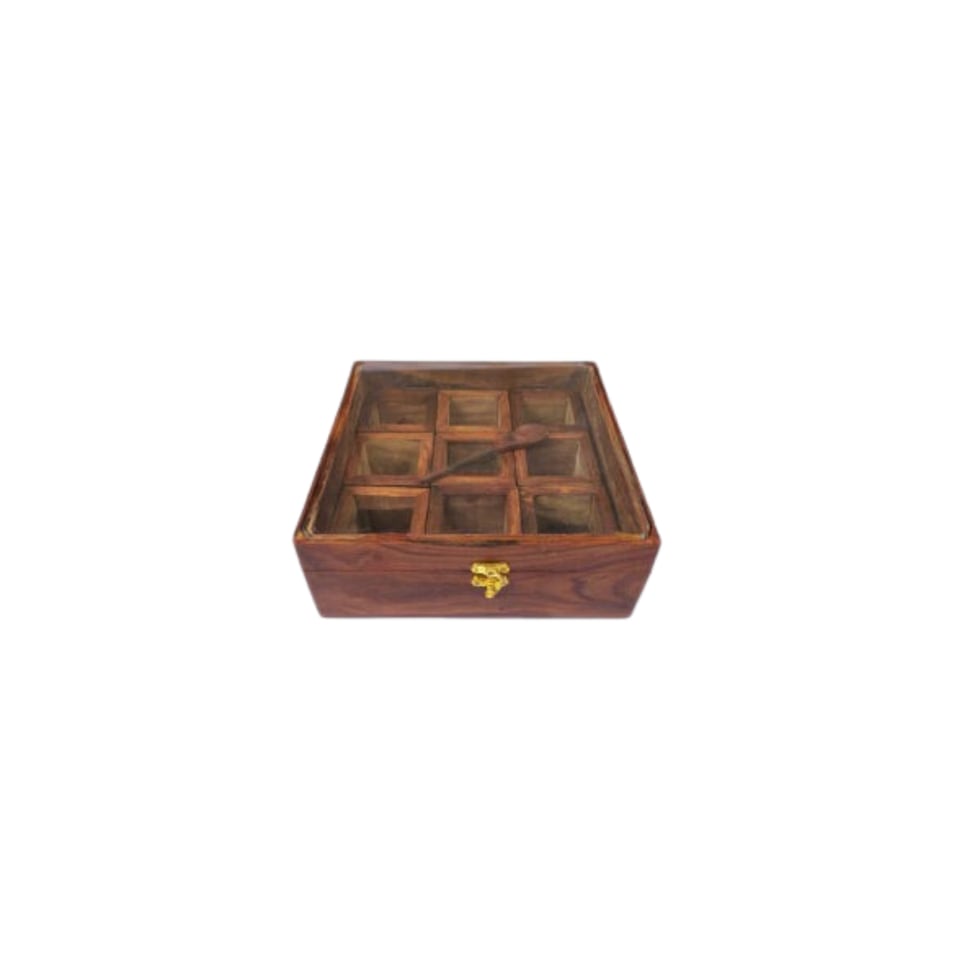
A good wooden spice box for a UK kitchen has enough compartments for your everyday spices, a wood dense enough not to warp near a hob, and a lid you can see through without opening it. Sheesham is the standard wood; glass is the more practical lid.
What is a masala dabba?
A masala dabba is a spice box that keeps the small amounts of ground spice a South Asian kitchen reaches for daily — turmeric, chilli, cumin, coriander — in one container instead of a row of separate jars. The traditional design, still the one most UK retailers stock, is a round steel tin with seven small katori bowls arranged in a circle under one lid.
How many compartments does a wooden spice box need?
Seven is the traditional count, sized for the core spices used in daily cooking, but it doesn't leave room for anything extra. Ours is turned square with nine compartments — 9 in (22.9 cm) across — which covers the traditional seven plus two more without the box getting any bigger to hold.
- Traditional round dabba: 7 compartments, steel, no lid visibility.
- Ours: 9 compartments, sheesham wood, square, glass lid, 9 x 9 in (22.9 x 22.9 cm).
- A small spoon sits inside; a small clasp holds the lid shut in transit and in a drawer.
What does a wooden spice box cost in the UK?
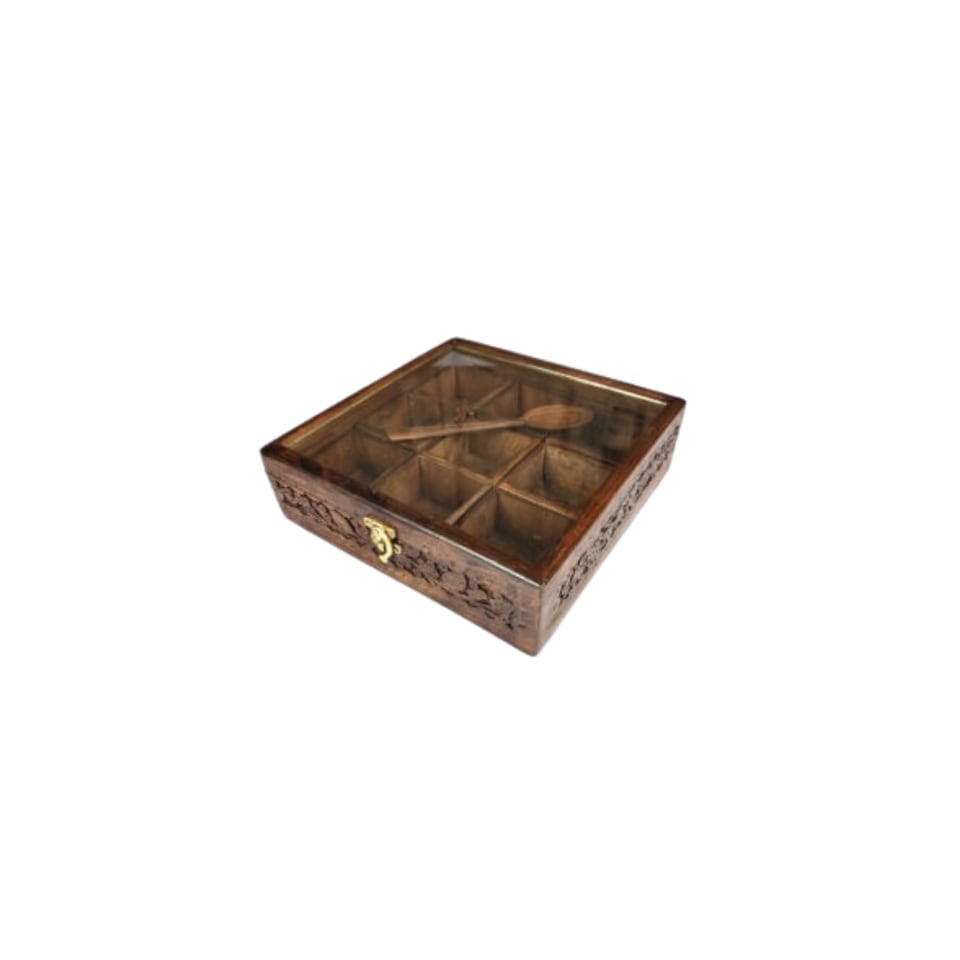
Prices vary a lot by wood and lid type. A sheesham masala dabba with a glass lid and nine compartments runs around £17 on UK marketplaces, while a mango-wood version with FSC certification from a mainstream homeware retailer sits at a similar level. Hand-carved sides, like the option we offer, generally cost more than a plain-sided box of the same size, because carving adds hours of hand work after the box itself is turned.
Is sheesham or mango wood better for a spice box?
Both are used in UK spice boxes and both are genuine, sustainably grown hardwoods — mango is a fast-growing fruit-tree by-product, sheesham (Dalbergia sissoo, sold in the UK as Indian rosewood) is denser and slightly heavier for its size. For a box that sits by a hob and gets opened several times a day, the denser wood holds its shape better against heat and steam over years of use; for occasional or display use, mango is a lighter, equally legitimate choice.
Should the lid be glass or solid wood?
A glass lid lets you see which compartment is running low without opening the box, which matters most for spices used daily and least for ones you reach for occasionally. A solid wood lid hides the contents but seals slightly better against light, which fades ground spice colour faster than a lidded tin would. Ours is glass, set into a sheesham frame, so you keep the visibility without a bare glass edge in the kitchen.
What spices go in a nine-compartment spice box?
The traditional seven-compartment fill is turmeric, red chilli powder, cumin seeds, coriander, mustard seeds, garam masala and salt — the spices most UK South Asian kitchens reach for on a normal cooking day. The two extra compartments on a nine-slot box give you room for a couple of less-common everyday spices, such as fenugreek or a second chilli variety, without needing a separate jar on the shelf.
- Turmeric
- Red chilli powder
- Cumin seeds
- Coriander
- Mustard seeds
- Garam masala
- Salt
How do you clean a wooden spice box?
Wipe the wood with a dry or barely damp cloth — spice powder and turmeric stain wood on contact if left wet, so don't let a damp cloth sit on it. The glass lid can be cleaned separately with a standard glass cleaner; keep it away from the wood frame while you do.
Can a wooden spice box go in the dishwasher?
No. Dishwasher heat and standing water will warp the wood and can crack the glass-to-wood seal on a lidded box, even on a low-temperature cycle. Hand-clean it the same way you'd clean a chakla belan rolling board or any other everyday sheesham kitchenware.
Is a square glass-lid spice box the same thing as a traditional masala dabba?
It does the same job — spices in one container, one lift of the lid — but it's a different design, not a copy of the round steel dabba. Ours is turned and carved in Sillanwali, a woodcraft town in Sargodha district, Punjab, Pakistan, where the wood-turning tradition runs alongside the naqshi lacquer technique used on our decorative pieces; the round steel dabba is a different craft from a different region entirely.
How long does a wooden spice box take to arrive in the UK?
Each one is turned, fitted with its glass lid and clasp, and finished by hand in the workshop. Within Pakistan it ships cash on delivery in 3 to 4 days; for a UK address, contact the workshop for a current shipping quote and transit time.
See the sheesham mortar and pestle for whole spices
Browse the full Kitchen & Dining collection
Buying a chakla belan too? Read the rolling board guide
Grinding garlic and whole spices too? Wood vs marble mortar and pestle
Frequently asked questions
- What is a masala dabba?
- A spice box that holds several everyday spices in one container instead of separate jars, usually with a spoon and a lid you lift once to reach all of them. The traditional version is a round steel tin with seven compartments.
- How many compartments does a masala dabba have?
- The traditional design has seven, sized around the core spices used daily. Ours is square with nine, 9 x 9 in (22.9 x 22.9 cm), which covers the traditional seven plus two extra without a bigger footprint.
- Is sheesham a good wood for a spice box?
- Yes. Sheesham — Dalbergia sissoo, sold in the UK as Indian rosewood — is dense enough to hold its shape near a hob's heat and steam over years of daily opening and closing, which is where a lighter wood is more likely to warp first.
- Is mango wood as good as sheesham for a spice box?
- Both are genuine hardwoods and both are used in UK spice boxes. Mango is lighter and a fast-growing by-product of fruit trees; sheesham is denser and holds up slightly better under the heat and steam a spice box near a hob is exposed to daily.
- Should a wooden spice box have a glass or wood lid?
- Glass lets you see which compartment is low without opening the box — useful for spices used daily. Solid wood seals better against light, which fades spice colour, but hides the contents. Ours uses a glass lid set into a sheesham frame.
- Can you put a wooden spice box in the dishwasher?
- No. Dishwasher heat and standing water warp the wood and can crack the seal between the glass lid and its wooden frame, even on a low-temperature cycle. Wipe it with a dry or barely damp cloth instead.
- Is a wooden spice box the same as the traditional Indian masala dabba?
- It does the same job but isn't the same design — the traditional dabba is round steel with seven compartments. Ours is a square, glass-lidded, sheesham version turned and carved in Sillanwali, a Punjab woodcraft town, using the same wood-turning tradition behind our other kitchenware.
- How long does a wooden spice box take to arrive in the UK?
- Each one is turned and fitted to order rather than held in stock, so allow 8 working days in the workshop before it ships. Contact us on WhatsApp for a current UK shipping quote and transit time.