Wooden or marble mortar and pestle: which for which job
Wood or marble for an imam dasta — which grinds garlic and ginger paste better, which handles hard dry spices, which stains or chips, and what our sheesham mortar and pestle is actually built for.
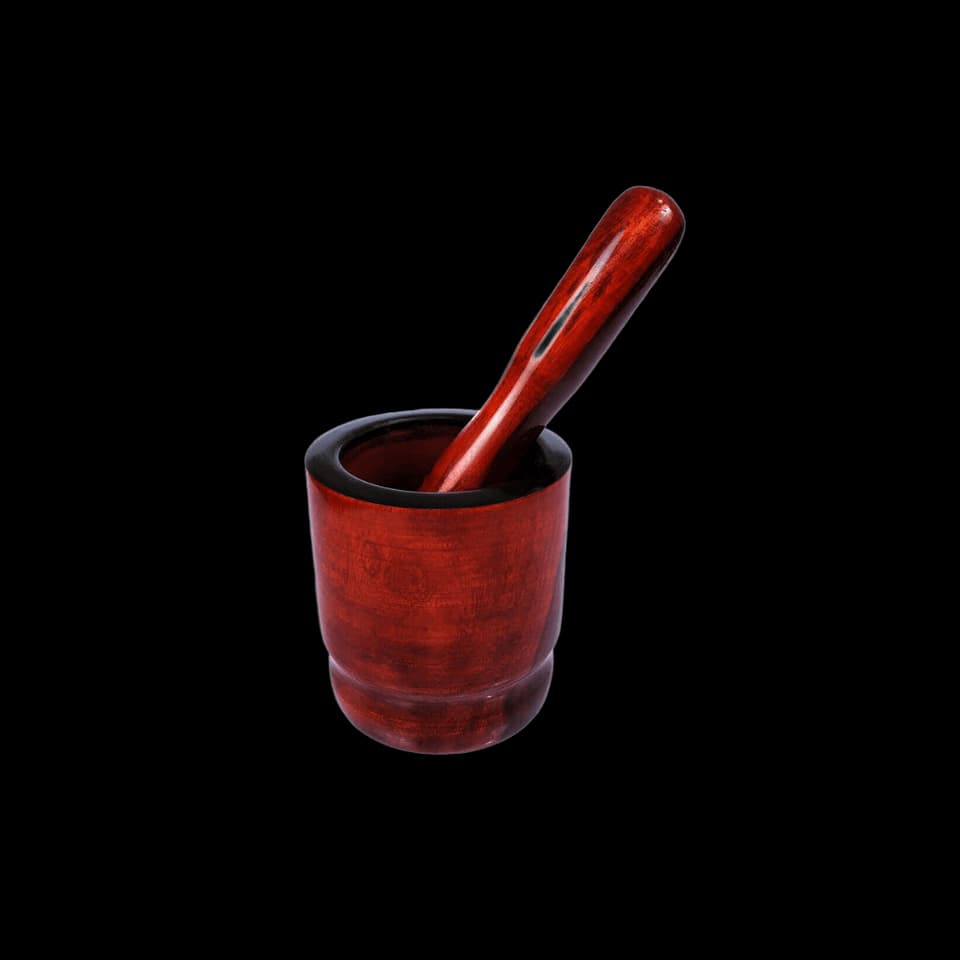
A wooden mortar and pestle — an imam dasta — is the better choice for wet pastes like garlic-ginger and for grinding without tiring your wrist; marble is better for pounding hard, dry spices to a fine powder. Wood also holds onto strong smells permanently, which marble mostly avoids.
What is an imam dasta?
Imam dasta is the name most used across Pakistan and North India for a wooden mortar and pestle set built for hand-pounding rather than powdering — garlic, ginger, green chillies, and whole spices crushed with a heavy wooden pestle in a deep wooden bowl. It's the same tool as a hamam dasta or an okhli musal, and it does a different job to the flat stone grinding slabs used for wet chutneys.
Is wood or marble better for grinding garlic and ginger?
Wood. A wooden pestle is lighter than stone, so pounding a garlic-ginger paste or a green chilli chutney for a few minutes doesn't tire your wrist the way a dense marble pestle does over the same time. The hand-pounding also avoids the oxidation and bruising a food processor blade causes, which is why cooks who make garlic-ginger paste daily tend to reach for wood rather than switch on a machine.
Is wood or marble better for hard, dry spices?
Marble, or granite. The extra weight and hardness in a stone pestle does the work of crushing whole cloves, cinnamon bark or peppercorns to a fine powder faster and more completely than a lighter wooden pestle can manage. If your main use is powdering dry, hard spices rather than pounding wet pastes, a stone mortar is the better tool for that specific job.
- Wood (imam dasta): lighter, kinder on the wrist, best for wet pastes and whole spices pounded rather than powdered — but retains strong smells permanently.
- Marble or granite: heavier, better for powdering hard dry spices and for repeated daily pounding without wearing — but can chip if dropped and dulls with acidic ingredients like citrus or tomato.
- Ours is sheesham, 5 in (12.7 cm) tall, with a bowl deep enough that crushed garlic or whole spice doesn't jump out mid-pound.
Does a wooden mortar and pestle hold onto smells?
Yes, and this is the one place marble genuinely wins — a wooden mortar absorbs the oils in garlic, ginger and strong spice, and that smell doesn't fully wash out even after several cleans. It's a real limitation, not a marketing gap we're papering over: our own product notes tell buyers the same thing, that strong spices will scent the wood over time. In practice this means a wooden imam dasta works best as a dedicated tool for the same family of ingredients — garlic, ginger, chilli — rather than switching between that and, say, crushing cardamom for a dessert.
Is granite better than marble for a mortar and pestle?
Granite is the harder of the two stones, which makes it more resistant to chipping and better suited to heavy daily pounding over years of use — it's the traditional choice for a Thai-style stone mortar built for repeated hard grinding. Marble is softer and takes a smoother polish, which is why it's more often sold for lighter kitchen use and for pesto-style pounding of nuts and herbs rather than constant heavy work. Neither is the tool we make — we work only in sheesham — but it's worth knowing the difference if you're weighing a stone option against a wooden imam dasta.
Does hand-pounding taste different from using a food processor?
Many cooks who make garlic-ginger paste daily say yes. Pounding by hand releases a spice's essential oils gradually under controlled pressure, rather than the fast shredding action of a blade, and it avoids the oxidation and bruising a food processor causes to garlic and ginger, which can turn the paste slightly bitter if it's blitzed too long. It's a slower method, and for a small daily batch that's rarely a real cost.
Can a marble mortar and pestle crack or stain?
It can chip or crack if dropped or knocked against a hard edge, since marble is softer than granite. Acidic ingredients — citrus, tomato, vinegar — etch and dull the surface over time, which is a cosmetic mark rather than a safety issue, but it does mean a marble mortar used for tomato-based pastes will show wear a wood or granite one won't.
What size mortar and pestle do you need?
For daily garlic-ginger paste and small batches of whole spice, a compact size is easier to hold and pound in than a large one — ours stands 5 in (12.7 cm) tall, sized for everyday cooking rather than bulk grinding. A taller, wider mortar makes sense mainly for households pounding large batches at once, such as for a big family meal or a gathering.
Should you oil a new wooden mortar and pestle before using it?
A light coat of food-safe mineral oil before first use helps seal the grain against the moisture in wet pastes, the same reason we recommend oiling any sheesham kitchenware before it goes into daily rotation. Reapply every few months rather than once — a dry mortar is more likely to develop hairline cracks around the bowl's rim than an oiled one, since that's the thinnest part of the wood and the first to dry out in a centrally heated UK kitchen.
How do you clean a wooden mortar and pestle?
Skip the soap — it can seep into the wood grain and linger longer than the odour you're trying to remove. Wipe it dry straight after use, and if smell has built up, grind a spoonful of dry rice or coarse salt in the empty bowl to lift oils and odour, then wipe out and air-dry rather than soaking it.
Imam dasta, okhli musal, kharal, khalbatta — same thing?
Yes. These are regional names for the same wooden mortar and pestle rather than different tools — imam dasta and hamam dasta are the most common across Pakistan, while okhli musal, kharal and khalbatta appear more often on North Indian listings. Buyers searching in English usually type "mortar and pestle" regardless of which regional name they grew up using.
Ours is turned in Sillanwali, a woodcraft town in Sargodha district, Punjab, Pakistan, home to a wood-turning and lacquer tradition — though this particular piece is plain-turned and polished rather than lacquered. Most UK listings for this style of mortar and pestle simply say "handmade" without naming a place — worth asking a seller directly if that matters to you.
How long does a wooden mortar and pestle take to arrive in the UK?
Ours is turned in Sillanwali and ready to ship — delivered within 3 to 4 days anywhere in Pakistan, cash on delivery. For a UK address, contact the workshop for a current shipping quote and transit time.
See the wooden mortar and pestle
Browse the full Kitchen & Dining collection
Frequently asked questions
- What is an imam dasta used for?
- Hand-pounding garlic, ginger, green chillies and whole spices into a wet paste or crushed mix, rather than powdering dry spice finely. It's the same tool as a hamam dasta or okhli musal under different regional names.
- Is a wooden or marble mortar and pestle better?
- Wood is better for wet pastes like garlic-ginger and is lighter on the wrist for daily use; marble or granite is better for powdering hard, dry spices and for heavy repeated pounding. Most South Asian kitchens use a wooden imam dasta specifically for the wet-paste job.
- Does a wooden mortar and pestle retain smell?
- Yes — this is its one real drawback. Wood absorbs the oils in garlic and strong spice, and the smell doesn't fully wash out even after several cleans, so it works best as a dedicated tool for one family of ingredients rather than switched between strong and mild ones.
- Can a marble mortar and pestle crack?
- Yes, if dropped or knocked against a hard surface, since marble is softer than granite. Acidic ingredients like citrus or tomato will also etch and dull the surface cosmetically over time, though this doesn't affect food safety.
- How do you clean a wooden mortar and pestle?
- Wipe it dry after use and avoid soap, which can seep into the grain. To lift built-up smell, grind a spoonful of dry rice or coarse salt in the empty bowl, then wipe out and air-dry rather than soaking it.
- What size is a standard wooden mortar and pestle?
- Sizes vary by use — ours stands 5 in (12.7 cm) tall, sized for everyday garlic-ginger paste and small batches of whole spice rather than bulk grinding.
- Is imam dasta the same as okhli musal or khalbatta?
- Yes, these are regional names for the same wooden mortar and pestle. Imam dasta and hamam dasta are more common in Pakistan; okhli musal, kharal and khalbatta appear more often on North Indian listings.
- How long does a wooden mortar and pestle take to arrive in the UK?
- It's turned to order rather than held in stock, so allow 5 working days in the workshop before it ships. Contact us on WhatsApp for a current UK shipping quote and transit time.