How to clean wooden kitchen utensils so they don't split
Washing, oiling and storing wooden spoons and kitchen utensils properly — why they crack, whether a dishwasher is ever safe, and how sheesham compares to the beech and olive wood already in most UK kitchens.
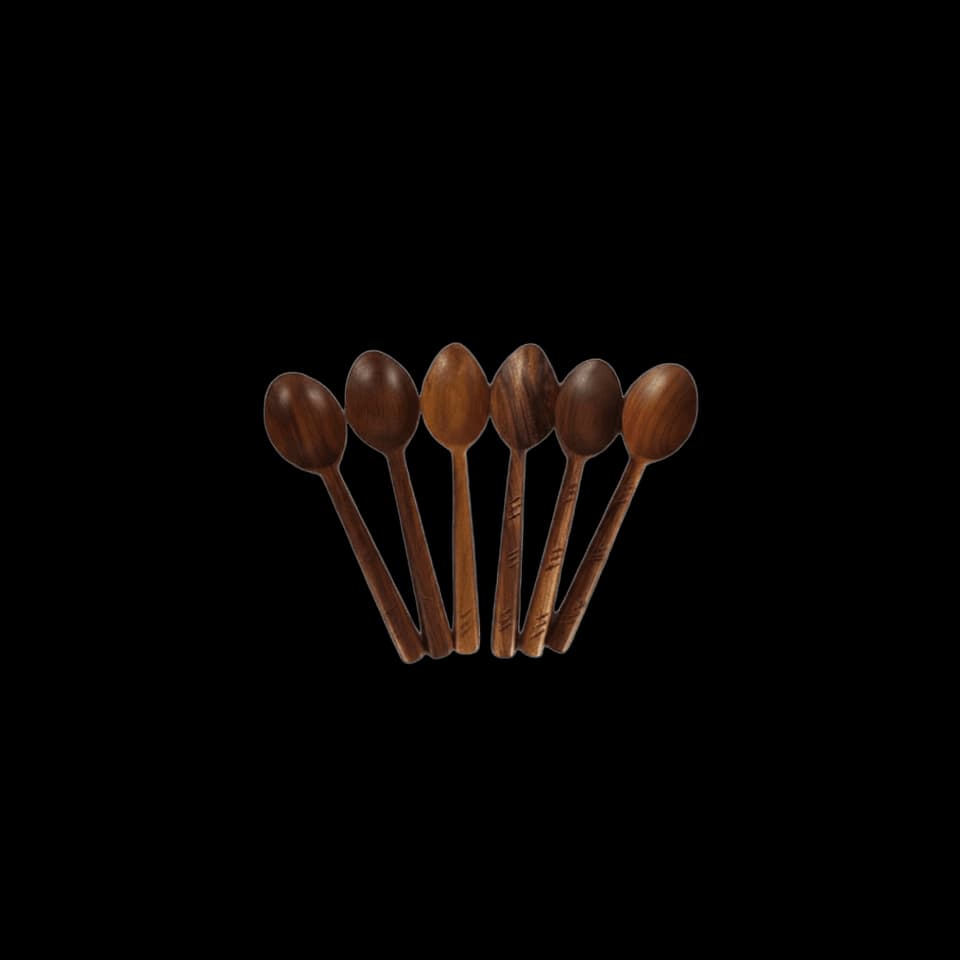
Wash wooden spoons and utensils by hand in warm water with a little washing-up liquid, dry them immediately with a tea towel, and never leave them soaking or run them through a dishwasher. Oil sheesham utensils every four to six weeks with food-safe mineral oil, since drying out — not age — is what actually causes splitting.
How do you wash wooden spoons and utensils?
Wash them by hand in warm water with a little washing-up liquid, using a sponge or soft brush to lift off any stuck food. Dry immediately with a tea towel rather than leaving them to air-dry in a rack, and don't let a spoon sit soaking in a sink of washing-up water while you finish the rest of the dishes.
Why do wooden spoons and utensils crack or split?
Cracking is almost always caused by the wood drying out unevenly, not by age. A spoon left wet in a crowded drawer, then dried fast by a radiator or a dishwasher's heat cycle, swells and shrinks faster than the wood fibres can move together, and a hairline split opens along the grain. Spoons and stirrers are more exposed to this than a thick chopping board, because the neck of a spoon — the narrow part between the bowl and the handle — is turned much thinner than a board and dries out from both sides at once.
Can you put wooden utensils in the dishwasher?
No. A dishwasher cycle soaks wooden spoons and utensils in hot water for the wash, then blasts them dry with heat for the drying cycle, and that fast in-fast-out moisture swing is the single most common cause of splitting. Dishwasher detergent is also harsher than washing-up liquid and strips the wood's natural oils faster than a hand wash does.
- Do: wash by hand in warm water and washing-up liquid, straight after use.
- Do: dry immediately with a tea towel, and stand spoons upright rather than leaving them flat.
- Don't: put them in the dishwasher, even on a low-heat or eco cycle.
- Don't: leave them soaking, or resting in a sink of water with other dishes.
- Don't: prop them against a hot pan, an oven door, or a radiator to dry.
How often should you oil wooden kitchen utensils?
Oil sheesham spoons and utensils every four to six weeks with food-safe mineral oil if you use them most days — sooner if the surface starts to look pale or feels rough rather than smooth under a thumbnail. Rub a small amount into the wood with a soft cloth, leave it to soak in for ten to fifteen minutes, then wipe off anything that hasn't absorbed; a spoon should never feel wet or sticky afterwards.
Can you boil wooden spoons to clean or sanitise them?
Don't. Boiling forces water deep into the wood within minutes, which is an even faster version of the same swelling-then-drying cycle that a dishwasher causes, and it's a piece of advice that circulates online but does more harm than a normal wash. A hand wash in hot, soapy water followed by immediate drying removes food residue and surface bacteria without soaking the wood through.
Are wooden spoons more hygienic than plastic ones?
When they're washed and dried properly, yes — research into wooden versus plastic kitchenware has found that wood doesn't hold onto live bacteria on its surface the way plastic does, because bacteria drawn into the wood fibres tend to die off as the wood dries rather than surviving in the microscopic scratches plastic develops with use. The caveat matters: a wooden spoon left damp for hours loses that advantage, since bacteria and mould both need moisture to establish themselves.
How do you get a smell out of a wooden spoon?
Rub the cut side of half a lemon over the surface, or work in a paste of bicarbonate of soda and a little water with a cloth, then rinse and dry immediately. Both lift the oils that carry strong smells — garlic, onion, curry spice — out of the surface layer of the wood without needing to soak the spoon.
Also caring for a wooden board? Read the chopping board oiling guide
Is sheesham a good wood for spoons and utensils, compared to beech or olive wood?
Most UK wooden spoons are beech or olive wood; ours are sheesham (Dalbergia sissoo), sold in the UK as Indian rosewood. Beech rates around 1,450 lbf on the Janka hardness scale, sheesham around 1,660 lbf, and olive wood around 2,700 lbf — so sheesham sits between the two, denser than beech and more resistant to surface dents, though not as hard or heavy in the hand as olive wood. All three are closed-grained hardwoods that take a smooth finish and don't need a coating to be food-safe.
How should you store wooden spoons and utensils?
Store them upright in a dry, open crock or a wall rack rather than flat in a closed drawer, so air reaches both sides and any residual damp from washing can escape rather than sitting trapped against the wood. Keep the crock or rack away from a radiator or a spot that gets direct sun through a window, both of which dry wood unevenly and faster than normal room air.
How long do sheesham spoons and utensil sets take to arrive in the UK?
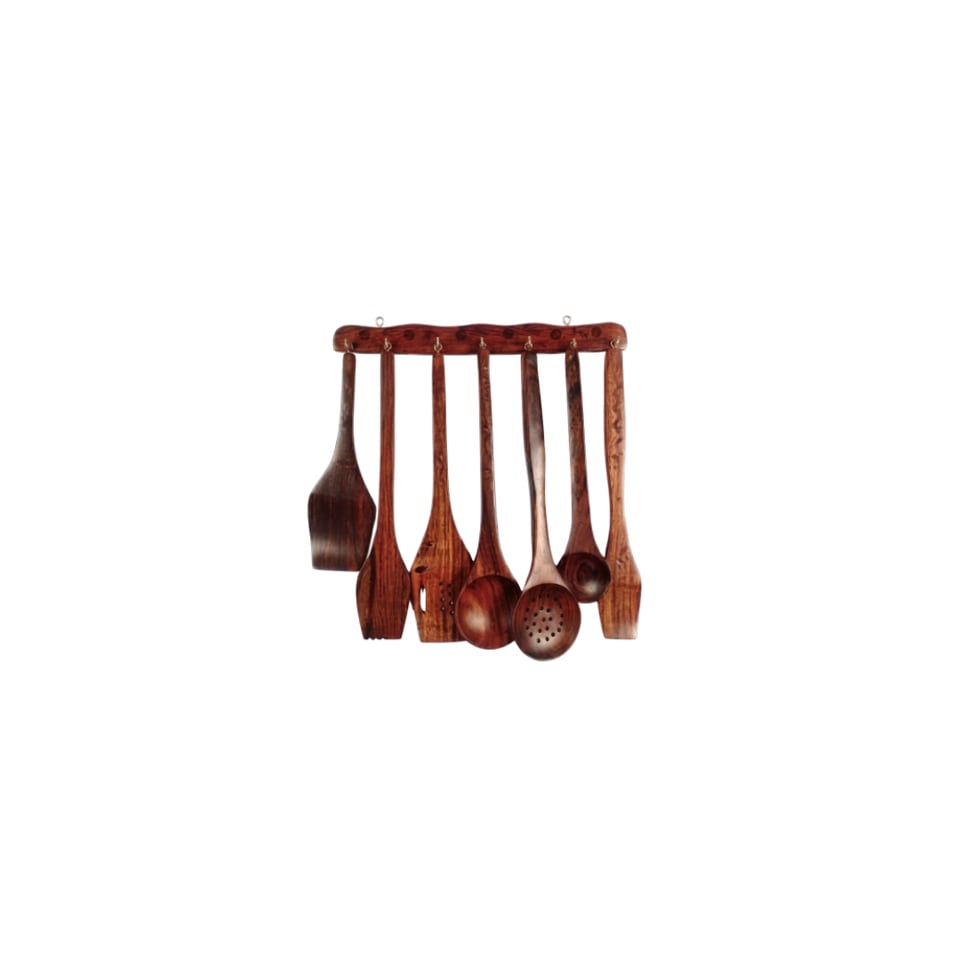
Ours are turned and hand-sanded in Sillanwali, a woodcraft town in Sargodha district, Punjab, Pakistan. The six-piece spoon set has spoons about 20 cm (8 in) long, and the seven-piece cooking utensil set hangs from a 35.6 cm (14 in) wall rack. Both are ready to ship, cash on delivery anywhere in Pakistan; for a UK address, contact the workshop for a current shipping quote and transit time.
See the seven-piece kitchen utensil set with wall rack
Frequently asked questions
- Can you put wooden spoons in the dishwasher?
- No — the heat and prolonged soak of a dishwasher cycle is the most common cause of a wooden spoon splitting. Wash by hand in warm water and washing-up liquid, then dry immediately with a tea towel.
- Why do wooden spoons crack or split?
- Mostly from uneven drying rather than age — a spoon left wet then dried fast by a radiator or dishwasher swells and shrinks faster than the wood fibres can move together. The thin neck of a spoon is more exposed to this than a thick chopping board.
- Can you boil wooden spoons to sanitise them?
- No. Boiling forces water into the wood quickly, causing the same swelling-then-drying cycle that leads to cracking, only faster. A normal hot, soapy hand wash followed by immediate drying is enough to clean a wooden spoon.
- Are wooden spoons more hygienic than plastic?
- When washed and dried properly, yes — wood doesn't retain live bacteria on its surface the way plastic's micro-scratches do, since bacteria drawn into the grain tend to die off as the wood dries. A spoon left damp for hours loses that advantage, so drying it straight after washing matters.
- How often should you oil wooden kitchen utensils?
- Every four to six weeks for spoons and utensils used most days, using a food-safe mineral oil rubbed in with a soft cloth. Oil sooner if the surface looks pale or feels rough rather than smooth.
- How do you get the smell out of a wooden spoon?
- Rub the cut side of half a lemon over the surface, or work in a paste of bicarbonate of soda and water, then rinse and dry immediately. Both lift the oils that carry strong smells like garlic and spice out of the wood's surface layer.
- Is sheesham a good wood for cooking spoons and utensils?
- Yes — sheesham (Dalbergia sissoo) rates around 1,660 lbf on the Janka hardness scale, denser than the beech (about 1,450 lbf) used in most UK wooden spoons, though softer than olive wood (about 2,700 lbf). It's a closed-grained hardwood that's food-safe without any coating.
- How long do wooden spoons take to arrive in the UK?
- Our six-piece sheesham spoon set is ready to ship. Within Pakistan it arrives in 3 to 4 days, cash on delivery; for a UK address, contact the workshop for a current shipping quote.