Handmade wooden serving trays: a UK buyer's guide to size, wood and care
Sheesham vs oak and walnut, real sizes in cm and inches, and how to care for a handmade wooden serving tray — made to order in Sillanwali and shipped to the UK.
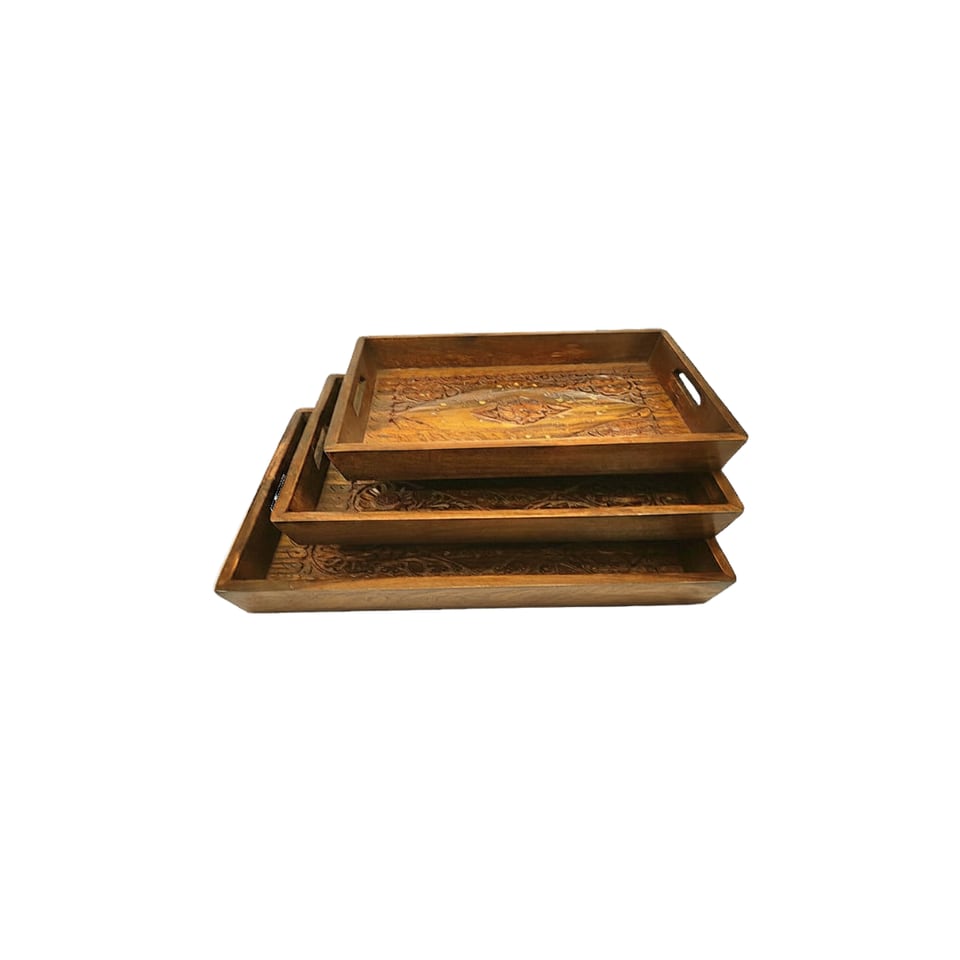
A handmade wooden serving tray for UK use should be turned from a dense, food-safe hardwood — sheesham (Indian rosewood), oak, walnut or teak — finished with food-grade oil, not varnish, and sized to the job: 30cm (12in) for daily tea, up to 41cm (16in) for guests. Ours are hand-carved to order and shipped worldwide.
Which wood is best for a serving tray?
Sheesham (Dalbergia sissoo, sold in the UK as Indian rosewood) is the standard for hand-carved trays from Punjab: it's dense, dark, and holds a chiselled border without splitting. British and American makers reach for oak, walnut or teak for the same reason — density and grain that stand up to daily handling. Mango wood and pine are lighter, cheaper, and show dents and stains sooner.
See the real hardness numbers: sheesham vs mango vs acacia
What size serving tray should you buy?
Trays run from a small dresser piece to a full nested set. These are the sizes we actually turn, in both cm and inches so you can check against your table or tray stand:
- Small (20–25cm / 8–10in round, or 25×15cm / 10×6in rectangular): a chai tray for two, or a dresser tray for perfume and jewellery.
- Medium (30–36cm / 12–14in): everyday tea service for four, or a coffee-table centrepiece.
- Large (41–46cm / 16–18in): guest serving, iftar plates, sweets at weddings.
- Nested set of three (30cm, 36cm and 41cm / 12in, 14in and 16in): the most common gift order — one large plus two smaller trays that stack inside it.
Which finish should you choose: plain, carved, naqshi painted or engraved?
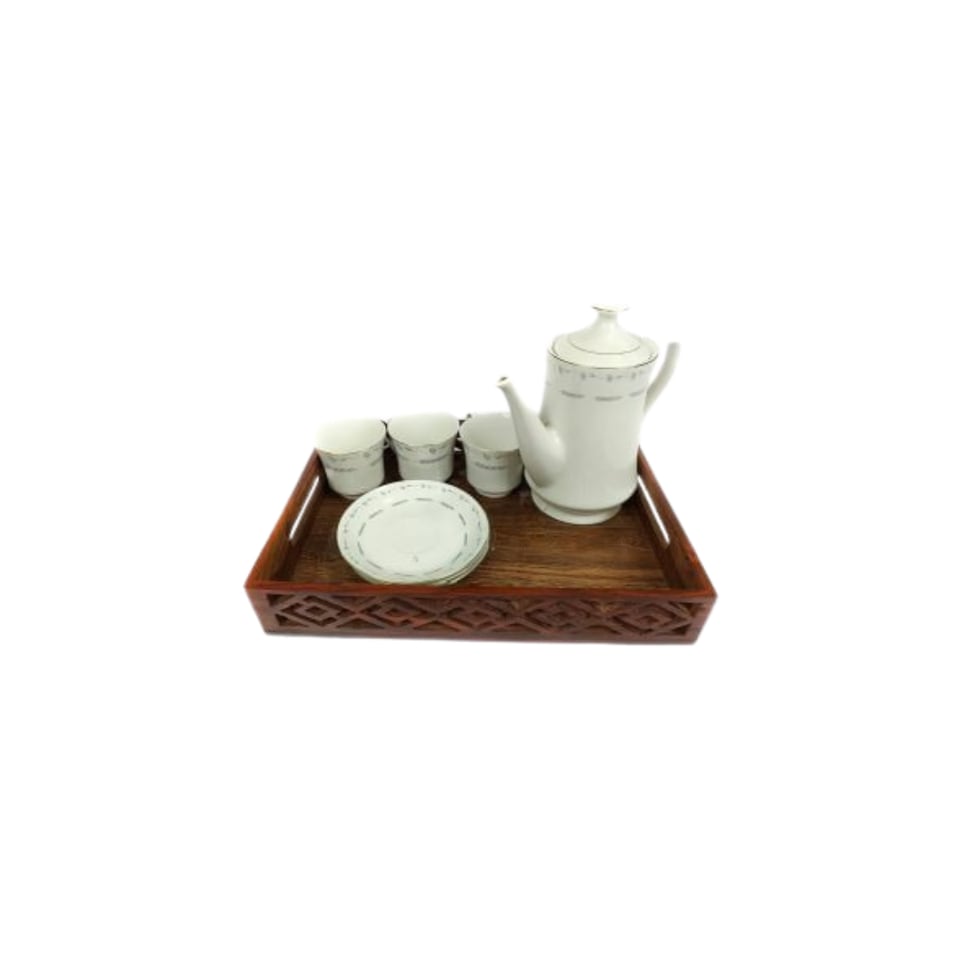
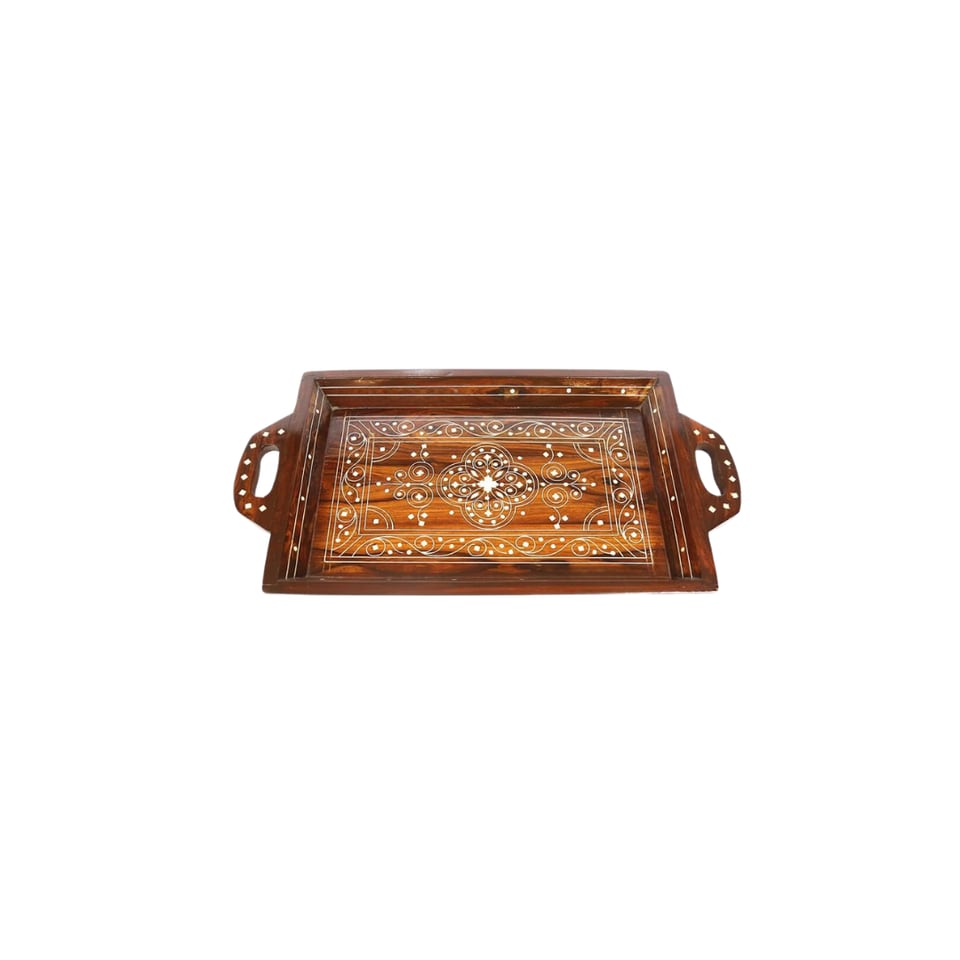
Plain sheesham trays show the grain and take a light food-safe oil beautifully — good for daily use. Carved trays add a hand-chiselled border and are the standard for gifting. A brass inlay border sits between the two — a thin metal strip set into the rim rather than a fully carved pattern, closer to a Western tableware look. Naqshi painted trays carry the layered lacquer pattern the town is known for; they are decorative pieces and best kept for serving dry items. Engraving is where personalisation happens — a name, a wedding date, a short line cut into the rim. The nested set also has cut-out handles at either end of each tray, for carrying a full load without gripping the rim.
How can you tell a tray is hand-turned rather than machine-made?
Turn it over. A hand-turned tray shows faint concentric tool marks from the lathe chisel on the underside, not a perfectly uniform machined surface — the same tell that applies to any piece turned on a khraad, the pedal-powered lathe used across Punjab's woodworking towns. A workshop can also name the person who turned and carved your piece; a reseller working from stock photos usually cannot.
Read the full hand-lathed vs mass-machined test
Where are these trays made?
Ours are turned and carved in Sillanwali, a town in the Sargodha district of Punjab, Pakistan, where sheesham has been turned on the lathe and finished by hand for around three hundred years. Most UK listings for this style of tray describe it as Indian by default; the wood and the technique are shared across the region, but this particular workshop and lathe are in Pakistan.
Is a wooden serving tray safe for food?
Yes, once it's finished with a food-safe oil rather than a synthetic varnish — the wood itself isn't the risk, an unspecified sealant on top of it is. We finish plain and carved sheesham trays with food-grade oil so they're safe for everyday serving. Naqshi painted trays are decorative and better kept for dry items such as biscuits, dry fruit or sweets, since standing liquid can lift the lacquer.
How long does a made-to-order tray take, and do you ship to the UK?
Every tray is turned and carved in our workshop after you order it, rather than pulled from finished stock — typical make time for the nested set is seven days. From there it ships worldwide, express within a week or standard within two weeks, and payment is taken in advance before crafting begins.
How do you clean and care for a wooden serving tray?
- Wipe with a dry or barely damp cloth after use. Do not soak it or put it in a dishwasher.
- Keep it away from a hot hob and direct sun — the wood dries out and the finish dulls.
- Refresh plain and carved trays with a thin coat of food-safe oil once or twice a year.
- For painted and carved trays, dust only. Standing water lifts lacquer over time.
A serving tray is also one of the more flexible gifts to send to a UK address: a plain tray suits a housewarming, a carved or engraved one suits a wedding, and the nested set covers both without you having to guess which single size the recipient already owns.
More personalised, engraved gift ideas shipped to the UK
The full oiling schedule: which oil, how often
Frequently asked questions
- Which wood is best for a serving tray?
- A dense hardwood — sheesham (Indian rosewood), oak, walnut or teak — holds a hand-carved border and daily handling far better than a softwood. Mango and pine are lighter, cheaper alternatives, but they dent and stain sooner and need more frequent oiling.
- Is a wooden serving tray safe for food?
- Yes, provided it's finished with a food-safe oil rather than a synthetic varnish — the finish is what determines safety, not the wood itself. Our plain and carved sheesham trays are finished this way; naqshi lacquer trays are decorative and best kept to dry foods.
- What size serving tray should I buy?
- 30–36cm (12–14in) covers everyday tea service for four. A nested set of three at 30cm, 36cm and 41cm (12in, 14in and 16in) is the most flexible option and the most common gifting purchase.
- How do you clean and care for a wooden serving tray?
- Wipe with a dry or barely damp cloth and never soak it or put it in a dishwasher. Keep it away from a hot hob and direct sun, and refresh a plain or carved tray with food-safe oil once or twice a year. Painted and lacquered trays should be dusted only.
- Can a naqshi lacquer tray be used for wet food?
- It is safer to keep painted and lacquered trays for dry serving — biscuits, dry fruit, sweets. For wet or oily food, use a plain or carved sheesham tray that can be wiped clean without lifting a painted finish.
- How much does a handmade wooden serving tray cost?
- Prices vary by size, finish and carving depth. At Sillanwali Handicrafts every piece is made to order, so we share a quote after you confirm size and finish rather than list a fixed price.
- How long does UK delivery take, and is payment upfront?
- Payment is taken in advance, before crafting begins. The nested set has a typical make time of seven days in the workshop, then it ships worldwide — express within a week or standard within two weeks, depending on the speed you choose.