Garam Pani Foot Soak vs a Foot Roller: Which Fits Your Evening?
Garam pani mein pair or a wooden foot roller? Compare effort, hygiene and safety, and see why people with diabetes are advised not to soak their feet.
Garam pani mein pair rakhna and rolling your soles on a wooden foot roller can both feel relaxing at the end of a long day. A soak needs water, a tub and drying time; a roller needs only a chair. One important difference: people with diabetes are advised not to soak their feet at all, so the roller, with a doctor's okay, is often the simpler habit.
Why do so many of us put our feet in warm water?
In many Pakistani homes, the evening foot soak is a family habit. Ammi fills a plastic tub with warm water from the geyser or a pateela on the stove, adds a spoon of namak, and tells everyone to sit for ten minutes after a long day. In winter it feels especially good, when the floors are cold and the feet feel stiff.
There is nothing strange about why it feels nice. Warm water is comforting, sitting down is a break, and the quiet ten minutes is a rest in itself. For many people, that is enough.
A foot soak is simply placing both feet in a tub of warm water for a few minutes, sometimes with salt or a few drops of oil added. People often call it namak wale pani mein pair rakhna when salt is added.
What a soak is not is a medical treatment. We don't know of solid evidence that salt water does anything special for tired feet beyond the warmth and the rest, and you shouldn't expect it to fix ongoing pain.
What does a wooden foot roller do differently?
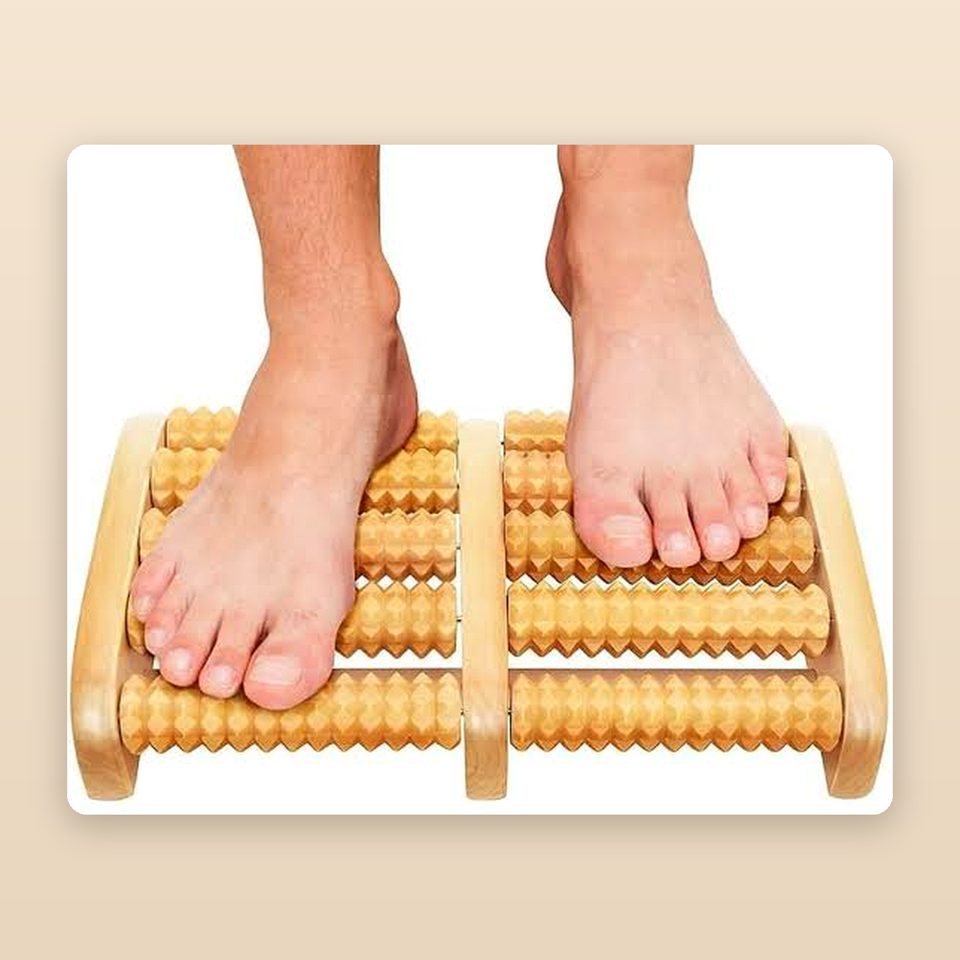
A wooden foot roller is a manual massager with ridged rollers that you move under your soles while seated. Instead of warmth, it gives a gentle pressing and rolling feel along the bottom of the foot.
The Sillanwali Wooden Foot Massager is a handmade piece of natural wood from Sillanwali, Sargodha, Punjab. It has dual-sided rollers so both feet can use it at the same time, and it needs no electricity, batteries or water. You sit down, rest your feet on it and roll slowly from heel to toes.
Many people find it relaxing after a day of standing, walking or sitting at a desk. The product page itself is clear that it is a manual relaxation product for home use, not a medical device, and it makes no medical claims.
Soak or roller: how do effort, time and hygiene compare?
Here is a plain side-by-side for a normal weekday evening:
- Setup. A soak needs water heated, a clean tub, a towel and somewhere to sit without splashing. A roller only needs to be pulled out from under the sofa or bed.
- Time. A soak usually takes ten to fifteen minutes, plus heating, emptying and cleaning the tub. A roller session is a few minutes and can happen while you watch the news or talk to family.
- Mess. Soaks mean wet floors, wet socks and a tub to wash. A roller stays dry.
- Hygiene. If several family members share one tub, it needs washing between uses, and feet need drying well, especially between the toes. A roller only needs a wipe with a dry or slightly damp cloth.
- Cost over time. A soak costs a bit of gas or electricity each time. A roller is a one-time purchase.
- Weather. Soaks are popular in winter, but in a humid Karachi or Lahore summer, sitting with feet in warm water is less appealing. A roller works the same in any season.
Neither is "better" for everyone. If you enjoy the soak and it suits your evening, there is no need to give it up. A roller simply fits busy days, small homes and people who want something quick and dry.
Can you use both, and in what order?
Yes, many people use both on different nights, or a short soak followed by the roller. If you do both, keep a few simple rules:
- Test the water first. It should feel warm, not hot. Check it with your hand or elbow before your feet go in.
- Keep the soak short. A few minutes is plenty; long soaks can leave skin soft and wrinkled.
- Dry your feet completely, including between the toes, before you put them on the roller.
- Keep the wooden roller away from water. Never put it in the tub, and don't roll wet feet on it. Water is not good for wood, and a wet roller is slippery.
- Roll gently. Light pressure for a few minutes is enough. Stop if anything feels sharp or painful.
For more on keeping the wood in good shape, read our guide on how to care for a wooden foot roller. If your family habit is oil maalish rather than water, our post on pairon ki maalish: oil vs roller compares those two.
how to care for a wooden foot roller
pairon ki maalish: oil vs roller
Why should people with diabetes avoid soaking their feet?
This is the most important part of the comparison. Diabetes foot care guidance from the US Indian Health Service (its 2024 foot care algorithm) tells people with diabetes plainly: don't soak your feet. International guidance for diabetic foot care (the IWGDF 2023 practical guidelines) stresses checking the feet every day and protecting them from injury.
Diabetic neuropathy is nerve damage caused by diabetes that can reduce feeling in the feet. When feeling is reduced, a person may not notice that water is too hot, or that skin has been damaged, until a problem has already started.
If you have diabetes, speak to your doctor before using any foot massager. Diabetes can reduce feeling in the feet, so you may not notice pressure damage. Don't use it on numb feet, cuts, blisters or sores, and check your feet daily.
So for anyone in the family with diabetes, the warm-water tub should not be the default. Wash and dry the feet normally instead, and ask the doctor what kind of foot care routine is safe. We go into more detail in our post on foot massagers for diabetics.
When should you see a doctor instead of trying either?
This massager is a relaxation product, not a medical treatment. If foot pain is severe, lasts more than two weeks, keeps coming back, or comes with swelling, numbness or an injury, see a doctor.
Neither a soak nor a roller is the right answer for a foot that is suddenly swollen, red or warm, for cracked or broken skin, or for a foot that was recently injured or operated on. Don't soak or roll in those cases; get it checked first. The same goes for burning feet that keep you awake, or feet that feel numb.
Ready to try a dry, quick evening habit?
The Wooden Foot Massager costs Rs 1,499, and this massager comes with free delivery anywhere in Pakistan. You pay cash on delivery, so there's no advance payment, and orders arrive in 3 to 4 days. Order the Wooden Foot Massager or see more in the Health & Wellness collection.
Order the Wooden Foot Massager
If more than one person at home wants their own: 2 for Rs 2,700, 3 for Rs 3,900, or 4 or more at Rs 1,250 each. Bundle savings apply automatically at checkout.
Frequently asked questions
- Is it good to put feet in warm water every night?
- Many people find a short warm soak relaxing, as long as the water is warm, not hot, and the feet are dried well afterwards. People with diabetes are advised not to soak their feet at all.
- Does adding salt to the water make a difference?
- Salt is a common family habit, but we don't know of solid evidence that it adds anything beyond the warmth and rest. Treat it as a comfort routine, not a remedy.
- Can I use the wooden roller with wet feet?
- No. Dry your feet fully first. Water is not good for wood, and wet feet can slip on the rollers.
- Which is quicker on a busy evening, a soak or a roller?
- A roller is usually quicker because there is no water to heat, no tub to clean and nothing to dry. A few minutes while seated is enough.