Pairon ki Maalish: Sarson ke Tel vs a Wooden Roller
Pairon ki maalish with sarson ka tel or a wooden roller? An honest comparison of time, effort and feel, plus how many Pakistani families use both together.
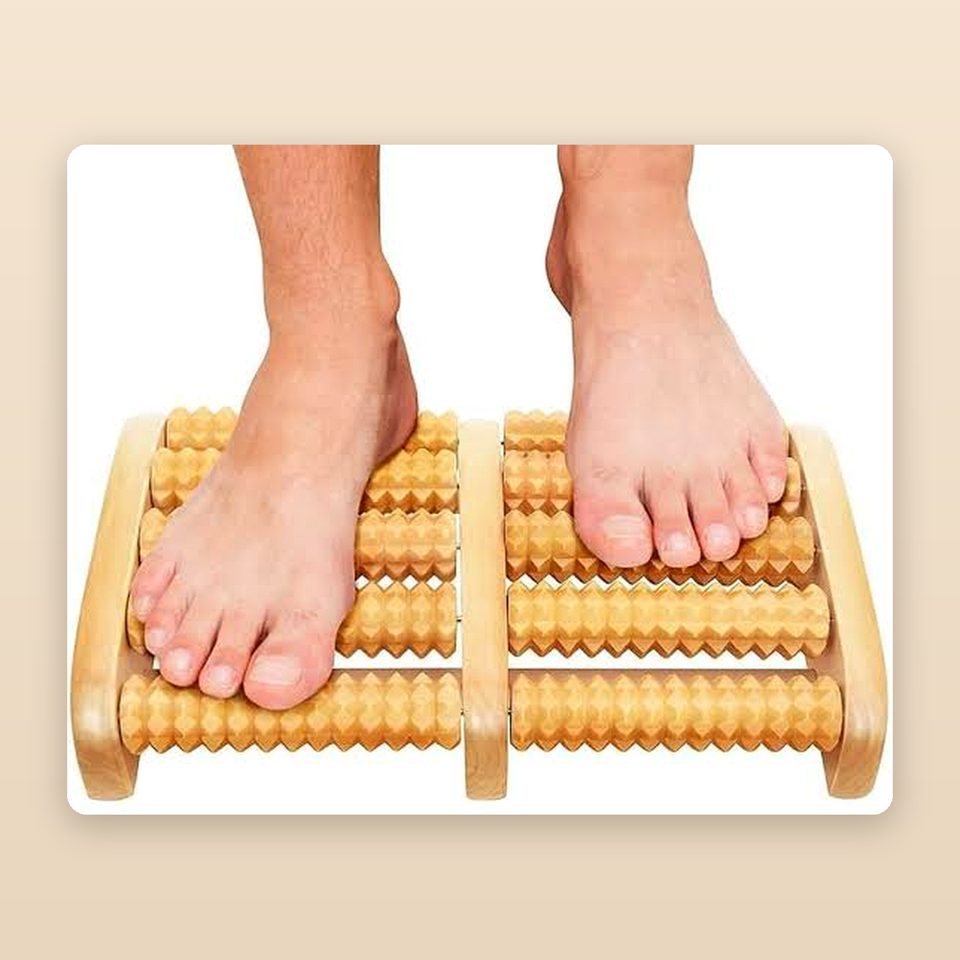
Pairon ki maalish with sarson ka tel is a warm family habit, but it usually needs another person and fifteen free minutes. A wooden roller takes five minutes and you can do it alone, with dry feet. Neither is a treatment. Many families simply use both: roller first, oil after.
What does pairon ki maalish mean in a Pakistani home?
Pairon ki maalish means massaging the feet, usually by hand and often with oil. In many homes it is less a beauty routine and more a way of caring for someone. A grandson presses Nana's feet after Isha, a daughter rubs Ammi's heels after a long day of guests, or a wife and husband take turns on a winter night.
Sarson ka tel is mustard oil, pressed from mustard seeds and used in Punjabi kitchens for generations. Many families also reach for coconut oil, olive oil or whatever is already on the shelf. The oil itself matters less than the time and the attention: someone sits with you and works slowly from the heel to the toes.
How is a traditional oil maalish usually done?
There is no single correct pairon ki maalish ka tarika, but most households follow a similar pattern:
- Wash the feet with lukewarm water and dry them well, especially between the toes.
- Warm a small amount of oil in the palms, not on the stove, so it is only skin warm.
- Rub the sole with the thumbs in small circles, moving from heel to toes.
- Press gently along the arch and around the ankle, then pull each toe softly.
- Wipe off the extra oil and put on cotton socks so the floor doesn't get slippery.
Done properly, this takes ten to fifteen minutes per person. It feels lovely, but it needs a second pair of hands, and oily feet on marble or tiled floors can be a slipping risk, especially for older relatives.
How is a wooden roller different from hand maalish?
A wooden foot roller is a frame with ridged rollers that you roll your bare feet over while seated. You control the pressure with the weight of your own legs, so you don't need anyone's help.
Here is a plain comparison of the two:
- Who it needs: oil maalish usually needs another person; a roller needs only you and a chair.
- Time: a hand maalish takes around ten to fifteen minutes; a roller session can be three to five minutes.
- Mess: oil needs washing up, a towel and socks; a roller is used on clean, dry feet with nothing to wipe away.
- Feel: hands are softer and can find sore spots slowly; a roller gives an even, rolling pressure along the whole sole.
So this is not really a contest. An oil maalish is something you give or receive, while a roller is something you can do for yourself on any ordinary evening.
Can you use oil with a wooden foot roller?
Please don't put oil on the wooden roller or roll oily feet over it. There are two good reasons:
- Grip: oily soles slide on the ridges, so the roller can slip forward and your foot can land hard on the floor.
- The wood: oil soaks into bare wood unevenly, can leave dark patches and makes the ridges sticky, which collects dust and hair.
The simple rule is roller first, oil after. Roll your feet while they are clean and dry, then, if you like, apply oil by hand and slip on socks. For cleaning and storing the roller, see our guide on how to care for a wooden foot roller.
What does a combined roller and oil routine look like?
For families who love the old habit but rarely find time for it, a mixed routine works well. Here is one way to do it on a winter evening:
- Sit on a chair with both feet flat on the wooden roller and roll slowly from heel to toe for three minutes.
- Lift one foot and roll the other a little more slowly along the arch, then switch.
- Take your feet off the roller and move it aside.
- Rub a few drops of sarson ka tel or your usual oil into the soles and heels by hand.
- Put on cotton socks and stay seated for a minute before walking on the floor.
On busy nights, the roller alone is enough. On weekends or when the family is together, someone can still sit with Dadi and do a proper hand maalish. If you'd like a calm bedtime version, our five-minute foot routine before sleep walks through it minute by minute.
Who should be careful with any kind of foot maalish?
Hand maalish and rollers both press on the feet, so the same care applies to both. Skip it, or ask a doctor first, if any of these apply:
- The feet are swollen, injured, have cuts, blisters, cracked or broken skin, or there has been recent foot surgery.
- The person has diabetes. If you have diabetes, speak to your doctor before using any foot massager. Diabetes can reduce feeling in the feet, so you may not notice pressure damage. Don't use it on numb feet, cuts, blisters or sores, and check your feet daily.
- The person is pregnant. If you're pregnant, ask your doctor or midwife before using any foot massager. Sudden swelling of the feet, hands or face during pregnancy needs urgent medical advice.
- Any oil causes itching, redness or a rash. Stop using that oil.
- Rolling or pressing causes sharp pain, tingling or numbness. Stop straight away.
When should you see a doctor instead of trying maalish?
This massager is a relaxation product, not a medical treatment. If foot pain is severe, lasts more than two weeks, keeps coming back, or comes with swelling, numbness or an injury, see a doctor.
How do you order the wooden roller?
The Sillanwali Wooden Foot Massager is a handmade piece of natural wood from Sillanwali, Sargodha, Punjab. It has dual-sided rollers for both feet, is used seated and is fully manual, with no electricity or batteries.
It costs Rs 1,499, and this massager comes with free delivery anywhere in Pakistan. You pay cash on delivery (COD) when it arrives, with no advance payment, and delivery usually takes 3 to 4 days. One for Ammi and one for Abbu? 2 cost Rs 2,700, 3 cost Rs 3,900, and 4 or more are Rs 1,250 each. Bundle savings apply automatically at checkout.
Ready to keep the maalish habit going?
Order the Wooden Foot Massager for Rs 1,499 with free delivery anywhere in Pakistan and cash on delivery, delivered in 3 to 4 days. Order the Wooden Foot Massager or browse the Health & Wellness collection. You can also read foot reflexology basics, how to care for a wooden foot roller and our 5-minute foot routine before sleep.
Order the Wooden Foot Massager
Frequently asked questions
- Which oil is best for a foot massage at home?
- There is no single best oil. Many Pakistani families use sarson ka tel, coconut or olive oil; choose one that doesn't irritate your skin and stop if it causes itching or a rash.
- Should I oil my feet before or after using the roller?
- After. Use the roller on clean, dry feet so they don't slip and the wood stays clean, then apply oil by hand and wear socks.
- Can a roller replace a hand maalish from family?
- It can cover the busy days when nobody is free, but it doesn't replace the time spent together. Many families use the roller daily and keep hand maalish for weekends.
- How much does the wooden foot massager cost?
- It costs Rs 1,499 with free delivery anywhere in Pakistan and cash on delivery. Delivery usually takes 3 to 4 days.