Factory and Warehouse Workers: Looking After Your Feet After a Shift
Foot pain for factory workers after long shifts on concrete in safety shoes: simple fixes for fit, socks, insoles, breaks and a calm evening roll at home.
Foot pain for factory workers usually comes from long hours standing on concrete in heavy safety shoes that don't fit well. Most of it can be eased with better fitting shoes and socks, a cushioned insole, short sitting breaks and a gentle ten minute roll of the soles at home after the shift.
Why do factory and warehouse shifts tire the feet so much?
A shift on a textile mill floor, a packing line in a warehouse or a loading bay is different from most jobs. You stand or walk on concrete for eight to twelve hours, often in one small area, and you may carry cartons, rolls of fabric or crates while you do it. Concrete does not give at all, so every step and every hour of standing lands on the heel and the ball of the foot.
Add to that the heat of many workshops from April to September, overtime during export seasons, and shoes that stay laced from the gate in the morning to the gate at night. By the time you sit on the bus or the motorcycle home, the soles feel hot and heavy and the heels throb.
Tired feet are common, but they are not something you have to live with every night. A few small changes at work and at home make a real difference.
How do safety shoes cause foot pain, and what can you change?
Safety shoes are shoes with a protective toe cap, usually steel or composite, and a tough sole, made to protect the foot from falling objects and sharp material. They are important, so never take them off on the floor where they are required. The trouble starts when they are the wrong size or worn out.
Common problems and simple fixes:
- Shoes too tight across the toes: the toe cap presses on the little toe and big toe joint. Try the next size up or a wider fit, and try shoes on in the evening when your feet are at their largest.
- Shoes too loose: the heel slips and rubs, which leads to blisters and a tired arch. Lace them properly every morning, right to the top eyelet.
- Flat, hard insole: many cheaper safety shoes come with a thin insole. A cushioned or arch-supporting insole can make long standing feel easier, as long as the shoe still fits with it inside.
- Old shoes: once the sole is worn smooth or the heel has collapsed on one side, the shoe no longer supports you well. Replace it if you can.
- Cotton socks soaked with sweat: in hot halls, change to a fresh pair at lunch if possible, and dry your feet before putting them back on.
What can you do during the shift itself?
You can't leave the line whenever you like, but a few habits fit inside normal breaks:
- Sit down for at least part of every break instead of standing around with friends.
- When you do sit, slip your heels out of the shoes for a minute and wiggle your toes.
- Shift your weight from foot to foot while standing, rather than locking both knees.
- If your station allows it, ask your supervisor about an anti-fatigue mat.
What is a good after-shift routine for tired feet?
The hour after you get home is when the feet feel the worst, and it is also the best time to look after them. A simple routine:
- Take off shoes and socks as soon as you can, wash your feet in normal temperature water and dry them well, including between the toes.
- Look at your feet for a minute. Check for blisters, cracks on the heels, redness from the toe cap or any cut.
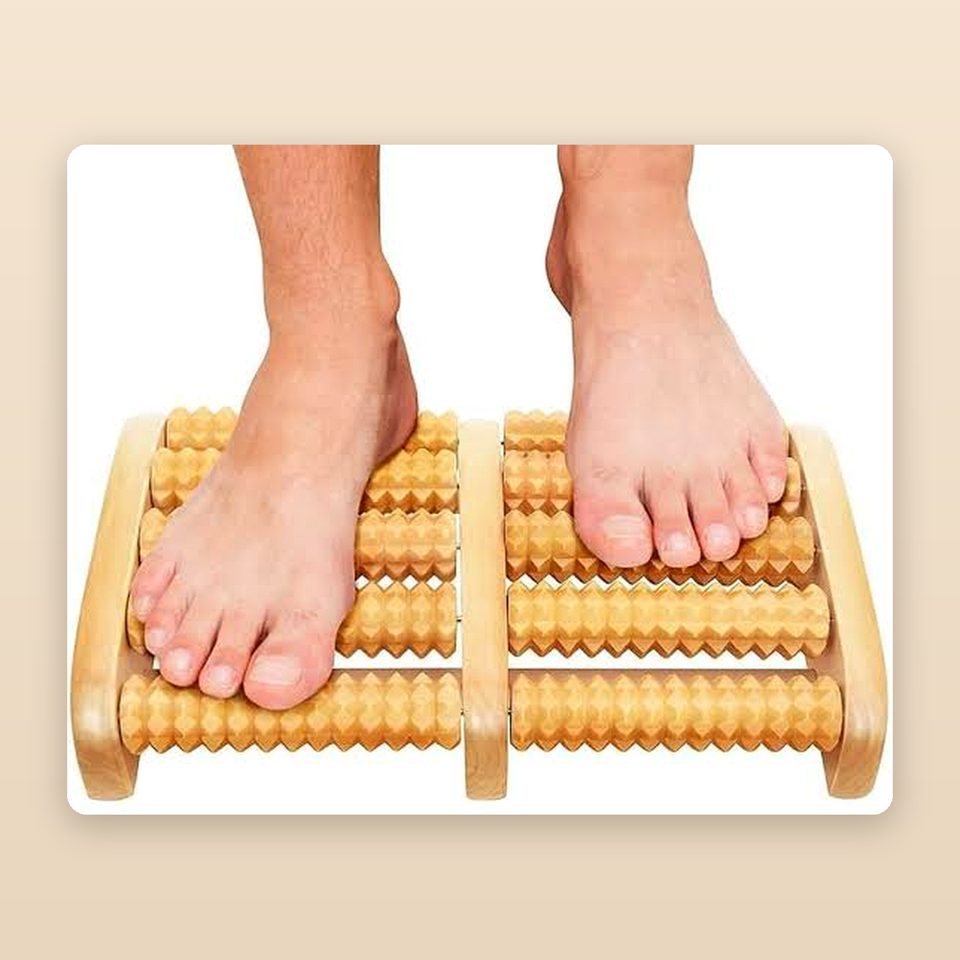
- Sit on a chair or charpai, place a wooden foot roller on the floor, and roll both soles slowly forward and back for 5 to 10 minutes with light pressure.
- Spend a little longer on the arch and the front of the foot, and keep the pressure comfortable. It should feel relaxing, never painful.
- Finish with your feet up on a pillow for ten minutes while you have your tea.
A wooden foot roller is a simple wooden frame with ridged rollers that you roll your bare soles over while sitting. Many people find it a relaxing way to end a long day on their feet, and it needs no electricity, batteries or charging, which suits homes with load shedding.
For more on how long and how often to roll, see our guide on how to use a wooden foot massager.
how to use a wooden foot massager
How is factory work different from shop or hospital work?
All three jobs keep you on your feet, but the details change what helps. Shopkeepers often stand behind a counter on tiles and can sit between customers, so we wrote a separate guide on foot relief for shopkeepers. Nurses walk long corridors in soft shoes through night duties, which we cover in foot pain for nurses.
Factory and warehouse workers usually have harder floors, heavier footwear, fixed break times and physical lifting on top of standing. That is why shoe fit and break habits matter even more here. For the general picture across all standing jobs, read foot massager for standing all day.
foot massager for standing all day
When should a factory worker see a doctor about foot pain?
This massager is a relaxation product, not a medical treatment. If foot pain is severe, lasts more than two weeks, keeps coming back, or comes with swelling, numbness or an injury, see a doctor.
Also see a doctor straight away after any crush injury, such as a crate, roll or trolley landing on your foot, even if you were wearing safety shoes. Don't roll a foot that is swollen, bruised, cut or recently injured. If you have diabetes, speak to your doctor before using any foot massager, and check your feet every day, because small rubs from work shoes can turn into sores without you noticing. The NHS also advises seeing a GP if heel pain hasn't improved after two weeks of self-care (NHS, Plantar fasciitis page).
Order the Wooden Foot Massager
The Sillanwali Wooden Foot Massager is a handmade wooden piece with dual-sided rollers for both feet, used while seated. It costs Rs 1,499, with free delivery anywhere in Pakistan on the massager and cash on delivery, so you pay only when it reaches your door in 3 to 4 days. Buying one for yourself and a colleague? 2 for Rs 2,700 or 3 for Rs 3,900, and bundle savings apply automatically at checkout. Order the Wooden Foot Massager or browse the Health & Wellness collection.
Frequently asked questions
- Can I use a foot roller before my shift as well?
- Yes, a short and gentle roll of two or three minutes before work is fine for most people. Keep the longer, slower session for the evening when your feet are most tired.
- Are steel toe shoes bad for your feet?
- Not if they fit. Steel or composite toe shoes protect you from serious injury, and most foot pain comes from the wrong size, a thin insole or worn-out shoes rather than the toe cap itself.
- How long should a factory worker roll their feet after work?
- About 5 to 10 minutes with light pressure is enough for most people. Stop if anything feels sharp or painful.
- Do I pay in advance for the massager?
- No. The Wooden Foot Massager is sent with cash on delivery anywhere in Pakistan, and delivery on the massager is free, so you pay Rs 1,499 to the rider when it arrives.