Foot Relief for Shopkeepers: A 10-Minute Routine After Long Counter Days
A foot massager for shopkeepers fits a simple 10-minute evening routine: stretch, rest, then roll tired feet seated. Plus counter habits that help.
Shopkeepers who stand behind a counter for 10 to 12 hours often go home with aching soles and heavy feet. Small changes help: a stool near the counter, supportive footwear, short sitting breaks, and a calm 10-minute routine at home. A foot massager for shopkeepers fits that evening routine as a simple, seated way to relax tired feet.
Why do a shopkeeper's feet hurt so much by closing time?
A dukandar's day is rarely one long stand. It is standing at the counter, walking to the back of the shop, climbing to the top shelf, carrying cartons from the godown, then standing again while a customer bargains. Many shops have hard tiled or cement floors, and many shopkeepers wear the same flat chappal all day because it is easy to slip on and off.
All of that adds up. By Maghrib the soles feel hot and tender, the heels ache, and the calves feel tight. On busy days, such as the Friday rush, the last days before Eid or the start of the wedding season, it can feel worse because there is no quiet hour to sit down.
That end-of-day ache is common and usually ordinary tiredness. The goal of this post is a practical routine you can actually keep, not a medical fix. If your pain is sharp, getting worse or comes with swelling, skip ahead to the section on when to see a doctor.
What can you change at the counter itself?
The biggest gains often come from habits during shop hours, before your feet are already worn out.
- Keep a stool behind the counter. Sit whenever there is no customer in front of you, even for two minutes. Standing up again when someone walks in is easy.
- Put a mat on hard floors. A thick rubber or foam mat behind the counter is kinder to the feet than bare tiles or cement.
- Wear supportive shoes in the shop. Thin, flat chappals give the arch very little support. A closed shoe or sandal with a cushioned sole and a back strap is a better choice for long hours. Keep the chappal for the walk home if you like.
- Shift your weight. Rest one foot on a low shelf or box under the counter, then switch. Changing position every few minutes takes load off the same spots.
- Plan godown trips. Group your carrying and stock checks together instead of going up and down the stairs all day.
- Drink water. Long days in a hot bazaar with only chai can leave you dehydrated and more tired overall.
None of these cost much, and together they can make the last hours of the day feel lighter.
What does a 10-minute evening routine look like?
When you get home, have your meal and sit down. Then try this, in order:
- Minutes 1 to 2: rest with feet up. Lie back or sit with your feet raised on a cushion or the edge of the charpai. Breathe slowly and let the legs relax.
- Minutes 3 to 4: gentle stretches. Sitting down, point and flex your toes ten times, then draw slow circles with each ankle. For the calves, stand facing a wall with one foot behind the other and lean in gently until you feel a stretch in the back leg, about 20 seconds each side.
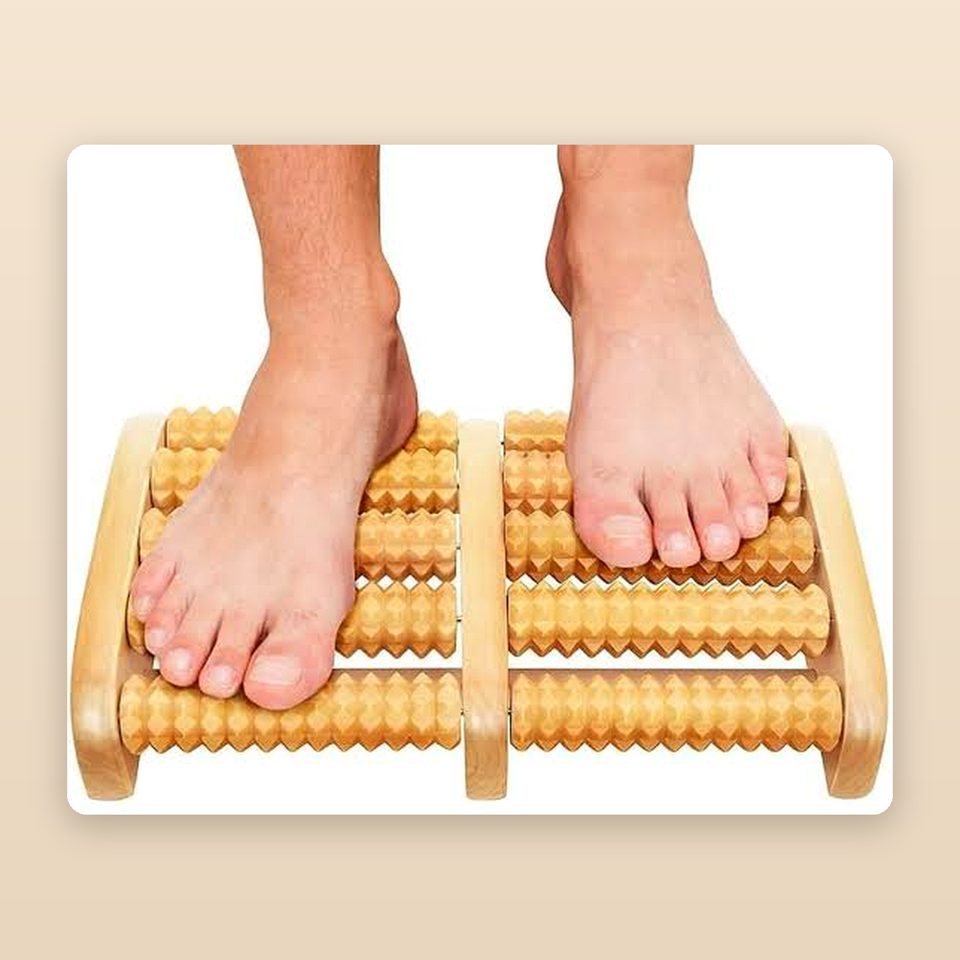
- Minutes 5 to 9: seated foot rolling. Sit on a chair or the sofa, place both feet on a wooden foot massager and roll slowly from heel to toe and back, with light pressure. Spend a little more time on the arch and the ball of the foot. Stop if anything feels sharp.
- Minute 10: rest. Put your feet flat on the floor for a minute before you get up.
That is it. Ten minutes, while the TV is on or while the children tell you about their day. For a fuller guide to pressure, timing and socks versus barefoot, read how to use a wooden foot massager.
how to use a wooden foot massager
Where should a shopkeeper keep a foot massager?
Keep it where you sit at the end of the day, not in a cupboard. Under the sofa, beside the charpai, or under the chair where you drink your evening chai all work well. If it is in sight, you will use it.
Some shopkeepers also like to keep one under the counter stool, for a few minutes of rolling during a slow afternoon. Only do this while seated, never while standing, and slide it out of the way so customers and helpers don't trip on it. Shop floors can be dusty, so wipe the rollers with a dry cloth now and then.
Is a wooden foot massager a good fit for a busy shopkeeper?
A wooden foot massager is a manual frame of ridged wooden rollers that turn as you move your feet over them. It suits a shopkeeper's life for a few plain reasons:
- No electricity or batteries, so load-shedding doesn't stop it and there is nothing to charge.
- It takes both feet at once, so a session fits into the time it takes to finish a cup of chai.
- You control the pressure, so you can go lighter on tender evenings.
- It is wood, so it is quiet and simple, with nothing to break inside.
Many people find a few minutes of rolling relaxing after a long day. What it won't do is replace rest, good footwear or medical care. Think of it as one part of the routine, alongside the counter habits above. For more ideas that apply to any job on your feet, see our guide on a foot massager for standing all day.
foot massager for standing all day
When should a shopkeeper see a doctor about foot pain?
This massager is a relaxation product, not a medical treatment. If foot pain is severe, lasts more than two weeks, keeps coming back, or comes with swelling, numbness or an injury, see a doctor.
Also see a doctor if heel pain is sharp with your first steps in the morning, if one foot looks red or hot, or if you have diabetes and notice any change in your feet. Don't roll feet that are swollen, injured, recently operated on, or have cuts or blisters. If morning heel pain is your main problem, our post on aedi ka dard subah ke waqt explains the common causes and self-care steps. For everyday tiredness, pairon ka dard and simple home steps covers rest and stretches in more detail.
pairon ka dard and simple home steps
How do you order the Sillanwali Wooden Foot Massager?
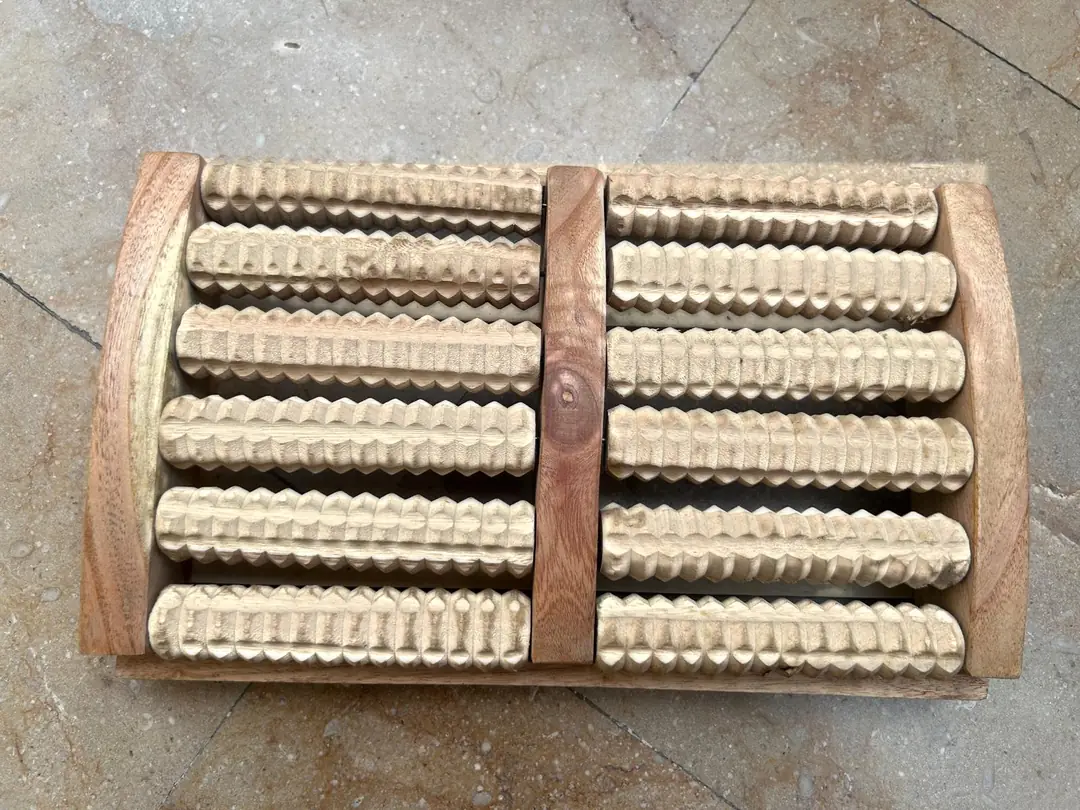
The Sillanwali Wooden Foot Massager is a handmade piece from Sillanwali, Sargodha, Punjab: natural wood, dual-sided rollers for both feet, used seated, with no power needed.
One massager is Rs 1,499, and the massager comes with free delivery anywhere in Pakistan. Payment is cash on delivery (COD), meaning you pay the courier in cash when the parcel reaches your home or shop, with no advance. Delivery takes 3 to 4 days. If your brother or father also runs the shop with you, 2 cost Rs 2,700 and 3 cost Rs 3,900, and 4 or more are Rs 1,250 each; bundle savings apply automatically at checkout.
Ready to end the shop day on your feet's terms?
Order the Wooden Foot Massager for Rs 1,499 with free delivery anywhere in Pakistan and cash on delivery, delivered in 3 to 4 days. Order the Wooden Foot Massager or browse the Health & Wellness collection.
Frequently asked questions
- Dukandar pairon ka dard kaise kam kare?
- Sit whenever the counter is quiet, wear cushioned shoes with arch support, use a mat on hard floors, and do a short evening routine of rest, stretches and gentle seated rolling. If pain is severe or lasts more than two weeks, see a doctor.
- Can I use the foot massager in my shop?
- Yes, as long as you sit down to use it. Keep it under your stool and slide it away afterwards so nobody trips on it.
- How many minutes should I roll my feet after work?
- About 5 minutes of rolling inside a 10-minute routine is enough for most people. Longer sessions on tender soles can leave them sore the next day.
- Does it need electricity?
- No. It is a manual wooden roller, so it works during load-shedding and has nothing to charge.