Aedi ka Dard Subah ke Waqt: What Morning Heel Pain Can Mean
Aedi ka dard subah ke waqt? Sharp heel pain with the first steps is a typical sign of plantar fasciitis. Simple self-care tips and when to see a doctor.
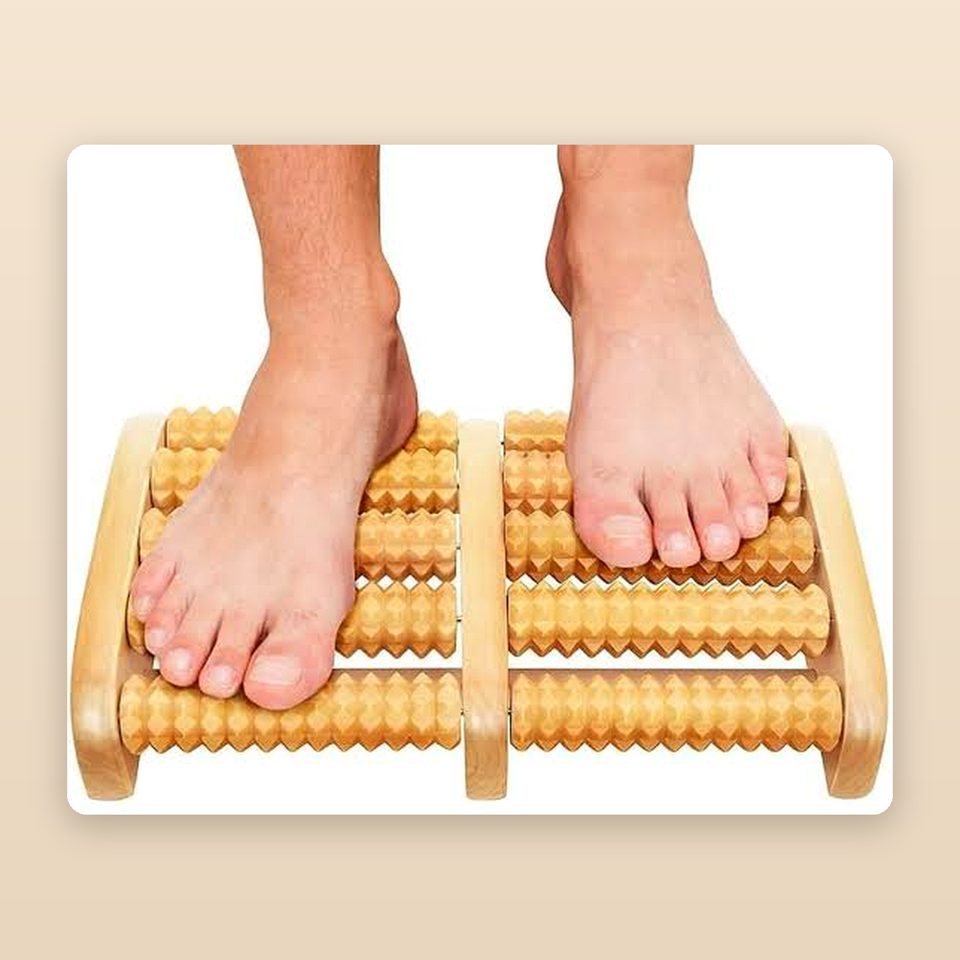
Aedi ka dard that is sharpest with your first steps out of bed, then eases as you move around, is a typical pattern of plantar fasciitis, according to the NHS. Most people can ease it at home with rest, supportive footwear and gentle stretches. If it hasn't improved after two weeks of self-care, see a doctor.
Why does aedi ka dard feel worst in the morning?
Aedi ka dard (also written airi, eirhi or pathon ka dard) simply means heel pain. Many people notice a particular pattern: the first few steps after waking up feel like stepping on a stone, and then the heel slowly loosens up over the next few minutes.
Plantar fasciitis is a strain of the plantar fascia, the thick band of tissue under your foot that connects your heel bone to your toes. The NHS describes the classic signs as:
- Pain on the bottom of the foot, around the heel and arch.
- Pain that is much worse when you first start walking after sleeping or resting.
- Pain that gets better once you move around, but worse again after long periods of standing or walking.
- Pain when you stretch the sole, for example raising your toes off the floor or climbing stairs.
The same pattern can show up after any long rest, such as getting up after a long drive.
Who is more likely to get morning heel pain?
The NHS lists several everyday factors that make plantar fasciitis more likely. Many of them match ordinary routines in Pakistani homes and workplaces:
- Doing a lot of standing or walking, or suddenly doing much more than usual: a shop counter, a kitchen, a classroom, a factory floor, or a week of wedding functions.
- Shoes with poor cushioning or support, such as thin, worn chappals.
- Tight calf muscles or a tight heel.
- Starting exercise on hard surfaces, like a new morning walk on a cement track.
Hard floors at home play a part too. Marble and tile floors are common in Pakistani houses, and walking barefoot on them all day gives the heel no cushioning at all. The NHS specifically advises trying not to walk barefoot on hard surfaces when you have this kind of pain.
What can you do at home for subah aedi mein dard?
People often search for "airi ka dard ka ilaj" hoping for one quick fix. The honest answer is a set of simple self-care habits. These are the steps the NHS says a GP will usually suggest first:
- Rest and raise your foot on a stool when you can.
- Hold an ice pack, or a bag of frozen peas, wrapped in a towel on the painful area for up to 20 minutes every 2 to 3 hours.
- Wear shoes with cushioned heels and good arch support, and consider insoles or heel pads.
- Do regular, gentle stretches for the sole of your foot and your heel.
- Avoid standing or walking for long periods while it is sore.
- Avoid high heels, tight pointed shoes, flip-flops and backless slippers.
Keep a pair of supportive slippers next to the bed so your heels never meet a cold marble floor first thing, and keep the routine going for a couple of weeks.
Where does gentle foot rolling fit in?
Rolling the arch of the foot over a smooth, firm object while seated is a common self-care habit in NHS hospital patient leaflets for plantar fasciitis, alongside stretching and better footwear. A wooden foot roller is one comfortable way to do this.
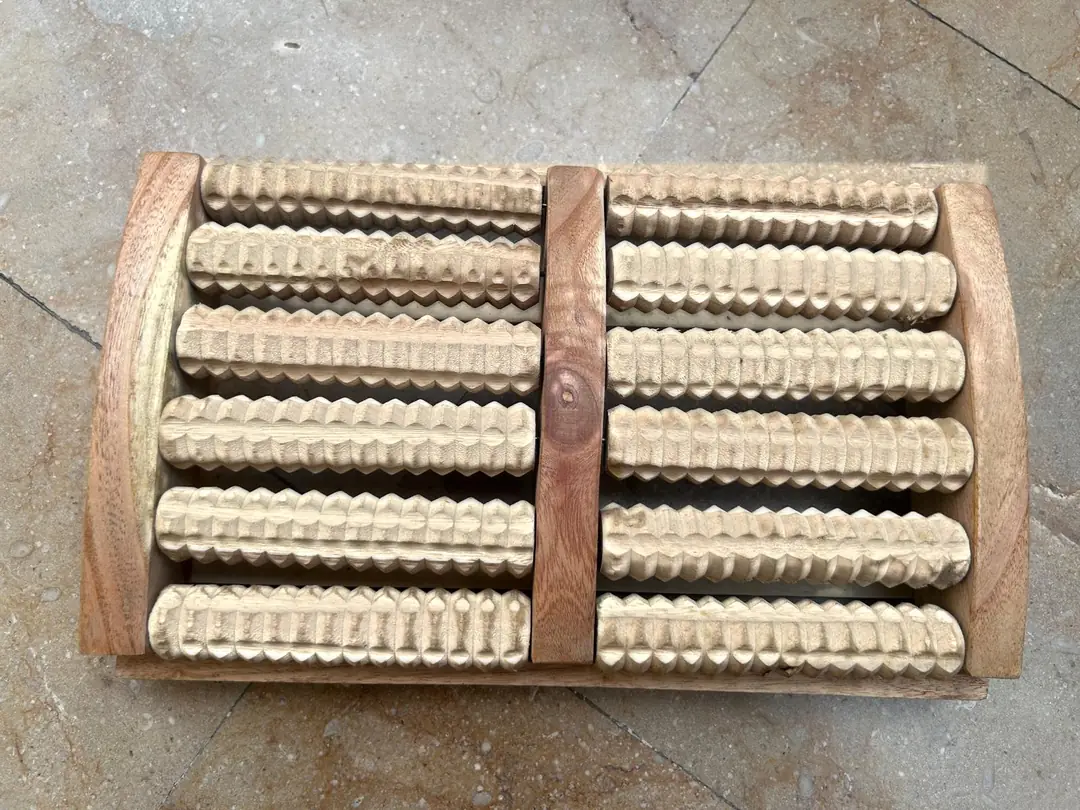
How to keep it gentle:
- Sit on a chair or the edge of the bed. Never stand on the roller.
- Roll the arch slowly back and forth for a few minutes with light pressure.
- Stay off the sorest spot on the heel; roll the arch and sole around it instead.
- Stop if anything feels sharp, burning or numb.
Many people find this soothing in the evening, and it fits easily into a morning routine before the first steps. It may help tired feet feel more relaxed, but it is a comfort habit, not a fix for heel pain. If you want to know what the rollers do as they turn, read how a wooden foot roller works.
how a wooden foot roller works
When should you see a doctor about heel pain?
This massager is a relaxation product, not a medical treatment. If foot pain is severe, lasts more than two weeks, keeps coming back, or comes with swelling, numbness or an injury, see a doctor.
The NHS also advises seeing a GP if heel pain is stopping you from doing normal activities, is getting worse, or comes with tingling or loss of feeling in the foot. If you have diabetes and foot pain, get it checked, because foot problems can be more serious with diabetes. Don't roll a foot that is swollen, injured or recently operated on.
Is morning heel pain the same as ordinary tired feet?
Not quite. Ordinary tiredness, or paon ki thakan, usually builds up through the day and feels better after a night's rest. Morning heel pain is the opposite: it is often worst right after rest. If your feet simply feel heavy and sore by evening, our guide to pairon ka dard and simple home steps is the better place to start. If long shifts on your feet are part of the problem, see our routines for a foot massager for standing all day.
pairon ka dard and simple home steps
foot massager for standing all day
Where can you order a wooden foot massager in Pakistan?
The Sillanwali Wooden Foot Massager is a handmade piece of natural wood from Sillanwali, Sargodha, Punjab. It has dual-sided rollers for both feet and is fully manual, with no plug or batteries.
- Price: Rs 1,499 for one.
- The massager comes with free delivery anywhere in Pakistan.
- Cash on delivery (COD): you pay the courier in cash when the parcel arrives, with no advance payment.
- Delivery takes 3 to 4 days.
For a household with more than one pair of tired feet, 2 cost Rs 2,700, 3 cost Rs 3,900, and 4 or more are Rs 1,250 each; bundle savings apply automatically at checkout. To compare options first, see our foot massager price in Pakistan guide.
foot massager price in Pakistan
Ready to make mornings a little easier?
Order the Wooden Foot Massager for Rs 1,499 with free delivery anywhere in Pakistan and cash on delivery, delivered in 3 to 4 days. Order the Wooden Foot Massager or browse the Health & Wellness collection.
Frequently asked questions
- Why does my heel hurt only for the first few steps after waking up?
- Pain that is worst with the first steps after sleep and then eases is a typical sign of plantar fasciitis, according to the NHS. If it doesn't improve after two weeks of self-care, see a doctor.
- Can I roll my foot if my heel hurts in the morning?
- Gentle seated rolling of the arch is a common self-care habit, and many people find it relaxing. Keep the pressure light, avoid the sorest spot and stop if anything feels sharp or numb.
- Do chappals make aedi ka dard worse?
- The NHS advises against flip-flops and backless slippers for this kind of heel pain. Shoes with a cushioned heel and good arch support are a better choice.
- Is a wooden foot massager a cure for heel pain?
- No. It is a manual relaxation product for home use, not a medical device. Severe or lasting heel pain needs a doctor.