A foot massager for standing all day: who actually needs one?
Nurses, retail staff, hairdressers and new parents pacing a hallway all get the same tired soles. Who a wooden foot roller genuinely suits, who should check with a professional first, and how it fits into a working day.
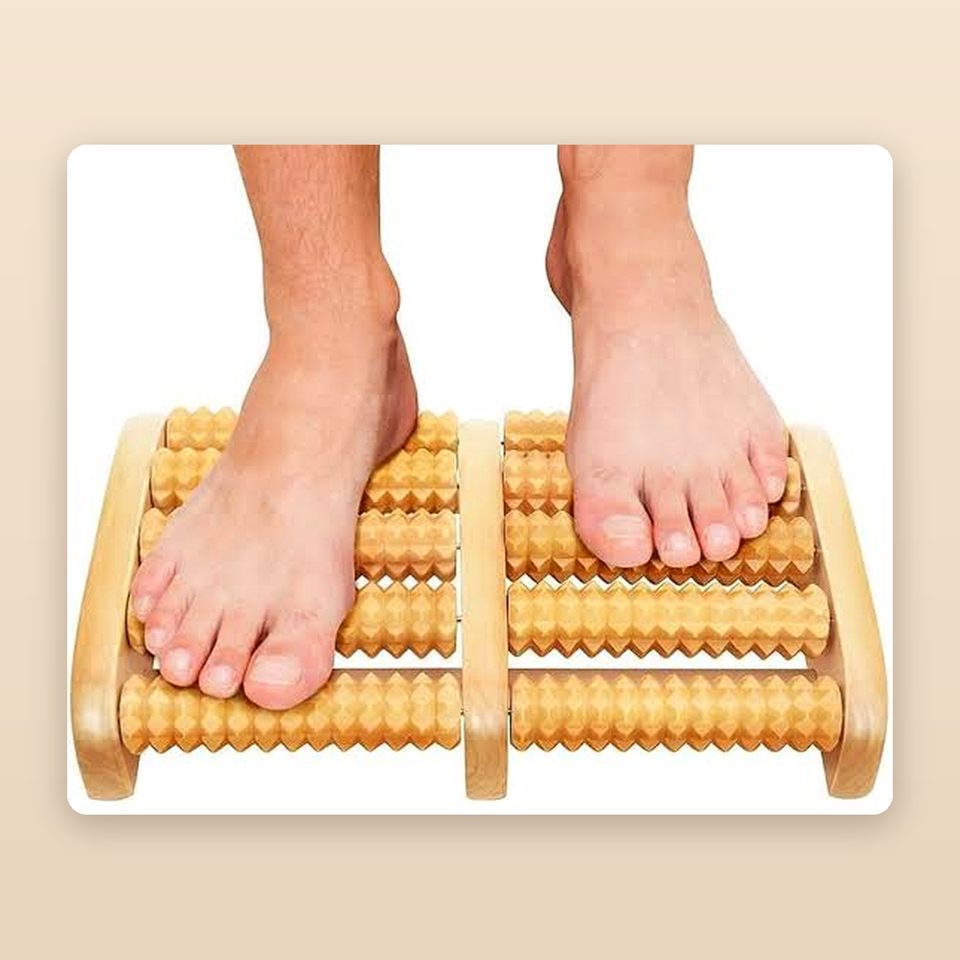
Anyone who spends most of a working day upright is a realistic match: nurses, retail and hospitality staff, hairdressers, teachers, warehouse workers, and new parents who spend hours pacing or rocking a baby. A wooden foot roller targets the same tired soles and arches, with nothing to plug in, charge or clean.
This one is turned by hand in Sillanwali, Sargodha district, Punjab, and measures roughly 28 to 33cm (11 to 13in) across, small enough to sit under a nurses' station, a shop counter or a changing table. It isn't the only foot massager for standing all day on the market, but it's one of the few with nothing to plug in, charge or break.
Who actually spends the most time standing at work?
Nurses, retail and hospitality staff, hairdressers, teachers, and warehouse or factory workers typically spend eight to twelve hours a shift on their feet, often on hard flooring with few chances to sit down. Hairdressers and teachers get less credit for this than nurses do, since their day mixes standing with short walking rather than one long stretch, but a full day of it is still tiring on the same soles and arches by the evening. New parents land in the same bracket without ever clocking in: pacing a hallway or standing to settle a baby adds up to hours of upright time in a day, and unlike a shift job, there's no fixed end time to look forward to.
Why do nurses' and retail workers' feet hurt more than an average office day?
Standing still or walking short, repetitive distances on hard floors lets blood pool in the lower legs rather than being pumped back up the way a longer stride does, which is part of why shift workers report more swelling and ache than people who walk further but sit down in between. An eight-to-twelve-hour shift is also simply longer than a typical desk-based working day, and a desk job comes with more natural excuses to get up and move around, whereas a ward, shop floor or salon often doesn't. Compression socks and supportive, cushioned shoes are the two changes podiatry guidance points to most often for this specific pattern, alongside sitting for even a few minutes each hour when a shift allows it.
Is postpartum foot pain from carrying and pacing with a baby actually a real thing?
It can be. New parents often go from an ordinary amount of standing to hours of pacing, rocking and carrying within a few weeks, and that sudden jump, combined with pregnancy-related changes to the ligaments in the foot, is a recognised trigger for arch and heel pain, including plantar fasciitis, in the postpartum period. The hormone relaxin loosens ligaments throughout the body during pregnancy, including in the feet, and that laxity doesn't reverse the moment a baby is born, which is one reason the extra standing lands harder than it would have done beforehand. This isn't something to self-diagnose from a blog post: persistent heel or arch pain after having a baby is worth raising with a GP or podiatrist rather than waiting it out.
Is a wooden roller a good foot massager for standing all day?
Rolling the sole over a ridged surface presses into the same tissue that tightens up after hours of standing, and the short-term relief many people feel is a genuine mechanical effect of pressure and movement, not a placebo. It doesn't remove the underlying cause, which is long hours on hard floors, so it works best alongside supportive footwear and short breaks rather than instead of them. We've written a longer explanation of the actual mechanics, including what a roller can't do, if you want the full picture.
How a wooden foot roller actually works
Who should check with a professional before using one?
A roller isn't the right first step if there's reduced feeling in the feet from a condition such as diabetic neuropathy, a balance problem, an open wound, or a diagnosed condition like plantar fasciitis that a clinician is already treating — in each case, ask a GP or podiatrist before adding pressure-based self-care. We've set out the fuller list of who should hold off in our gift-buying guide, since the same caution applies whether you're buying it for yourself or for someone else.
Who a wooden foot massager isn't right for
What do most foot massager guides for standing all day get wrong?
Most pages ranking for this search are shopping round-ups of electric massagers sorted by price and feature count, several of which don't say where the product is made or who makes it. A wooden roller doesn't fit that comparison format since there's no motor, heat setting or app to review, but it does answer a narrower question honestly: whether a simple mechanical tool is worth keeping at a nurses' station or shop counter, without pretending it fixes the underlying cause of standing-related pain or belongs to any particular job title.
What else actually helps besides a foot roller?
A roller is one tool, not a complete fix, and none of the following costs much or takes long, which matters on a day that's already full. It's worth pairing rolling with habits podiatry guidance for people who stand all day repeats often:
- Rotate two pairs of supportive, cushioned shoes rather than wearing one pair until it's worn flat.
- Wear proper shoes indoors too — bare feet or flat slippers on a hard kitchen or hallway floor undoes a lot of the benefit of good shoes at work.
- Try a daily calf stretch against a wall; tight calves pull on the same tissue that gets sore under the sole.
- Sit down for a few minutes every hour where a shift or a nap schedule allows it, rather than saving the only break for the end.
How do you fit a two-minute foot-rolling habit into a working day?
The habit sticks best when it's attached to something you already do, rather than added as a new task: keep the roller under a desk or by the door where shoes come off, and roll for a minute or two per foot the moment you sit down, before your feet have a chance to stiffen up. In a workplace where personal items are allowed in a staff room or behind a counter, a roller left there permanently removes the excuse of having to remember to bring one in. For a new parent, the equivalent moment is the first time you sit down after a feed or a nap — a roller by the sofa works the same way a phone charger by the bed does, there for the moment you finally stop moving.
How do you buy a wooden foot massager in Pakistan?
This is the one market where the checkout works end to end today: order directly on the product page for Rs. 1,199 plus a flat Rs. 250 cash-on-delivery charge, and it arrives within 3 to 4 days anywhere in Pakistan, with no advance payment and no account needed.
Order in Pakistan — Rs. 1,199, cash on delivery
How do you buy one from the UK?
The online checkout only takes cash-on-delivery orders inside Pakistan, so a UK order goes through the workshop directly: message on WhatsApp or by email with your address, and shipping and payment are agreed with you before anything is sent, the same way as any other piece ordered for international delivery.
Frequently asked questions
- Do nurses and retail workers really benefit from a foot roller?
- Many report short-term relief after a shift, since the mechanism — pressure and movement on a tired sole — is genuine, though it works best alongside supportive shoes and scheduled breaks rather than as the only fix for hours of standing on hard floors.
- What's the quickest way to relieve tired feet after a long shift?
- Sit down, take your shoes off, and roll each foot for a minute or two with your legs raised slightly if you can; podiatry guidance also points to compression socks worn during the shift as one of the more effective changes for reducing end-of-day swelling.
- Is foot pain after having a baby normal?
- It's common enough to be recognised by podiatrists — a sudden jump in standing, pacing and carrying, combined with pregnancy-related changes to the ligaments in the foot, is a known trigger for arch and heel pain. Persistent pain is worth raising with a GP or podiatrist rather than assuming it will pass on its own.
- Can pregnant women use a wooden foot roller?
- There's no wood-specific reason it would be unsafe, but pregnancy can also change balance and foot sensitivity, so it's worth checking with a midwife or GP first, rather than assuming any foot-care tool is automatically fine to use seated or otherwise.
- Do compression socks work better than a foot roller for standing all day?
- They do different jobs — compression socks are worn during a shift to support circulation as it happens, while a roller is used afterwards to ease tissue that's already tightened up, so many people who stand all day use both rather than choosing one over the other.
- Is it bad for your feet to stand all day, long-term?
- Sustained standing on hard floors is linked to a higher rate of foot, knee and lower-back complaints over a career, which is why footwear, floor mats and scheduled breaks feature so often in occupational health guidance for nurses, retail staff and similar roles.
- How often should someone who stands all day use a foot roller?
- A short session, a couple of minutes per foot, once a day after a shift is a reasonable starting point; there's no published standard specific to occupational foot fatigue, so treat it as a comfort habit rather than a prescribed routine.