Wooden foot roller or electric foot massager: which one to buy
Price, running cost, upkeep, travel and safety — a plain comparison of a hand-turned wooden foot roller and an electric foot massager.
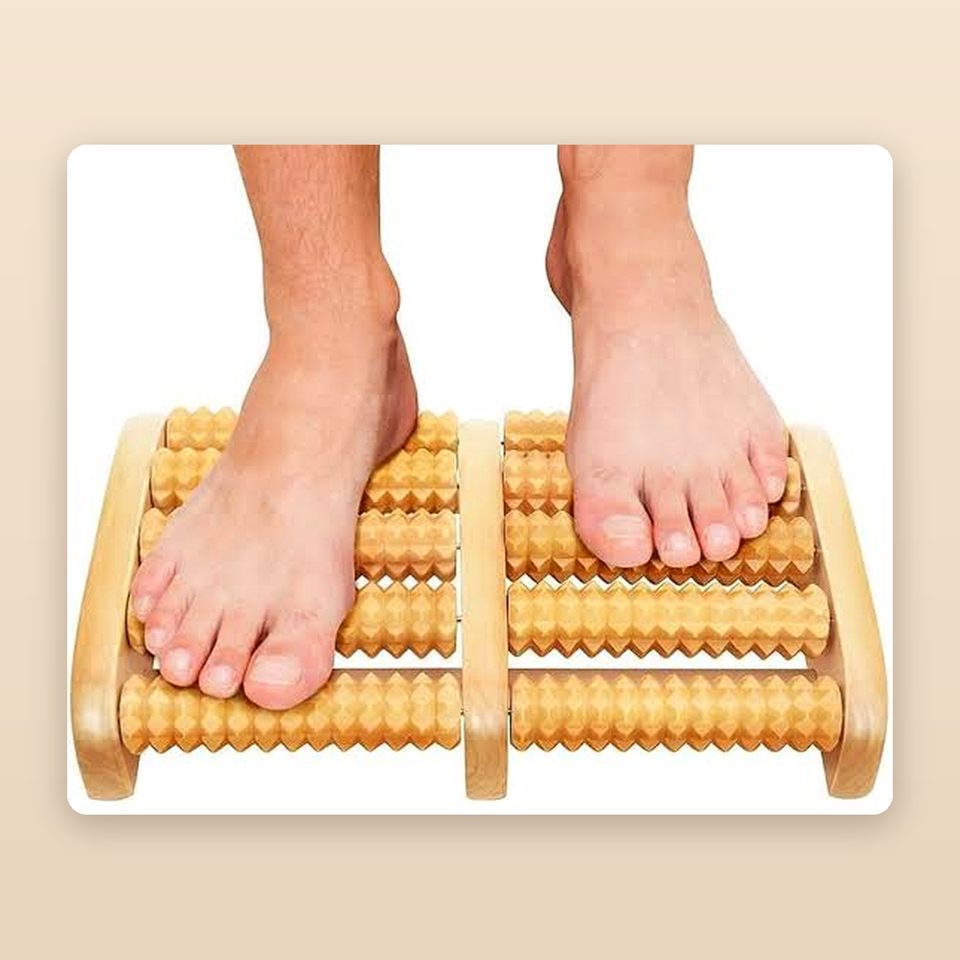
A wooden foot roller suits anyone who wants a cheap, silent, maintenance-free way to work tired soles by hand; an electric foot massager suits someone who wants heat, air compression or kneading without moving their own feet, and is willing to pay more, charge or plug it in, and clean it. Neither replaces medical treatment.
What's the actual difference between a wooden foot massager and an electric one?
A wooden roller is a solid shaped frame with no moving parts beyond the rollers themselves — you supply the movement and the pressure by shifting your foot over it. An electric foot massager has a motor, and usually adds one or more of heat, air compression bags, kneading nodes or EMS pads, so it can knead, squeeze or pulse your foot while you sit still.
Ours is the first kind: two rows of ridged rollers in a frame roughly 28 to 33cm (11 to 13in) across, 18 to 20cm (7 to 8in) front to back and 5 to 6.5cm (2 to 2.5in) high, turned by hand in Sillanwali, Sargodha district, Punjab. Because each is turned individually rather than moulded, sizes vary slightly piece to piece.
How much does each one cost in the UK?
Electric models vary enormously with features. As one example from a single well-known brand, UK retail listings for Renpho foot massagers run at £89, £175 and £549, the top one being a heated air-compression leg-and-foot unit. Ours sells for Rs. 1,199 plus a flat Rs. 250 delivery inside Pakistan; a UK order is quoted per order by the workshop, because international shipping is arranged directly rather than through a fixed checkout price.
Does one actually work better than the other?
We're not aware of any independent trial comparing a wooden roller against an electric massager for everyday foot fatigue, so neither can honestly claim to be proven superior. What differs is the sensation: a wooden roller gives firm, directed pressure exactly where you place your foot, while heat and air compression spread a broader, more passive sensation across the whole foot without you doing anything.
Which needs less maintenance?
A wooden roller needs almost nothing — wipe it with a dry or barely damp cloth, and keep it away from standing water and radiators. An electric massager has more to look after: a fabric liner or foot pocket that needs wiping or washing, a cable or battery to keep in working order, and eventually a motor or heating element that can fail and isn't something you repair at home.
Which is easier to travel with?
A wooden roller is light enough to carry in one hand, needs no charger, plug adapter or voltage check, and works the moment you put your feet on it, so it slips into a suitcase or sits under a desk at work. Most electric massagers are bulkier, need mains power or a charged battery, and a cordless model's lithium battery can fall under airline carry-on rules.
Is either type risky for anyone in particular?
Electric massagers with heat or EMS pads commonly carry manufacturer warnings about use during pregnancy, with a pacemaker, with epilepsy, or with reduced foot sensation from a condition such as diabetic neuropathy — read the specific product's instructions before using one if any of that applies. A wooden roller has no electrical or heating element, so those particular warnings don't apply, though anyone with an open wound, infection or fresh injury on the foot should avoid rolling over it too.
Which is better for plantar fasciitis or a diagnosed foot condition?
Neither is a proven treatment for a diagnosed condition like plantar fasciitis — both are self-care tools, not medical devices, and persistent or worsening pain belongs with a podiatrist, physiotherapist or GP. If your clinician is happy for you to use one as part of a wider routine, the choice is about comfort: some people prefer a heated, hands-free session, others prefer steering the pressure onto one sore spot themselves.
How a wooden foot roller actually works, mechanically
So which one should you actually buy?
It comes down to budget, noise and how hands-off you want the experience to be, more than which one is objectively better. A wooden roller makes sense if:
- You want the lowest upfront cost and no running cost at all.
- You'd rather control the pressure yourself than have a machine set it.
- You want something silent that needs no charging and works in a power cut.
- You're buying for travel or a desk at work, where size and weight matter.
An electric massager makes more sense if:
- You want heat, air compression or kneading without moving your own feet.
- You're comfortable with a higher price and a small ongoing electricity cost.
- You don't mind charging it, cleaning a fabric liner, and replacing it when the motor wears out.
- None of the manufacturer's electrical or heat warnings apply to you.
How do you buy the wooden version in Pakistan?
Order directly on the product page for Rs. 1,199 plus a flat Rs. 250 delivery, paid cash on delivery, and it arrives within 3 to 4 days anywhere in Pakistan — no advance payment or account needed.
Order in Pakistan — Rs. 1,199, cash on delivery
How do you buy it from the UK?
The online checkout only handles cash-on-delivery orders inside Pakistan, so a UK order goes through the workshop directly — message on WhatsApp or by email with your address, and shipping and payment are agreed with you before anything is sent, the same way every other piece is handled for international delivery.
Frequently asked questions
- Is an electric foot massager better than a wooden roller for tired feet?
- Neither is objectively better. An electric massager adds heat, compression or kneading you don't have to power yourself, while a wooden roller gives direct control over pressure and costs far less to buy and nothing to run. Choose on budget, noise and whether you want a hands-off session.
- How much does an electric foot massager cost in the UK?
- It depends heavily on features. UK listings for one well-known brand, Renpho, run at £89, £175 and £549, with heat and air compression pushing the price up. A wooden roller has no motor or electronics, which is most of why it costs so much less.
- Do electric foot massagers use a lot of electricity?
- Not much per session — most run from a mains lead or a rechargeable battery. The practical difference is that a wooden roller needs no power source at all, so it never needs charging and works during a power cut.
- Can electric foot massagers irritate the skin?
- Some buyers report itchiness or mild irritation from the fabric lining or heat on particular electric models, though that's customer feedback rather than a rule for every product. A solid wood roller has no fabric lining or heating element, so that kind of irritation doesn't come into it.
- Which is easier to travel with, a wooden roller or an electric massager?
- The wooden roller: it's light enough to carry in one hand and needs no charger, cable or plug adapter. Electric models are usually bulkier, need power, and a cordless unit's lithium battery can be subject to airline carry-on rules.
- Is EMS in a foot massager safe for everyone?
- EMS sends small electrical pulses through pads to make muscles contract, and manufacturers commonly warn against it during pregnancy or with a pacemaker, epilepsy or reduced foot sensation. Check with a doctor first if any of those apply; a purely mechanical wooden roller carries none of those electrical warnings.
- Which is better for plantar fasciitis, wooden or electric?
- Neither is a proven treatment on its own, and a diagnosed case is best taken to a podiatrist or physiotherapist. If a clinician is happy for you to use one, some people find a heated electric model more soothing, while a wooden roller lets you aim pressure at one specific sore spot.
- How long does a wooden foot roller last compared with an electric one?
- A solid wood roller has no motor, battery or heating element to wear out, so with dry storage away from radiators it can last for years. An electric massager's lifespan is set by its motor, heater and battery, and those parts usually aren't repairable at home.