Can a Foot Roller Help Plantar Fasciitis? What the Evidence Says
Can a foot roller for plantar fasciitis help? NHS leaflets include gentle arch rolling with stretches and good shoes. Here is what the evidence says.
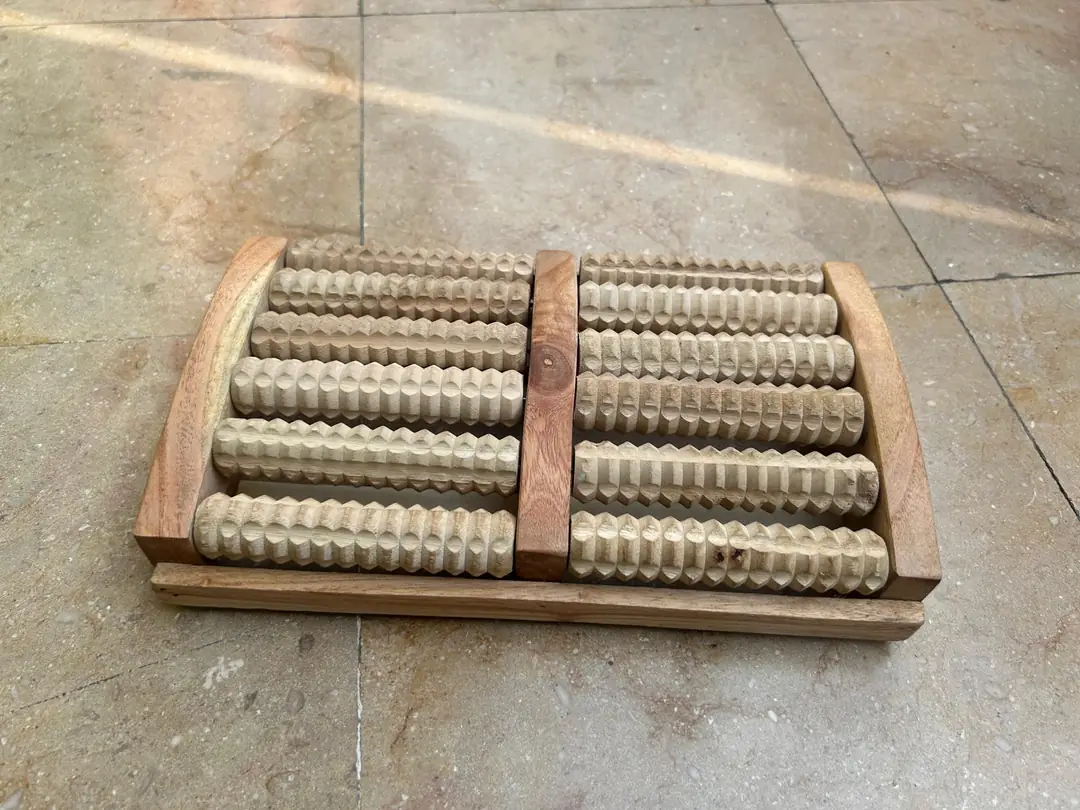
A foot roller for plantar fasciitis can be a comfortable part of home self-care, but it is not a fix on its own. NHS hospital leaflets include gently rolling the arch over a firm object for a few minutes, alongside calf and sole stretches, supportive shoes and rest. Research on rolling is small and short-term, so treat it as a comfort habit.
What is plantar fasciitis, in plain words?
Plantar fasciitis is a strain of the plantar fascia, the thick band of tissue that runs under the foot from the heel bone to the toes. The NHS describes the typical pattern as pain under the heel and arch that is worst with the first steps after sleeping or sitting, eases as you move, and returns after long periods on your feet.
In Pakistan many people simply call it aedi ka dard. For what morning heel pain means, see our Roman Urdu guide to aedi ka dard subah ke waqt. This post looks at one habit, rolling the foot, and the evidence behind it.
What do NHS leaflets say about rolling the foot?
Rolling appears in official patient advice, which is why so many people search for it. Two examples:
- A University Hospitals Coventry and Warwickshire NHS leaflet on plantar fasciitis describes plantar fascia massage by rolling the arch of the foot over an object for about 2 to 5 minutes.
- A Royal Berkshire NHS leaflet suggests rolling the sole over a ball or a frozen water bottle, together with stretching exercises, and advises avoiding walking barefoot on hard ground.
Rolling is listed as one item in a routine, beside stretches, footwear and rest, not as the main answer. The NHS plantar fasciitis page itself puts rest, raising the foot, ice packs, cushioned shoes, insoles and regular stretching first.
What does the research on rolling show?
The honest summary is that the evidence is limited. A 2021 randomised trial published in an open-access journal and indexed on PubMed Central compared foam rolling with self-stretching in 50 people with plantar fasciitis. Both groups reported less pain and better ankle movement straight after the session, and there was no meaningful difference between the groups in heel pain scores. The foam roller group did better on pressure tolerance in the calf muscles.
Three points keep this in perspective:
- It was a small study with 50 participants.
- It measured effects immediately after the session, not over weeks or months.
- It used a foam roller, not a wooden foot roller, so the results can't be transferred directly.
The 2023 heel pain clinical practice guideline published in the orthopaedic journal JOSPT focuses on approaches such as manual work by a clinician, stretching, taping, footwear and orthoses. It does not single out home foot rollers as a recommended stand-alone option. So the fair conclusion is that rolling may feel good and fits well beside stretching, but no one should promise it will resolve plantar fasciitis.
How do you roll your foot gently if your heel hurts?
If your doctor is happy for you to try it, keep the routine short and seated. A wooden roller with ridged rollers, like a dual-sided wooden foot massager, is one way to do it at home.
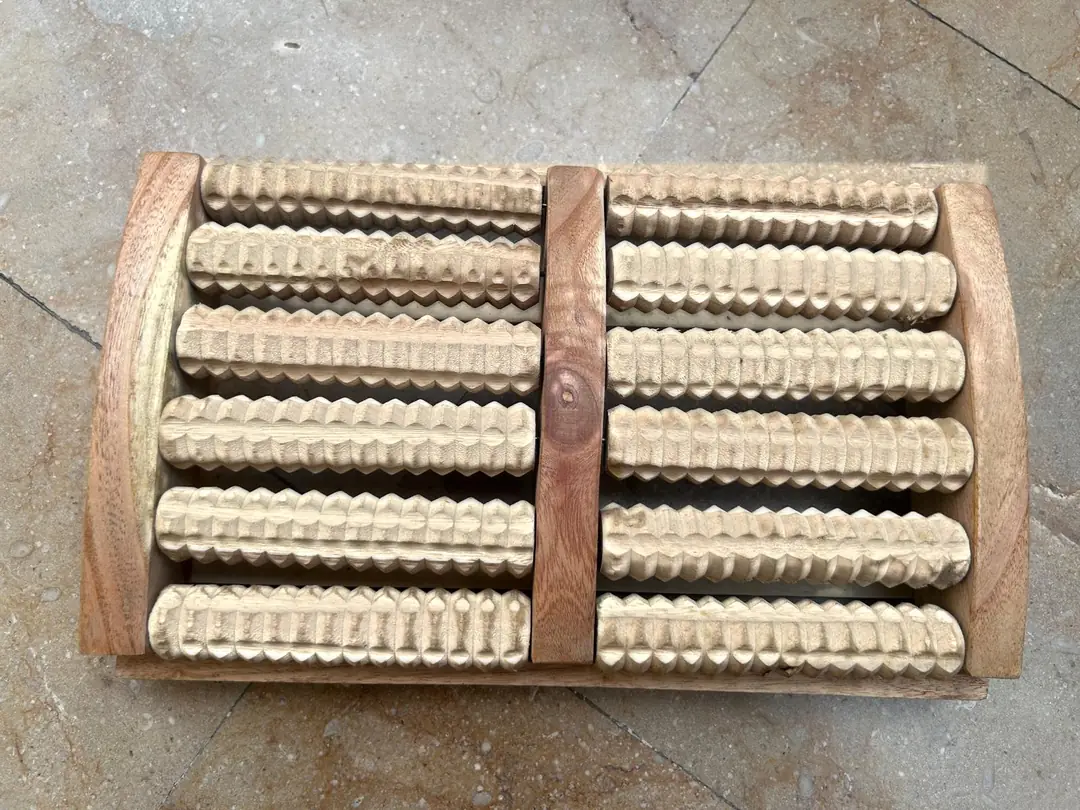
- Sit on a chair, sofa or the edge of a charpai. Never stand on the roller with your full weight.
- Roll the arch slowly from the ball of the foot towards the heel and back, with light pressure.
- Keep it to a few minutes, in line with the 2 to 5 minutes mentioned in the NHS leaflet.
- Work around the sorest spot on the heel rather than pressing straight into it.
- Stop if you feel sharp pain, burning, tingling or numbness.
Many people like a short roll in the evening after a day on their feet, and some use it before the first steps of the morning. For general timing and how often to use a roller, see how to use a wooden foot massager.
how to use a wooden foot massager
Which plantar fasciitis exercises go well with rolling?
Searches for "plantar fasciitis exercises in Urdu" usually want simple stretches that can be done at home. NHS and hospital leaflets commonly describe moves like these:
- Calf stretch against a wall: one foot forward with the knee bent, the back leg straight and the heel flat on the floor, holding for a slow count.
- Towel stretch: sitting with legs straight, loop a towel or dupatta around the ball of the foot and gently pull the toes towards you.
Stretch gently and never bounce. If an exercise makes the pain clearly worse, stop and ask your doctor or a physio which version suits you. Footwear matters too: thin, worn chappals and backless slippers give the heel little support, and walking barefoot on marble or tiled floors all day is something the Royal Berkshire leaflet advises against.
When should you see a doctor about plantar fasciitis?
This massager is a relaxation product, not a medical treatment. If foot pain is severe, lasts more than two weeks, keeps coming back, or comes with swelling, numbness or an injury, see a doctor.
The NHS also advises seeing a GP if heel pain stops you doing normal activities, is getting worse, or comes with tingling or loss of feeling. If you have diabetes and foot pain, get it checked, because foot problems can be more serious with diabetes. Don't roll a foot that is swollen, injured or recently operated on.
Where can you get a wooden foot roller in Pakistan?
The Sillanwali Wooden Foot Massager is a handmade piece of natural wood from Sillanwali, Sargodha, Punjab, with dual-sided rollers for both feet. It is manual, with no plug or batteries, and it is meant to be used seated.
- Price: Rs 1,499 for one.
- The massager comes with free delivery anywhere in Pakistan.
- Cash on delivery: you pay the courier when the parcel arrives, with no advance payment.
- Delivery takes 3 to 4 days.
If more than one person at home has sore heels, 2 cost Rs 2,700, 3 cost Rs 3,900, and 4 or more are Rs 1,250 each; bundle savings apply automatically at checkout. If long standing at work is behind your heel pain, our routines for a foot massager for standing all day may also help you plan your day.
foot massager for standing all day
Want a gentle rolling habit at home?
Once your doctor is happy for you to try it, order the Wooden Foot Massager for Rs 1,499 with free delivery anywhere in Pakistan and cash on delivery, delivered in 3 to 4 days. Order the Wooden Foot Massager or browse the Health & Wellness collection.
Frequently asked questions
- Is rolling a frozen water bottle better than a wooden roller?
- A Royal Berkshire NHS leaflet mentions a ball or a frozen bottle, and the cold may feel soothing. A wooden roller gives a steady, ridged surface for both feet; neither is proven to be better, so choose what feels comfortable.
- How long should I roll my foot for heel pain?
- A University Hospitals Coventry and Warwickshire NHS leaflet mentions about 2 to 5 minutes of rolling the arch. Keep the pressure light and stop if it hurts.
- Can a foot roller cure plantar fasciitis?
- No. Research on rolling is small and short-term, and the wooden roller is a relaxation product, not a medical device. Lasting heel pain needs a doctor.
- Should I roll my foot on the most painful spot?
- It is gentler to roll the arch and sole around the sorest part of the heel. Pressing hard on a painful spot can make it feel worse.