Barefoot on Marble and Tile Floors: Why Your Heels Ache
Walking barefoot on a hard floor all day can leave heels aching. Why marble and tile floors hurt, simple home fixes, and when heel pain needs a doctor.
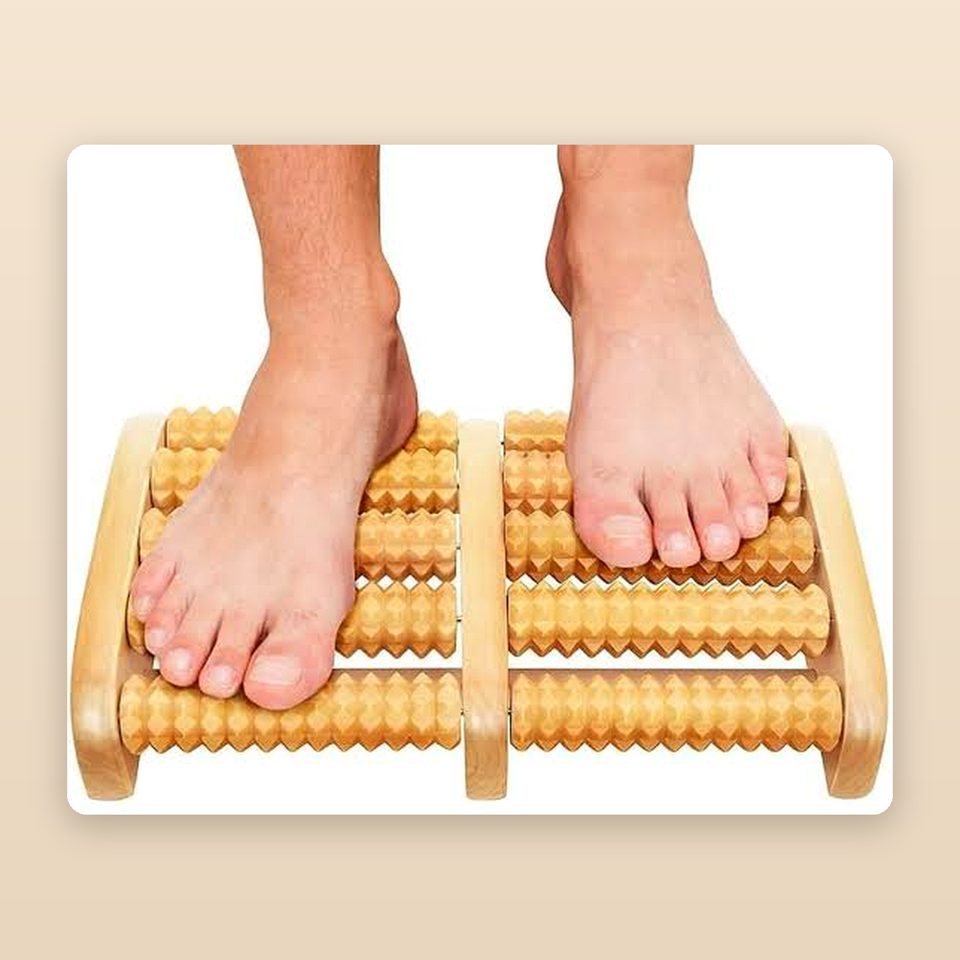
Walking barefoot on a hard floor for hours gives your heels no cushioning, so heel pain after a day on marble or tile is common. The NHS lists standing on hard surfaces for too long as a cause of heel pain and advises against long periods of walking or standing, especially barefoot. Soft house slippers, rugs where you stand and short rests usually help.
Why do marble and tile floors make your heels ache?
Marble, terrazzo and ceramic tile are everywhere in Pakistani homes. They stay cool in summer, they are easy to wash, and a quick pocha keeps them clean. The downside is that they don't give at all.
Every step lands on the heel first. On a carpet or a cushioned sole, some of that impact is absorbed. On bare marble, the fat pad under your heel and the band of tissue along the sole take all of it. Do that from fajr until late at night, between the kitchen, the courtyard and the stairs, and many people end the day with a dull, bruised feeling in the heels.
The NHS heel pain page names three everyday causes that fit this picture: exercising or doing too much, standing on hard surfaces for too long, and being overweight. It also warns not to try to diagnose the cause of the pain yourself.
Is nangay paon chalna at home really a problem?
Nangay paon chalna, walking barefoot, is a habit in many homes, and plenty of people do it without trouble. It becomes a problem when it is combined with long hours on your feet, a hard floor and heels that are already sore.
That is why the NHS self-care advice for heel pain includes a simple "don't": do not walk or stand for long periods, especially barefoot. It doesn't mean you can never step on the floor without shoes. It means that if your heels already ache, hours of barefoot standing on marble are worth cutting back.
Some situations make it worse:
- Cooking for a big family, standing at the counter for two or three hours at a time.
- Floor-washing days, when you are on your feet and moving fast on a wet surface.
- Guests or functions at home, when you barely sit down from morning till night.
- A new house with fresh tile, after years in a home with rugs or a cement floor that felt softer underfoot.
What home fixes help with marble floor foot pain?
These are simple, low-cost changes, most of them taken from NHS self-care advice for heel pain:
- Keep a pair of house chappal or slippers with a cushioned heel and a soft sole by the bed and by the door. The NHS suggests wide, comfortable shoes with a low heel and soft sole.
- Avoid thin, flat, backless slippers if your heels already hurt; they protect your skin from the floor but give the heel little support.
- Put a rug, dari or thick mat where you stand longest: in front of the stove, the sink and the ironing spot.
- Sit down for tasks that don't need standing, such as chopping vegetables or folding clothes.
- Rest and raise your feet when you can, and try gentle calf and sole stretches each day.
- If a heel is sore, the NHS suggests an ice pack, or a bag of frozen peas wrapped in a towel, for up to 20 minutes every 2 to 3 hours.
- Ask a pharmacist about soft insoles or heel pads for your outdoor shoes.
If the pain is sharpest with your very first steps after waking, read our guide to aedi ka dard subah ke waqt, which covers that pattern in detail.
Where does an evening foot roll fit in?
After a day on hard floors, many people like to sit down and give their feet a few minutes of gentle movement. Rolling the soles over a smooth wooden roller while seated is one simple way to do that. It may help tired feet feel more relaxed, and it turns the end of the day into a short, quiet habit.
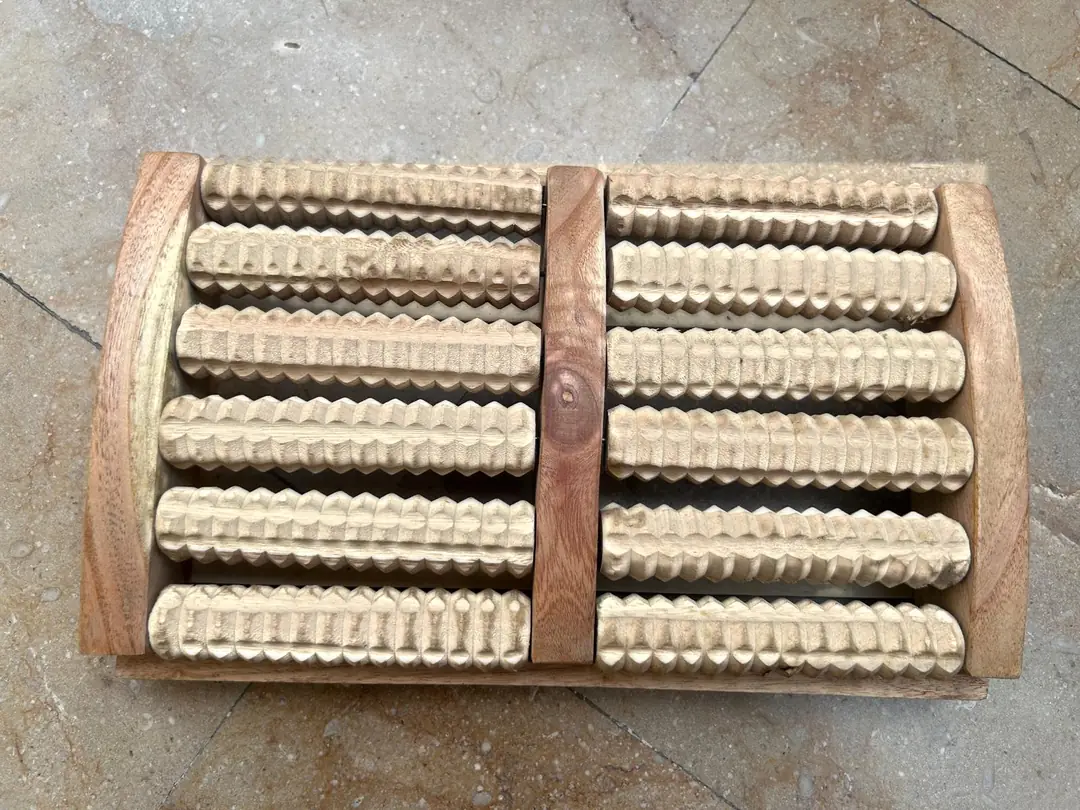
A gentle five-minute routine:
- Sit on a chair or the edge of the charpai with both feet flat on the roller.
- Roll slowly from the ball of the foot to just in front of the heel, with light pressure.
- Keep the sorest part of the heel off the roller; work the arch and sole around it instead.
- Stop if anything feels sharp, burning or numb.
Never stand on the roller, and don't use it on a foot that is swollen, injured, has broken skin or was recently operated on. For step-by-step timing, see how to use a wooden foot massager.
how to use a wooden foot massager
How is this different from tiredness after standing at work?
Heel ache from barefoot floors is a home problem with home fixes: slippers, rugs and sitting down more often. Foot tiredness from a job, like a shop counter or a classroom, depends on work shoes and shift patterns instead. If long working hours are the bigger issue, our guide to a foot massager for standing all day is the better place to start.
foot massager for standing all day
When should you see a doctor about heel pain?
This massager is a relaxation product, not a medical treatment. If foot pain is severe, lasts more than two weeks, keeps coming back, or comes with swelling, numbness or an injury, see a doctor.
The NHS also says to see a GP if heel pain is stopping you from doing normal activities, is getting worse, or comes with tingling or loss of feeling in the foot. If you have diabetes, get any foot pain checked and speak to your doctor before using a foot massager.
Where can you order the Sillanwali Wooden Foot Massager?
The Wooden Foot Massager is a handmade piece of natural wood from Sillanwali, Sargodha, Punjab. It has dual-sided rollers for both feet and works by hand, with no plug or batteries, so it can sit next to the sofa or under the bed.
- One massager costs Rs 1,499.
- The massager comes with free delivery anywhere in Pakistan.
- Pay cash on delivery when the parcel arrives, with no advance payment.
- Delivery takes 3 to 4 days.
If everyone at home is on the same marble floors, 2 cost Rs 2,700, 3 cost Rs 3,900, and 4 or more are Rs 1,250 each. Bundle savings apply automatically at checkout.
Ready to give your heels a softer end to the day?
Order the Wooden Foot Massager for Rs 1,499 with free delivery anywhere in Pakistan and cash on delivery, delivered in 3 to 4 days. Order the Wooden Foot Massager or browse the Health & Wellness collection.
Frequently asked questions
- Can walking barefoot on marble cause heel pain?
- Long hours of walking or standing barefoot on a hard floor give the heel no cushioning, and the NHS lists standing on hard surfaces for too long as a cause of heel pain. Supportive house slippers and rugs where you stand usually help.
- What kind of house chappal is best for sore heels?
- The NHS suggests wide, comfortable footwear with a low heel and a soft sole, plus soft insoles or heel pads. Thin, flat, backless slippers give the heel little support.
- Should I roll my heel if it hurts after a day on tile floors?
- Roll gently while seated and keep the sorest spot off the roller, working the arch and sole instead. Stop if anything feels sharp, burning or numb.
- Is a wooden foot massager a treatment for heel pain?
- No. It is a manual relaxation product for home use, not a medical device. Heel pain that lasts more than two weeks or keeps getting worse needs a doctor.