Wooden surahi sets: what they are, and buying one in the UK
What a decorative wooden surahi actually is, how it differs from a dallah, real sizes in cm and inches, and how to order a hand-turned sheesham set for UK delivery.

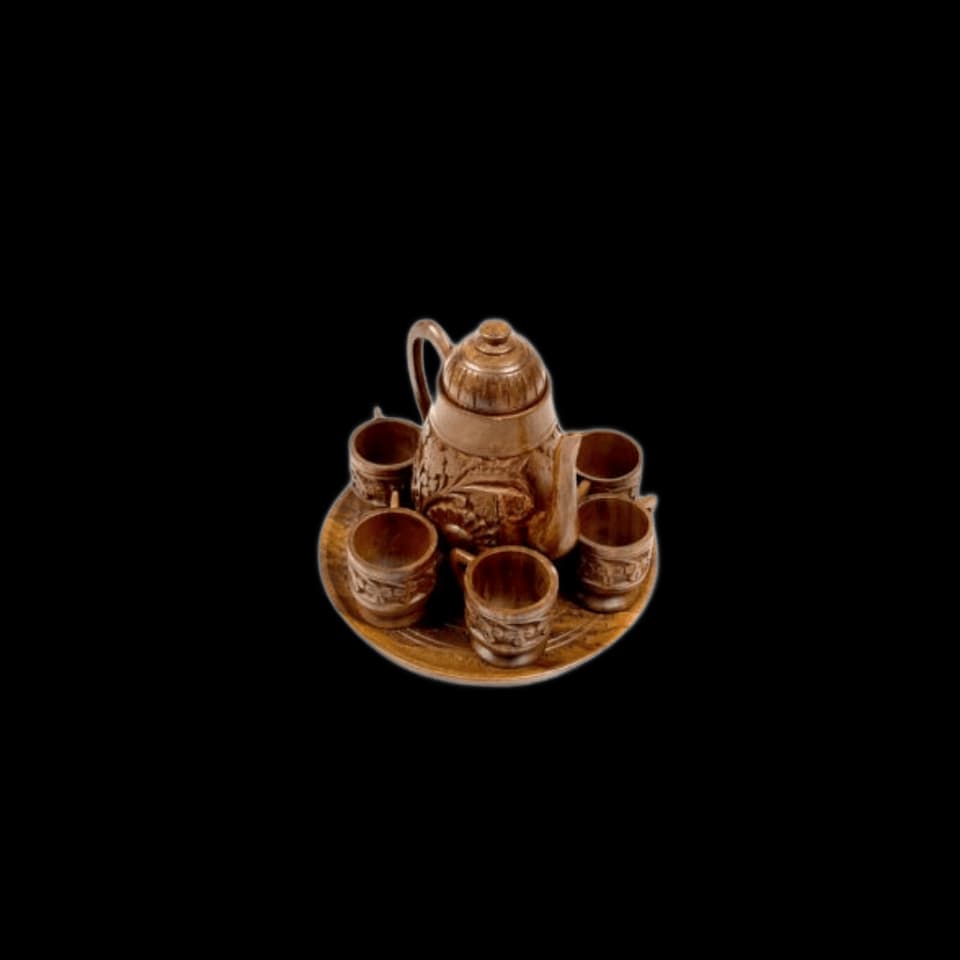
A wooden surahi is a decorative turned vessel — a narrow-necked pot with a domed lid, curved spout and handle — paired with matching cups on a footed tray, made for display rather than holding liquid. Sillanwali Handicrafts turns ours in sheesham, 14in (36cm) tall, made by hand in Pakistan and sent to the UK on request.
What is a surahi, exactly?
The word describes a narrow-necked pot, traditionally earthenware, used across South Asia to store and cool drinking water — the long neck slows evaporation, which draws heat out of the water inside. The wooden version sold as a surahi today, ours included, keeps that tall silhouette but adds a domed lid, a curved spout and a side handle, and is built for a shelf rather than a well.
Is a wooden surahi meant to hold water or drinks?
No — ours is a display and serving-table set, not a working jug: it's meant for a shelf or a tea trolley rather than daily brewing. Keep liquid out of it; if you want a piece that's actually finished to hold food or drink safely, our serving trays and dry-fruit tray are oiled with a food-safe finish instead.
What sizes and finishes does a decorative surahi set come in?
- Antique Teal — two matching cups, a teal-and-gold finish, 14in (36cm) tall including the domed lid.
- Carved Tea Set — four matching cups, more of the natural sheesham carving left visible, 14in (36cm) tall.
- Both sit on a round, footed wooden tray sized to hold the pot and its cups together.
Is a surahi an Indian or a Pakistani craft?
Every UK page we could find on this ties the surahi to Indian pottery, particularly the kumbhar potters of Haryana, and none mention Pakistan at all. The wooden version we make comes from Sillanwali, a woodworking town in Sargodha district, Punjab, Pakistan, where sheesham is turned on the lathe by hand — a separate, parallel craft to the clay original, not a copy of it.
What's the difference between a surahi and a dallah?
The two names get used almost interchangeably for this style of turned, spouted vessel, but they come from different traditions. A dallah is the long-spouted coffee pot associated with Gulf Arab hospitality, traditionally brass or copper and built to pour qahwa. A surahi is the South Asian water jar described above, with no spout or handle in its original form. A piece like ours — a narrow neck and domed lid with a dallah-style spout and handle added — sits between the two, which is why near-identical wooden vessels turn up online sold under either name.
How is a wooden surahi set made?
The body, neck, cups and tray are each turned separately in sheesham on the workshop's lathe, then the spout and handle are fixed on before the piece is carved and finished by hand — the same turning technique used across Sillanwali's woodwork, just applied to more parts than a single bowl or tray. A full set takes about 10 working days in the workshop to make.
See how a single piece is turned on the lathe, start to finish
Is a surahi a good wedding or housewarming gift?
It suits a Nikkah or a new-home gift well because it's a display piece rather than something that gets used up — the same reason it already features in our joint-home Nikkah gift list, alongside the Ayat Wall Panel and the nested serving tray set.
12 Nikkah gifts that aren't cash
More handmade housewarming gift ideas
How much does a decorative surahi set cost?
The surahi set carries its price on its product page, so you can see the cost of each finish before you order. Within Pakistan it is delivered cash on delivery; for a UK address, contact the workshop and we confirm the shipping cost and agree payment with you before anything is sent.
How do you look after a wooden surahi set?
- Dust with a dry or barely damp soft cloth — never soak it or put it in the dishwasher.
- Keep it out of direct sun and away from radiators; centrally heated air dries wood faster than it would in Punjab and can crack a painted finish.
- Don't use it to hold water or drinks — it's a display piece, not sealed for standing liquid.
Do you ship a decorative surahi set to the UK?
Yes, on request. Contact the workshop with the set you'd like and your UK address: we confirm the shipping cost, courier and transit time and agree payment with you before it is sent. Within Pakistan the set is delivered in 3 to 4 days, cash on delivery.
See the Umar Khayyam surahi set
Frequently asked questions
- What is a surahi used for?
- Traditionally, a surahi is a narrow-necked jar used to store and cool drinking water — the shape slows evaporation, which draws heat out of the water inside. Decorative wooden versions like ours are used differently: as a display piece for a shelf, mantelpiece or tea trolley rather than for holding water.
- Is a wooden surahi safe to hold water or drinks?
- No, not ours — it's built and finished as a display and serving-table set, not a sealed vessel, so keep liquid out of it. If you want something that safely holds food, our serving trays and dry-fruit tray are finished with food-safe oil instead.
- What is a surahi traditionally made from?
- Terracotta and other earthenware, historically — the clay and its porous surface are part of what keeps the water inside cool. Decorative surahi sets today are also made in brass, marble and turned wood, which is where a piece like ours, hand-turned in sheesham, fits in.
- What's the difference between a surahi and a dallah?
- A dallah is the long-spouted coffee pot from Gulf Arab coffee culture, traditionally metal. A surahi is a South Asian water jar with no spout in its original form. Wooden decorative vessels that combine a surahi's tall neck with a dallah-style spout and handle, like ours, get sold under either name.
- Is a surahi an Indian or a Pakistani craft?
- The clay surahi is generally described as an Indian craft, tied to potters in states such as Haryana. The wooden, turned version we make is a Pakistani craft from Sillanwali, in Sargodha district, Punjab — a parallel woodworking tradition, not a copy of the clay original.
- How tall is a decorative surahi set?
- Ours stands 14in (36cm) tall including the domed lid, with a round footed tray sized to hold the pot and its cups together. That's taller than the small single wooden vases sold under the same name, which we've seen listed as short as 20cm (8in), because ours is a full pot, cups and tray set rather than a stand-alone vase.
- Can a surahi be used as a vase?
- Yes, the narrow neck suits a single stem or a small dried arrangement, though ours is sold as a full set with matching cups on a tray rather than as a stand-alone vase.
- Is a surahi a good wedding or housewarming gift?
- It works well for both — it's a display piece rather than something that gets consumed, which is why it already sits in our joint-home Nikkah gift list alongside the Ayat Wall Panel and the nested serving tray set.