Chappals, Khussa and Foot Ache: Footwear Habits That Matter
Chappal foot pain is common with flat, backless footwear. See what NHS advice says about heels, arch support and slippers, plus a simple evening routine.
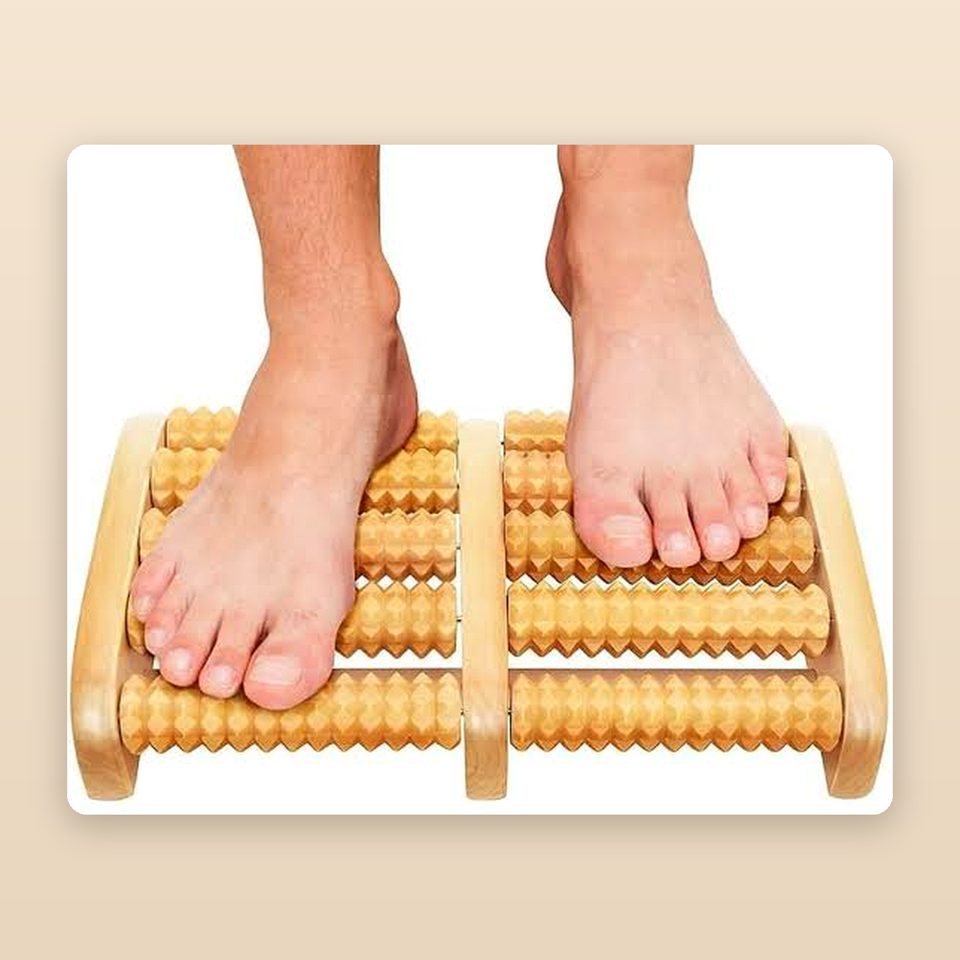
Chappal foot pain usually comes from wearing flat, thin or backless footwear for long hours. NHS advice for heel pain is to wear shoes with cushioned heels and good arch support, and to avoid flip-flops and backless slippers. Fix the footwear first; a wooden foot roller can then be a relaxing end-of-day habit, not the fix.
Why do chappals make your feet ache?
In most Pakistani homes, the day runs on chappals. We wear them to the kitchen, to the bazaar, to the mosque and on the walk to the corner shop. They are cheap, easy to slip on and cool in the heat. The trouble is what most of them don't have.
A typical rubber or flat leather chappal has a thin sole, almost no shaping under the arch and no back strap. That means three things for your feet:
- Little cushioning under the heel. Every step lands on a thin layer, so the heel takes more of the impact, especially on concrete, tiles and marble.
- No arch support. The sole of the foot is left to hold its shape on its own for hours.
- Toe gripping. Without a back strap, your toes curl slightly with every step to keep the chappal on. Over a long day, that can leave the sole and the front of the foot feeling tight.
The NHS page on plantar fasciitis lists the things it suggests avoiding for heel pain, and footwear is a big part of it: don't wear high heels or tight pointy shoes, don't wear flip-flops or backless slippers, and try not to walk barefoot on hard surfaces. It also lists "shoes with poor cushioning or support" among the things that make heel pain more likely.
Plantar fasciitis is pain in the thick band of tissue that runs along the bottom of the foot from the heel to the toes, often worst with the first steps in the morning.
What about khussa and Peshawari chappals?
Traditional footwear has its own pattern.
Khussa are beautiful and comfortable for an hour or two, which is why they are a favourite for weddings and Eid. Most have a thin, flat sole with little shaping under the arch, and they are often bought snug so they stretch to fit. If you wear new khussa through a full day of functions, sore soles by the evening are no surprise. They are better kept for occasions than used as everyday walking shoes.
Peshawari chappals usually have a back strap and a firmer sole, so the foot doesn't have to grip as much to keep them on. That helps, but many pairs are still quite flat inside. If your heels ache in them, a soft heel pad or insole can make a real difference.
Plastic and rubber slippers for the home are the most common culprit. They are fine for a quick trip to the bathroom, but standing in them for an hour at the stove or the sink is a different matter.
None of this means you have to give up chappals. It means matching the footwear to how long you'll be on your feet.
What should you look for in footwear if you stand or walk all day?
Use the NHS advice as a simple checklist. It suggests wearing shoes with cushioned heels and good arch support, and using insoles or heel pads in your shoes. In practice, when you're buying chappals, sandals or shoes for daily use:
- Press the heel area with your thumb. It should give a little, not feel like a flat board.
- Look at the inside from the side. A gentle rise under the arch is better than a completely flat footbed.
- Choose a back strap for long days. Sandals with a strap behind the heel stop the toes from gripping.
- Check the fit at the end of the day, when feet are slightly bigger, so new pairs aren't too tight.
- Keep one cushioned pair at home. Many people buy good shoes for outside and then stand barefoot or in thin slippers on hard floors indoors. If your home has marble or tile floors, our post on barefoot on marble floor heel pain explains why that matters.
barefoot on marble floor heel pain
If your arches are low, insoles with arch support are worth asking a pharmacist about before you rely on any roller.
Which daily habits make chappal foot ache worse?
Small habits add up across a week:
- Wearing the same worn-out pair for years. Once the sole is flattened or uneven, it offers even less support.
- Standing for long stretches in thin slippers, such as cooking for a family dawat or washing a big load of dishes.
- Walking long distances in khussa at weddings, on shopping trips or at the mazaar.
- Going barefoot on hard floors at home, especially first thing in the morning.
- Ignoring morning heel pain and hoping it goes away by itself.
Changing even one of these, such as keeping a cushioned pair by the kitchen, is often a better first step than anything else.
Where does a wooden foot roller fit in?
Footwear comes first. A foot roller is what you do afterwards, sitting down, once the day is over.
The Sillanwali Wooden Foot Massager is a handmade piece of natural wood from Sillanwali, Sargodha, Punjab. It has dual-sided ridged rollers, so you can use both feet at once while seated, and it is fully manual, with no electricity or batteries. Many people find a few minutes of slow rolling under the soles relaxing after a day in flat chappals.
A simple way to use it:
- Sit on a chair or the edge of the bed, feet flat on the rollers.
- Roll slowly from heel to toes and back, with light pressure at first.
- Keep it to a few minutes, and stop if anything hurts or feels sharp.
An NHS hospital leaflet on plantar fasciitis (University Hospitals Coventry and Warwickshire) describes rolling the arch of the foot for 2 to 5 minutes as a self-massage exercise. Keep it gentle and short, and never roll a foot that is swollen, injured or has broken skin.
The product page itself states that this is a manual relaxation product for home use. It is not a medical device and makes no medical claims.
When should you see a doctor about foot pain from footwear?
This massager is a relaxation product, not a medical treatment. If foot pain is severe, lasts more than two weeks, keeps coming back, or comes with swelling, numbness or an injury, see a doctor.
Book an appointment sooner if the pain is so bad you can't walk normally, if one foot suddenly becomes swollen, red or warm, or if you have diabetes and notice any foot pain, cuts or changes in feeling. A doctor or physiotherapist can also advise on insoles and stretches suited to your feet.
Ready to add a relaxing step to your evening?
The Wooden Foot Massager costs Rs 1,499, and the massager comes with free delivery anywhere in Pakistan. You pay cash on delivery (COD), meaning you pay the rider in cash at your door with no advance payment, and delivery takes 3 to 4 days. Order the Wooden Foot Massager or browse the Health & Wellness collection.
Order the Wooden Foot Massager
Buying for the whole family? 2 for Rs 2,700, 3 for Rs 3,900, or 4 or more at Rs 1,250 each. Bundle savings apply automatically at checkout.
Frequently asked questions
- Are flat chappals bad for heel pain?
- Flat, thin or backless chappals give the heel and arch very little support. NHS advice for heel pain is to avoid flip-flops and backless slippers and to wear shoes with cushioned heels and good arch support.
- Is it okay to wear khussa every day?
- Most khussa have a thin, flat sole, so they suit short occasions better than long days of walking. If your soles ache after wearing them, switch to cushioned footwear for everyday use.
- Can insoles help with chappal foot pain?
- The NHS suggests insoles or heel pads as one self-care step for heel pain. A pharmacist or doctor can advise on which type suits your feet.
- Does a foot roller replace good footwear?
- No. Footwear makes the bigger difference through the day. A wooden foot roller is a manual relaxation product for a few minutes in the evening, and it makes no medical claims.